Lost the word
Outlook
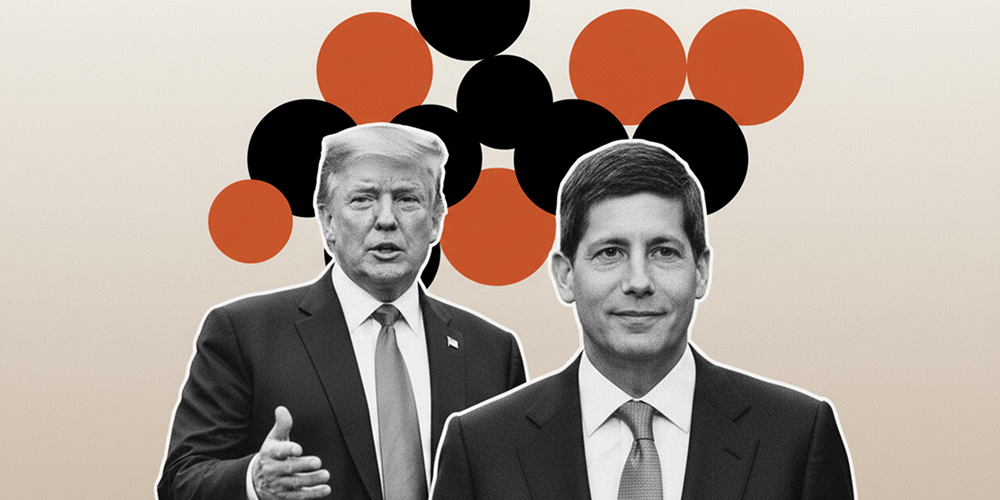
We watched Fed chief Warsh on TV and were appalled. He refused to name the pause a pause and spoke of “watchful thinking.” If we are going to live without forward guidance, and the Fed is going to take information straight from the bond market, and the bond market is signaling rather loudly it be lieves a rate hike is needed, how then how can he say “interpreting markets is an imperfect business”? This is incoherence, not verbal trickery.
The WSJ does not see it that way, writing “He has an interesting point about market signals…. His post meeting press conference also was enlightening, even without “forward guidance” about Fed inten tions. [He] ….suggested his no-forward-guidance policy is working. Since his first meeting as Chairman in June, investors have had to relearn how to price risk themselves without being steered by the Fed. One result has been that bond yields are rising across the duration curve. Another is that the dollar has appreciated modestly.”
Traders will find it insulting to be told they need to relearn how to price risk.!
It wasn’t so much the FOMC’s decision to hold that sent the dollar down—it was Warsh. After all, the market got exactly what it expected, a semi-hawkish hold. And the dollar fell across the board, even against the yen and yuan Some of the moves were really big—see the charts—big black bars dotting the landscape pretty much everywhere.
More than one analyst had predicted the dollar would fall if the Fed held rates the same, but this seems more than the usual temporary knee-jerk reaction. There is some sentiment leaning toward the idea that the hikes outlined in the FedWatch betting were overdone. We don’t see a retreat in the distribu tion of probabilities—yet.
But folks are talking. One report says the Sept hike is in doubt, too. The CME has a 57.4% probability for that one, but looking at the Dec outcome, only 43.2% expect a single hike and 32.9% expect two, down from 36.3% the day before and 37.1% the week before. So, maybe only one hike before year-end?
This is idle speculation and premature. But if this kind of talk has some juice, dollar strength is at risk. If the markets stop trusting the Fed and imagine it will drag its heels on fighting inflation with rate hikes, more stable and sensible central banks get the rising currency. Be warned, though, that Warsh may start up quantitative tightening as a substitute for a hike.
Note that the Bank of England also stood pat today with a strong probability of a Sept hike, and de-
spite three dissents as in the US, sterling did not fall but instead kept rising strongly. The Bank of Japan meets tomorrow but hardly anyone expecting anything other than a hold.
Then there’s actual data. The PCE deflator has been widely forecast to moderate . The Cleveland Fed has 3.63% y/y (from 4.1%) and core at 3.36% (from 3.4%) for July. See the chart from Trading Economics.
We also get the usual Thursday jobless claims, which some will try to take to turn straw into hay. We say the data cannot cover the wildly diverse labor market and captures too little. We can be pretty sure, for example, that the gray market, which is at least 10 million workers, has contracted substantially, and is not measured at all. Nobody can find a guy to mow the lawn.
The final number is Q2 GDP—the first estimate. The Atlanta Fed GDPNow has 1.5% as of yesterday, from 1.6% the day before. Others, including Bloomberg, are expecting 2% or more. Trading Economics has 2.1%, the same as Q1.
Forecast
The big across-the-board dollar drop combined with the big rise in yields is rare. Something happened. It could be that there were three dissenters against a hold, the most since 1970. It could be a new disap pointment in the Fed, even though the three dissents and the hold outcome were telegraphed long in ad vance. If it’s not a sudden new loss of confidence in the Fed, it must be a loss of confidence in Warsh and his pitiful performance yesterday. It won’t be long before someone says he favored a hold and did n’t argue for a hike because Trump instructed him not to hike. And to Trump and some others, loss of confidence in the Fed is a good thing. We don’t buy it, but hey.
The smart move on Warsh’s part would be to do something to the balance sheet that is a soft form of QT, not enough to frighten the horses into a stampede but enough to show anti-inflation resolve.
Now that the long end has voted, how much further can it go—or is it already ended, or will end with the better PCE inflation later today? Plus GDP, still at 2% or perhaps a bit more.
Reuters Dolan has a moderate take but one that still has funeral music in the background: “Fed boss Kevin Warsh … did suggest that the bond market is doing some of the Fed's job for it by tightening ag gressively.
“That may be a case of ‘careful what you wish for’, as bond yields appear to be rising due to doubts
about Fed credibility and concern that the Fed is mistakenly trying to pass high inflation off as transi tory for the second time in five years.
With oil prices jumping back up nearly 8% yesterday amid renewed strikes by the U.S. and Iran, the fuel squeeze seems far from transitory, too.”
Fed can be a big deal—but not long-lasting. This means the dollar will come back, but nobody knows how long it will take for the sudden new loss of confidence to abate. This means traders are up the creek without a paddle.
Author

Kathleen Brooks
XTB UK
Kathleen has nearly 15 years’ experience working with some of the leading retail trading and investment companies in the City of London.

















