Déjà Vu at the Fed
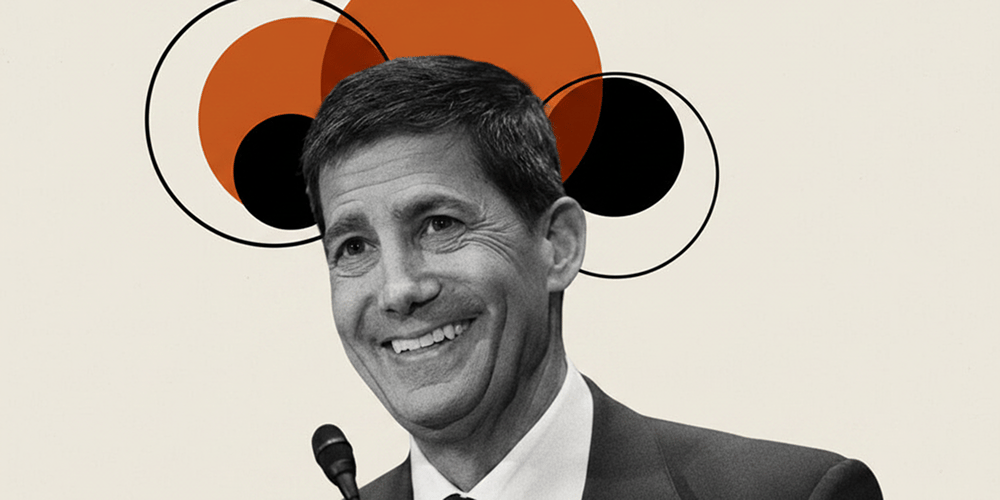
Will Chairman Warsh suffer the same criticisms as Chairman Powell?
Conventional wisdom about monetary policy is straightforward: If the Fed prioritizes fighting inflation over stimulating economic growth, monetary tightening is appropriate (i.e., raising interest rates); on the other hand, if stimulating growth is the priority, the remedy should be monetary easing (i.e., lowering interest rates. In both situations, however, the Fed’s actions would serve to affect aggregate demand — depressing aggregate demand in the former case and augmenting it in the latter. For the uninitiated, aggregate demand is made up of spending by four economic sectors: consumers, businesses, the government, and net exports.
The Fed doesn’t influence spending in any of these sectors directly, rather it does so via changes in interest rates and credit conditions. Tighter money constrains spending by consumers and businesses. Easier money does the opposite. To be fair, those demand side effects feed through to the supply side, in that suppliers will react to the way they anticipate changes in demand, but the supply-side effects of monetary policy are secondary.
The challenge for the Fed, then, is working in a world where the problem arises on the supply side while the Fed’s tools primarily affect the demand side. In such situations, the Fed’s traditional remedy may do more harm than good. This concern is exactly what’s facing the Fed today. That is, at least some portion — perhaps a major portion — of the inflationary pressures we see today is coming from supply disruptions that have arisen from the war with Iran, which has precipitated substantial disruptions of critical energy and fertilizer supplies. Higher prices, on their own, would be expected to have a cooling effect on economic activity. Coupling that with added demand suppression from a tighter monetary policy could potentially be overly restrictive.
It seems clear that fighting inflation remains the Fed’s priority, but the Fed’s hesitancy to raise interest rates further at its latest meeting — even as the threat of inflation may be building — reflects a collective judgment that the problem is on the supply side. The question facing the Fed is whether this reduced aggregate supply condition will foster an immediate spike in inflation that would be expected to peter out once new, equilibrium higher prices consistent with the altered supply and demand conditions are reached, or whether the initial round of inflation will persist into the future due to a new wage-price spiral coming into being.
This dilemma is a repeat of the same one that the Fed faced under the leadership of Chairman Powell: Is this current inflation we’re experiencing likely to be transitory or more lasting? A judgment that it will be transitory would make holding off on a rate increase the preferred course of action. On the other hand, a determination that if unchecked, the current inflation would be expected to extend for a longer duration, would mean preemptive action to raise rates would be in order. The latest decision to hold rates steady reflects the collective judgment by the Fed’s decision makers that, at this point, most of those at the table are expecting (hoping) that the current inflationary pressures will abate on their own. During Chairman Powell’s tenure, the Fed was criticized for holding the view that inflation was going to be transitory for too long. That same potential criticism may arise under Warsh’s leadership. Only time will tell.
Author
_Profile.jpg)
Ira Kawaller
Derivatives Litigation Services, LLC
Ira Kawaller is the principal and founder of Derivatives Litigation Services.