Key takeaways from the BoE meeting
The Bank of England has hiked interest rates as expected to 4%. All MPC members voted to hike interest rates, with one member voting to hike rates by 50bps.
As usual, the focus is on what comes next and whether rates will continue to rise. The BOE also released their latest growth and inflation forecasts at this meeting, and these will help to determine how likely rates are to rise. The inflation forecast was grim, the central forecast is that CPI will peak at 5% next year, however, the inflation rate will not return to the 2% target rate for another 2 years.
Inflation projections support vigilance on rate hikes
The BOE’s mandate is price stability, so this forecast means that rates are more likely to rise in the coming months. However, the BOE has also moved to keep their options open. The MPC did not commit to any further action today, and Governor Andrew Bailey said that the BOE is taking it meeting by meeting.
Essentially everything is about oil prices, and the longer the conflict goes on in the Middle East, the more complex the situation gets for the BOE. If the conflict rolls on, and if energy prices remain elevated, then the BOE’s worst case scenario for inflation could come true and CPI could rise to more than 6% next year.
Can the Democrats halt a rate hike cycle in the UK?
The BOE was asked about how the Democratic win in the Midterms could impact the outlook for the war in the Middle East, and ultimately the impact this could have on UK interest rates.
Bailey acknowledged the volatility in oil prices, and referenced the near 15% drop in the oil price this week. However, the BOE is looking at inflation pressures already in the pipeline, which will take longer to weigh on inflation. However, the BOE’s inflation forecast published today is predicated on oil prices at $108 per barrel, the Brent crude oil price is now below $100. If the oil price stays in the $90s over the next few weeks, then the December meeting could have a more dovish tone compared to today’s meeting.
A new division at the BoE
While BOE members all voted for a rate hike today, a new division has emerged on the committee: the hawkish faction see this as the start of a new hiking cycle, while today’s dovish hikers see one more hike at best. One member was clear that this is not the start of a hiking cycle, while 4 others signalled that more increases are needed.
Bailey on the fence for now
The governor seems to be on the fence for now, he said that ‘without news which softens inflation pressures’ then Bailey could vote for another rate hike. However, he also said that this rate hike should not be seen as a sign that rates will continue to rise.
This suggests that the BOE could really go either way in the coming months, and this clouds the outlook for future policy. For now, the interest rate futures market is predicting between 2-3 further rate hikes in the coming 12 months.
AI drives UK growth
Another shift at the BOE is the focus on growth, and a strong UK economy. The BOE increased its forecast for Q3 growth to 0.7%, and the Monetary Policy report also focused on the impact of AI on the UK’s growth story. The Bank sees the AI sector, including computer programming, consulting, AI software and agents contributing 20% to UK growth this year. This is huge, and AI could help the UK to become a strong economy, certainly relative to European standards.
Watching AI to determine where rates go next
This is important, since stronger growth and a rapid pace of AI investment could keep inflation elevated and make rate hikes more likely. However, it could also help the UK economy to become resilient to further rate hikes. It also means that if AI investment falls off a cliff, or if growth in AI slows, this could be what drives a rate cut from the BOE. In the coming months and years, BOE decisions on rates will not only be based on the direction of energy prices, but also on the future of AI in the UK economy.
The market view
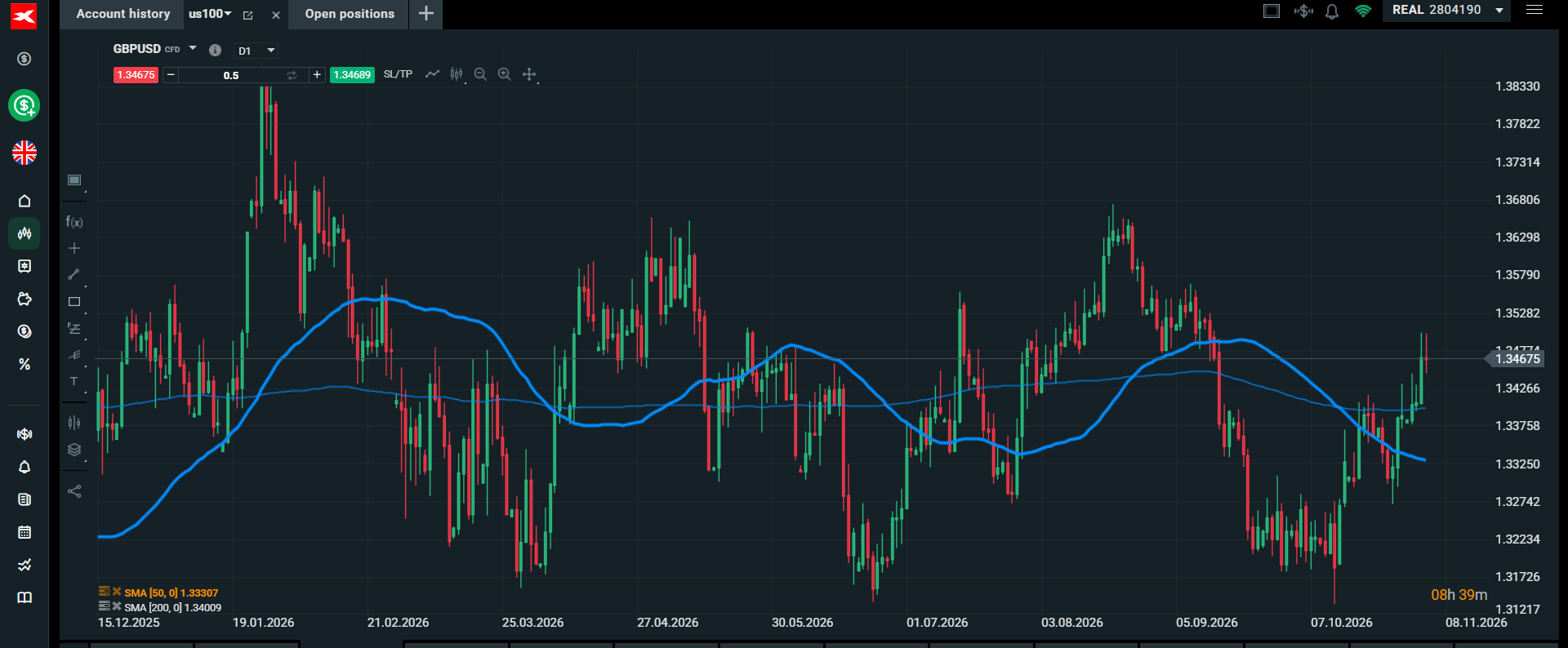
There is nothing that came out of this meeting that should weigh on sterling for the long term, or weaken the FTSE 100, in our view. The BOE meeting revised up growth and inflation forecasts, which keeps upward pressure on the pound, and GBP/USD could test the $1.35 level once the dust settles on today’s meeting.
The upgrade to the near term growth forecast, and the strength of the AI sector in the UK is good news for UK asset prices, as it could attract more overseas interest, this could also prop up the pound.
Gilts are likely to resume their rally, and yields could fall further, but only if oil prices fall. If they do keep falling, then expect yields to fall sharply into the December BOE meeting. Although the 2-year yield is rising on Thursday, a move back to 4.5% is not out of the question if oil prices moderate and if President Trump avoids escalating the war in Iran.
GBP/USD, is $1.35 next?
Source: XTB
Author

Kathleen Brooks
XTB UK
Kathleen has nearly 15 years’ experience working with some of the leading retail trading and investment companies in the City of London.