July’s US employment report to shake the markets

Market attention on July’s US employment report
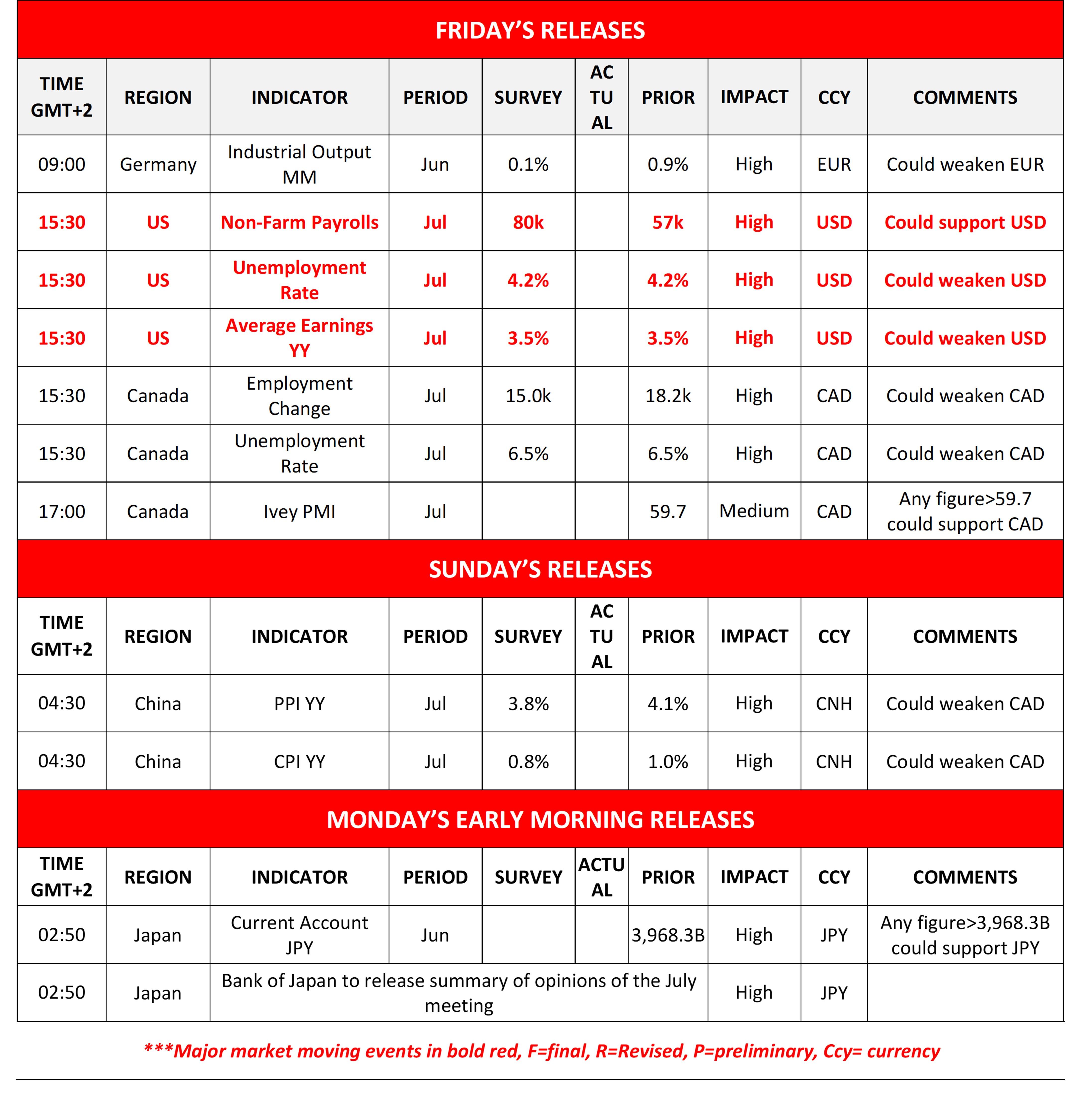
USD edged higher yesterday, as media reports pointed towards a potential rate hike by the Fed in September. Today, we focus on the release of July’s US employment report. The NFP figure is expected to rise, and the unemployment rate to remain unchanged. Should the actual data show an even looser-than-expected US employment market, we may see the USD slipping while a possibly tighter-than-expected employment market could cause the USD to rally as chances for a rate hike in September may get a boost.
Canada’s July employment data also to be released
Simultaneously with the US employment data, we also get Canada’s July employment data. Market expectations are for the employment change figure to drop and the unemployment rate to remain unchanged. Forecasts tend to point towards a slightly looser Canadian employment market, and should the actual data point towards a substantially cooling employment market in Canada we may see the Loonie weakening, while hotter than expected Canadian employment data may provide some support for the CAD.
US equities correct lower
With no high-profile companies’ earnings releases on the calendar, we turn our attention towards the release of the US employment report for July. Possibly a tighter-than-expected employment market could weigh on equities, while a looser market could provide support. Also, market focus is on developments in the Middle East, and a possible improvement of the market sentiment could also provide some support for US equities.
Bullish tendencies still present for Gold
The bullish tendencies for gold’s price are still present yet gold traders now focus on the US employment report for July. A possibly tighter that expected employment market could weigh on gold’s price as market expectations for the Fed to tighten its monetary policy could be enhanced and on the contrary a looser than expected employment market could lift gold’s price.
Other highlights for today
Today we get Germany’s industrial output for June and Canada’s Ivey PMI figure, all for July. On Monday BoJ is to release the summary of opinions of the July meeting.
Charts to keep an eye out
USD/CAD hit the floor at the 1.3990 (S1) support line bouncing higher. The existing downward trendline continues to suggest a bearish outlook for the pair, given also the bearish market sentiment suggested by the RSI indicator’s position. Yet the inability of the pair to form lower troughs tends to create doubts for further losses. Some analysts are noting that we may be in the last stage of a double bottom formation which could shoot up the pair’s price action, yet that is currently premature in our opinion. Should the bears maintain control over the pair, we may see USD/CAD breaking the 1.3990 (S1) support line and continue lower aiming if not breaking the 1.3880 (S2) support level. Should the bulls take over we may see USD/CAD breaking initially the downward trendline, in a first signal that the downward motion has been interrupted and continue to reach if not breach the 1.4125 4550 (R1) resistance level.
Nasdaq seems to stabilise just below the 29675 (R1) resistance line after breaking the upward trendline that was guiding it for the past five days. The RSI remains flat, just above the reading of 50 yet is currently unconvincing for the bullish tendencies of the index. We maintain our sideways motion bias as mentioned in yesterday’s report. Should the bulls take over, Nasdaq may break the 29675 (R1) resistance level and start aiming for the 30770 (R2) resistance level, which marks and All Time High for the index. Should the bears take over, we may see the index aiming if not breaking the 28200 (S1) support line.
USD/CAD daily chart
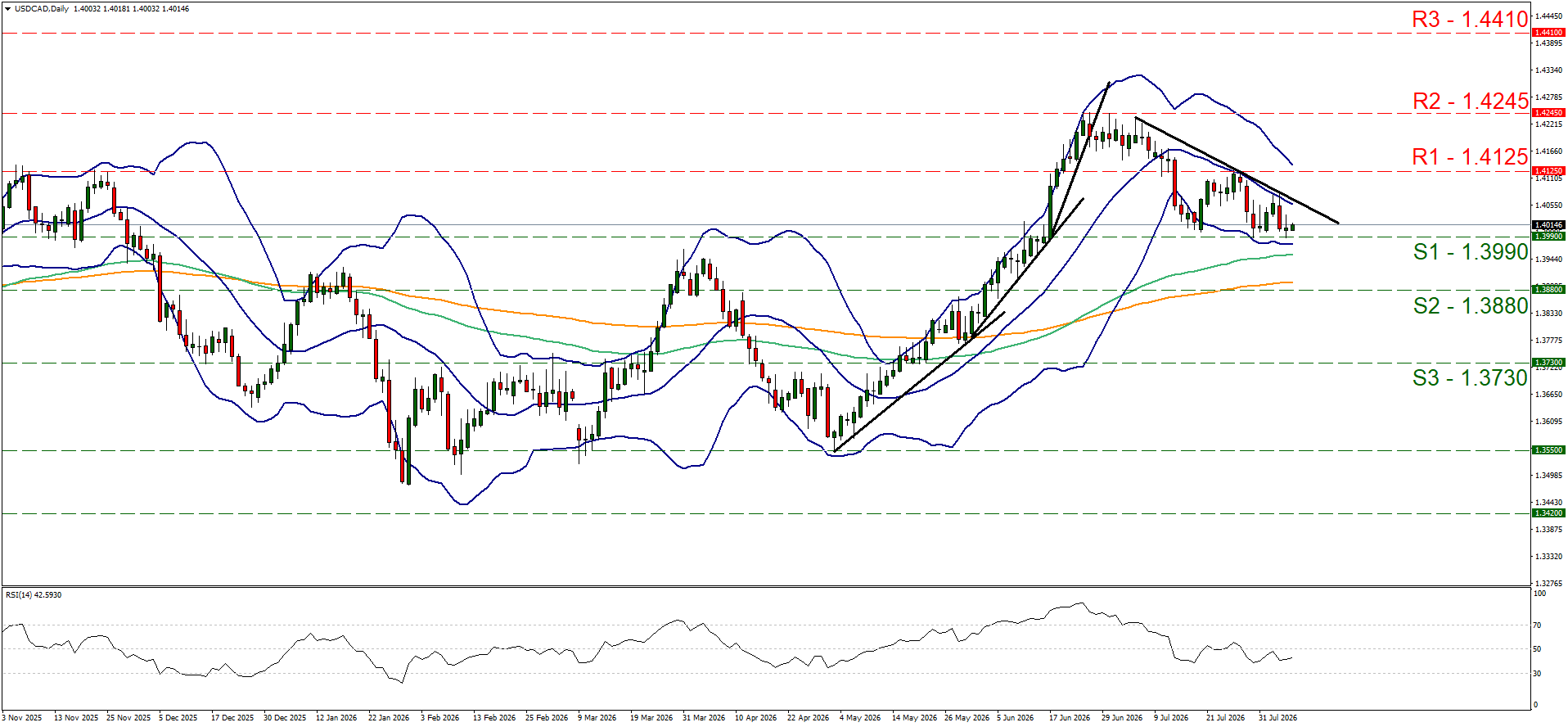
- Support: 1.3990 (S1), 1.3880 (S2), 1.3730 (S3).
- Resistance: 1.4125 (R1), 1.4245 (R2), 1.4410 (R3).
US100 cash daily chart
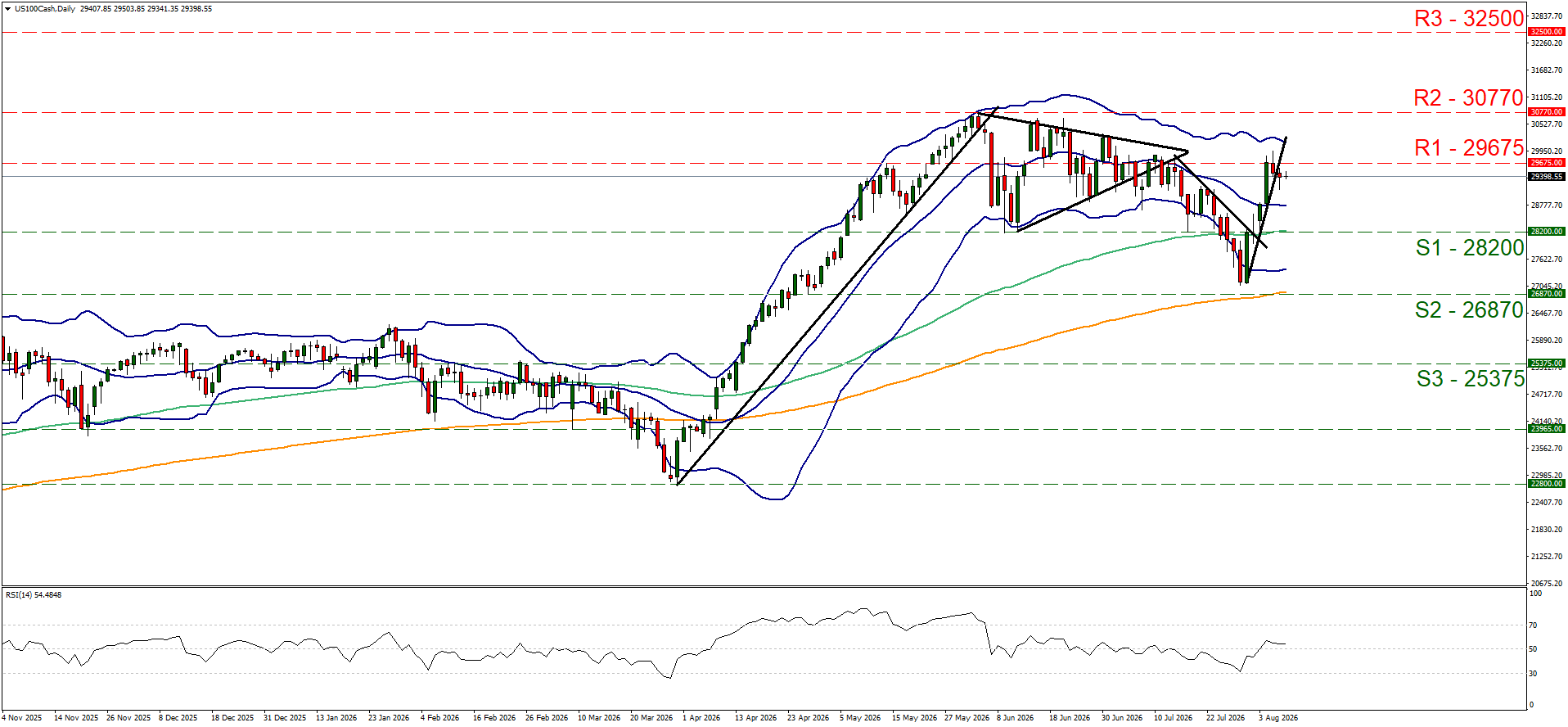
- Support: 28200 (S1), 26870 (S2), 25375 (S3).
- Resistance: 29675 (R1), 30770 (R2), 32500 (R3).
Author

Peter Iosif, ACA, MBA
IronFX
Mr. Iosif joined IronFX in 2017 as part of the sales force. His high level of competence and expertise enabled him to climb up the company ladder quickly and move to the IronFX Strategy team as a Research Analyst. Mr.