Investors await NFP to validate their Fed rate cut bets
-
Investors expect two rate cuts, even though Fed signals one.
-
Recent data corroborates investors’ take.
-
Nonfarm payrolls waited for more confirmation.
-
The report comes out on Friday, at 12:30 GMT.

Fed appears hawkish, but data paint a different picture
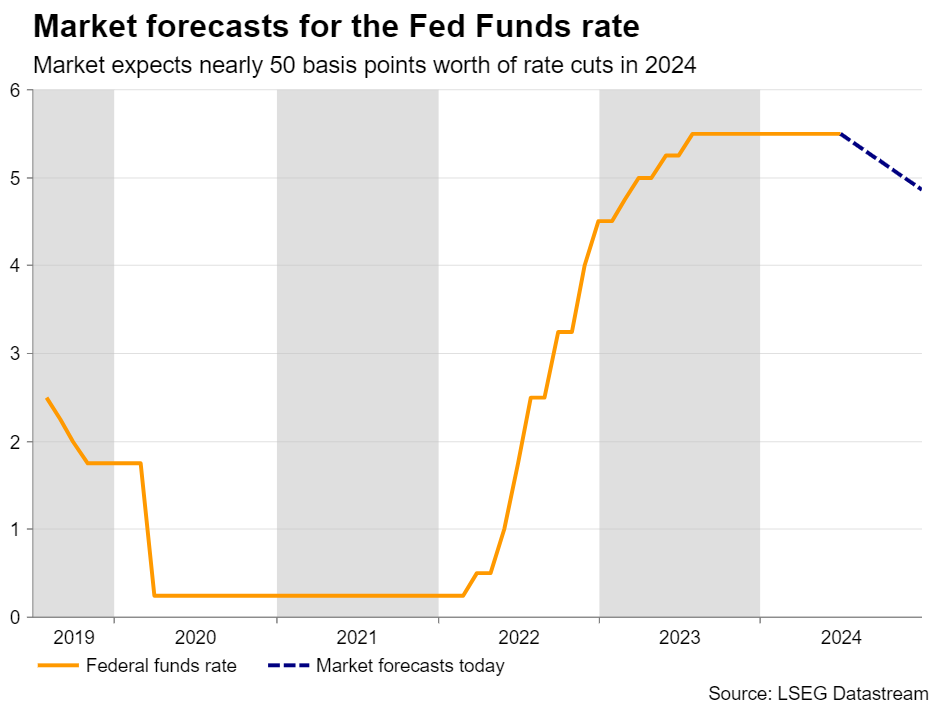
At its latest gathering, the FOMC appeared more hawkish than expected, revising its interest rate projections from three quarter-point reductions by the end of the year to just one. That said, the softer-than-expected CPI numbers a few hours ahead of the decision did not convince market participants about policymakers’ intentions.
The weaker than expected retail sales numbers for May and the slowdown in the core PCE price index for the same month corroborated that view. Indeed, according to Fed funds futures, investors are penciling in 48bps worth of reductions by December, assigning around a 75% probability for the first quarter-point rate cut to be delivered in September.
That said, the S&P Global PMIs for June suggested that the economy expanded at a faster pace than in May, which justifies remarks by Fed policymakers that there is no urgency in beginning to lower borrowing costs. However, the ISM manufacturing PMI on Monday came in weaker than expected, pointing to a third straight month of contraction in June.
Job gains and wage growth to slow
What could make the picture somewhat clearer may be Friday’s employment report for June. Nonfarm payrolls in the world’s largest economy are forecast to have increased by 195k, which is a notable slowdown from the astounding 272k a month before. The unemployment rate is expected to have held steady at 4.0%, while average hourly earnings are projected to have slowed to 3.9% from 4.1% y/y.
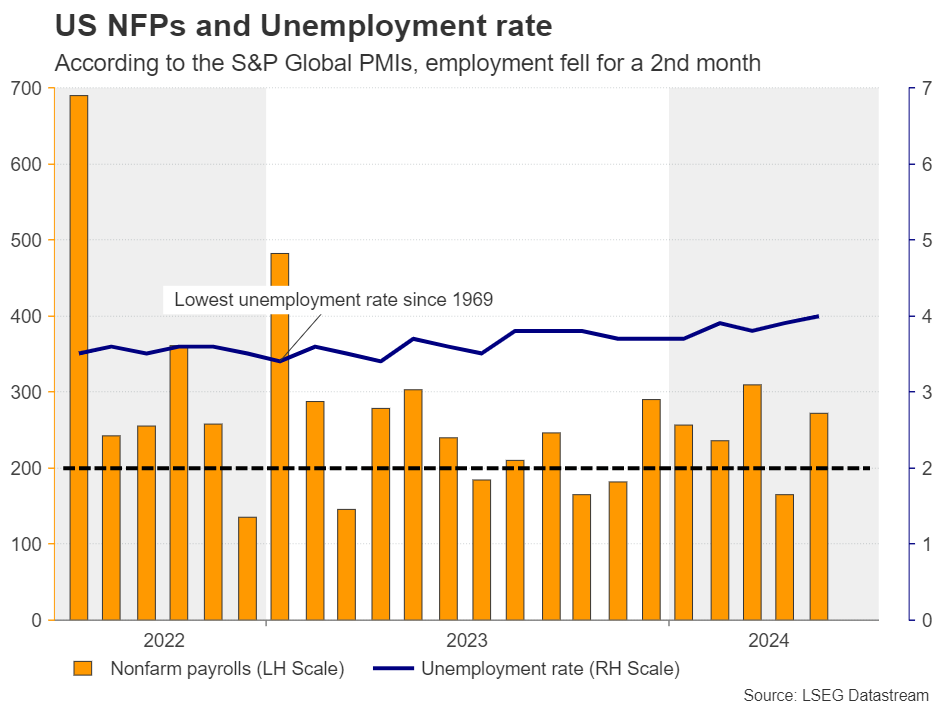
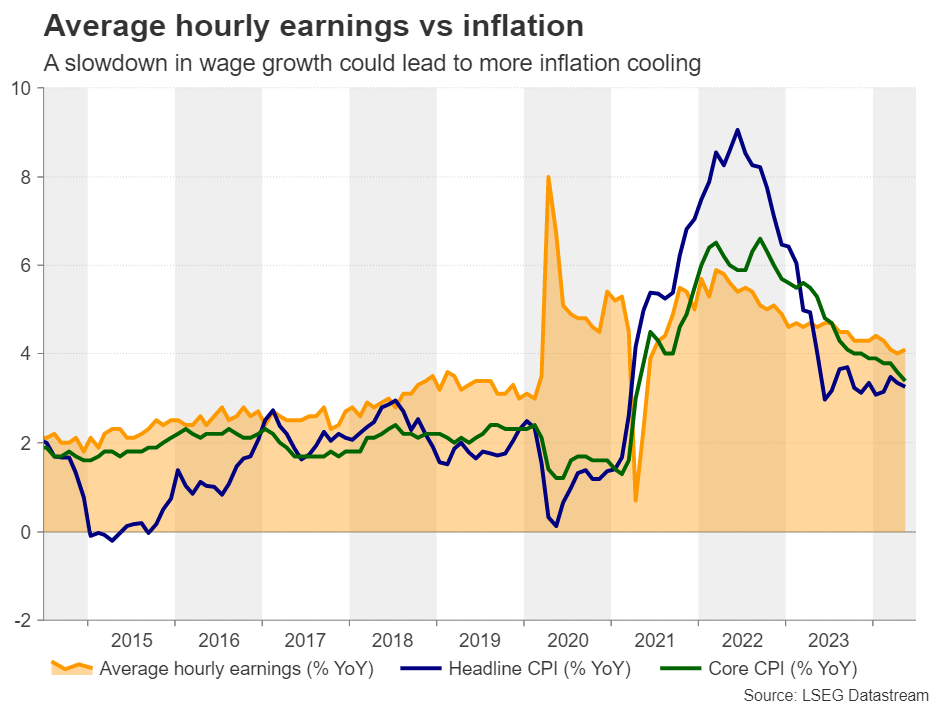
A potential slowdown in job gains is underscored by the increase in initial jobless claims during the month, which is indirectly supporting the notion of a pay slowdown, as having more available workers to choose from is allowing firms to offer less.
This could result in lower inflation in the months to come and thereby add more credence to investors’ view that interest rates in the US may need to be cut twice this year.
Dollar may come under pressure
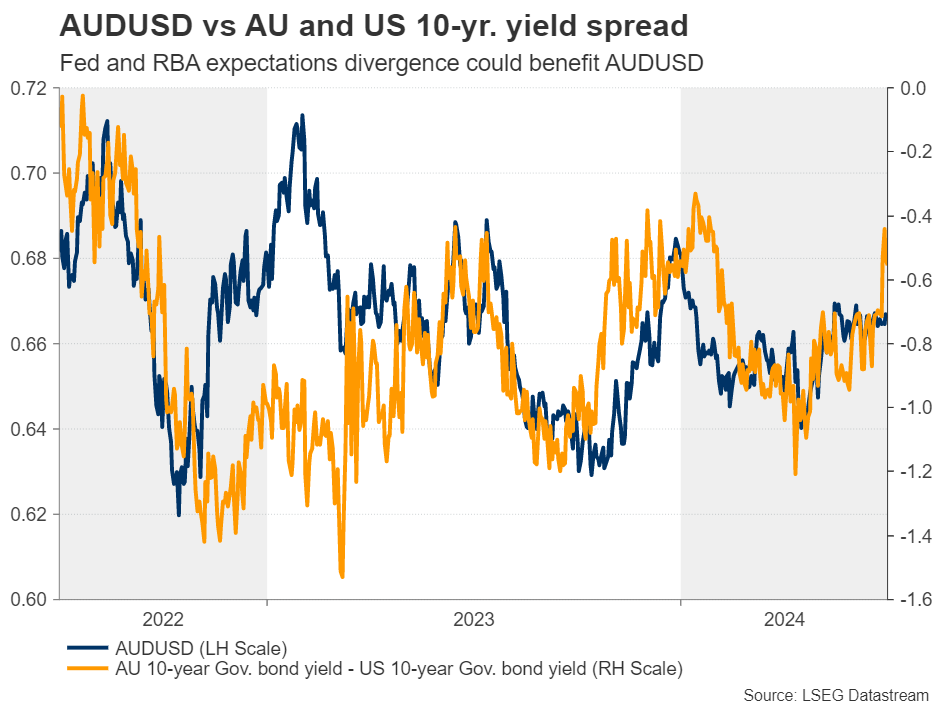
Ergo, in case of a weak employment report, Treasury yields could slip, thereby exerting pressure on the US dollar, which could suffer the most against its Australian counterpart. At its latest gathering, the RBA maintained its neutral stance, while Governor Bullock revealed that they discussed the option of raising rates. Due to that, the market is currently assigning a more than 50% chance for an RBA rate hike by November.
From a technical standpoint, aussie/dollar has been trading in a sideways range since May 3, between the 0.6575 and 0.6690 levels. Although the price is closer to the upper bound, until and if this barrier is breached, the outlook remains neutral.
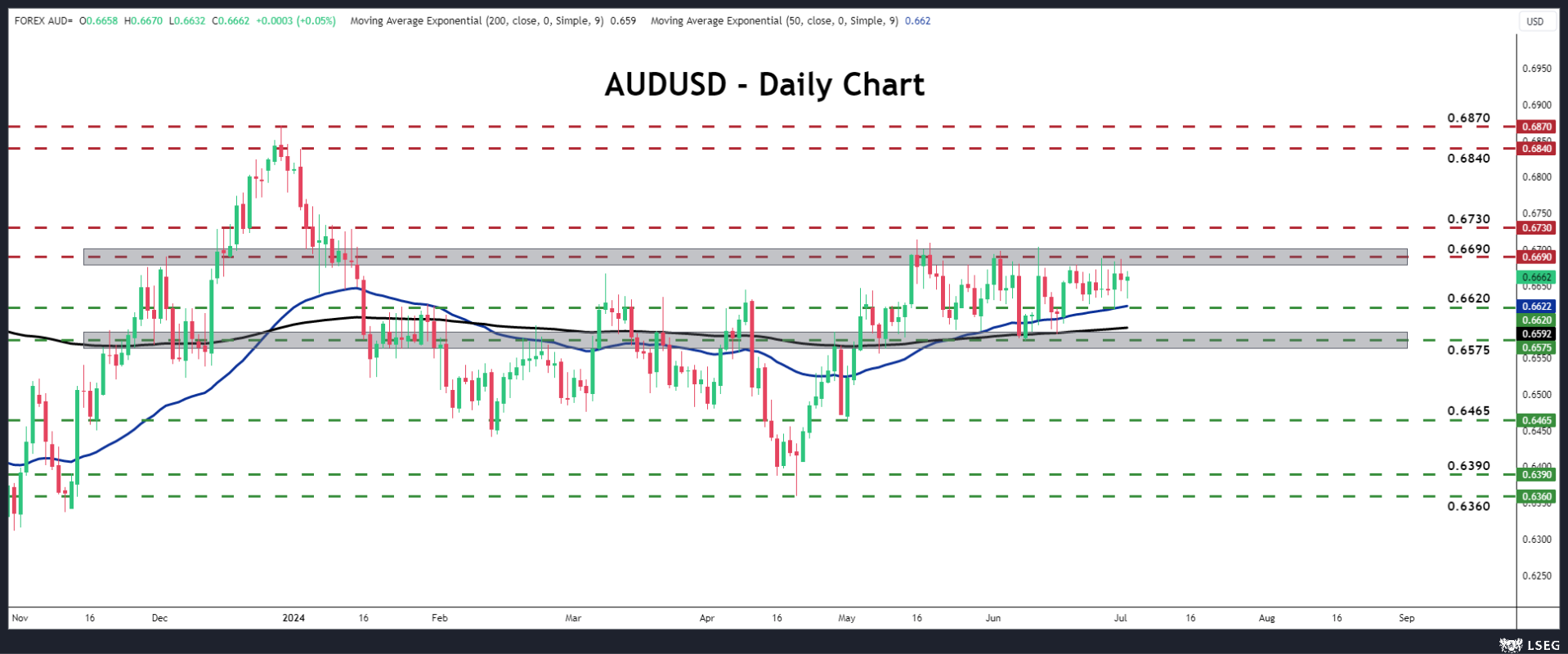
A decisive break above 0.6690 could initiate a shift towards a more positive outlook, but the move carrying larger bullish implications may be a break above 0.6730. Such a move could pave the way towards the high of January 2, at around 0.6840. For the outlook to turn negative, the pair may need to slide below the 0.6575 zone, which is the lower end of the range.
Author

Charalampos joined Trading Point in August 2022 as a senior market analyst. He has extensive experience in analyzing financial markets, gained through a decade-long career, with his primary focus being on the currency market.