|

Intraday market analysis: CHF bounces back

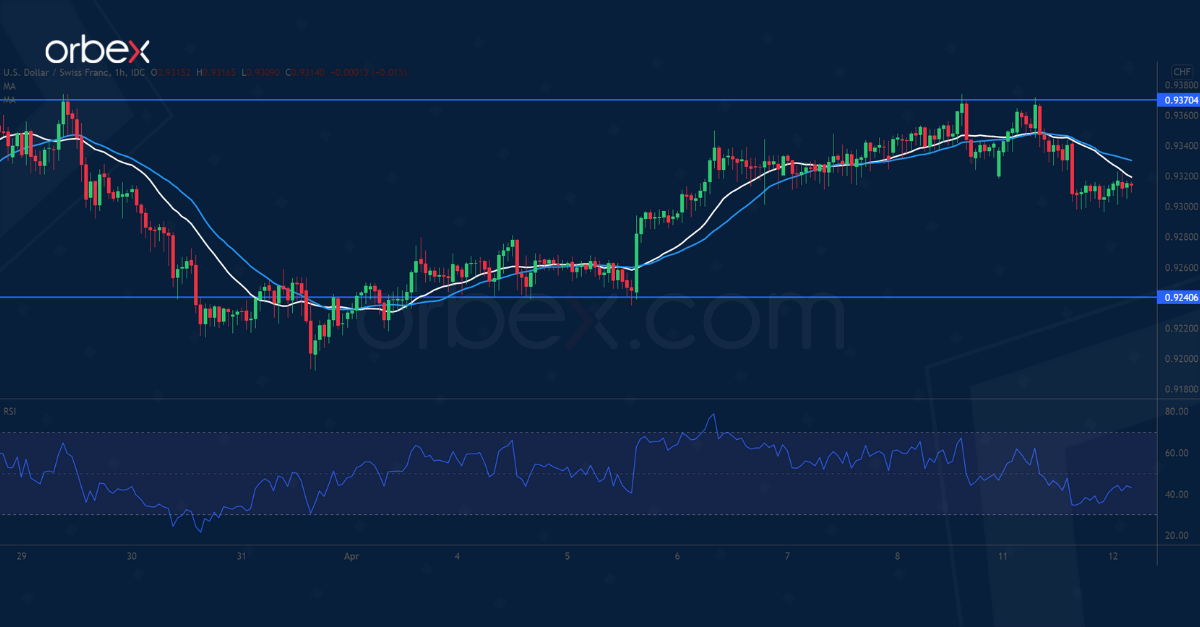
USD/CHF hits resistance

The Swiss franc rallies across the board as traders dump risk assets for safe haven ones amid uncertainty. The latest rebound came to a halt at 0.9370 from the late March sell-off.

The RSI’s double top in the overbought zone prompted intraday buyers to take profit, weakening the upward momentum. A bullish close would lift offers to the recent peak at 0.9460, where strong selling pressure could be expected.

A breakout may extend the rally to 0.9600. Otherwise, 0.9240 is the closest support to test the bulls’ resolve.
USDCHF

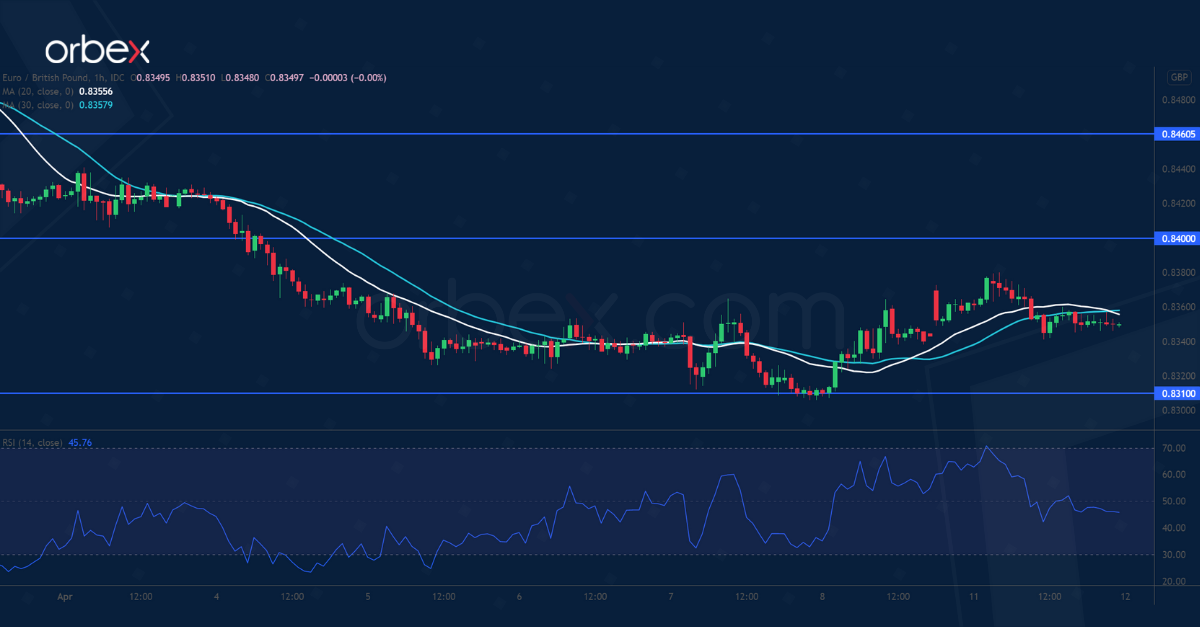
EUR/GBP attempts rebound

The sterling softened after Britain’s GDP fell short of expectations in February. The euro found support in the demand zone between 0.8300 and 0.8310, an important level from the daily chart.

The ensuing break above 0.8360 flushed out some selling interests and could pave the way for a sustained bounce. 0.8400 is the next hurdle and its breach may propel the single currency to the previous high (0.8510).

An overbought RSI may cause a temporary pullback and the bulls may see it as an opportunity to join in.
EURGBP

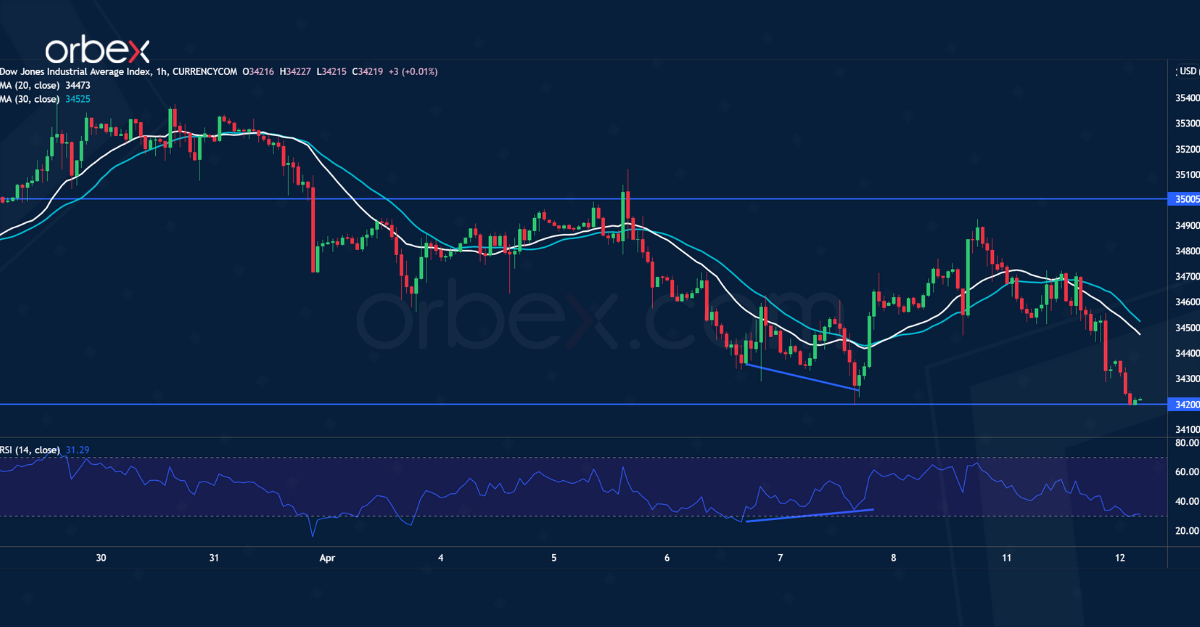
US 30 struggles for support

The Dow Jones 30 turns south as US Treasury yields continue to climb. The index briefly found support over the 30-day moving average (34200).

A bullish RSI divergence indicates a deceleration in the current sell-off. Nonetheless, the bulls’ struggle to push past 35000 suggests that short-term sentiment remains cautious.

On the downside, a fall below 34200 could trigger a broader liquidation, causing an extended consolidation in the days to come. 33500 at the origin of the previous breakout would be the next support.
Dow Jones

Author

Jing Ren

Jing-Ren has extensive experience in currency and commodities trading. He began his career in metal sales and trading at Societe Generale in London.


More from Jing Ren
Share:

Editor's Picks

AUD/USD picks up bids above 0.7100 after RBA-speak

AUD/USD picks up bids above 0.7100 in the Asian session on Tuesday, following hawkish comments from RBA Assistant Governor Sarah Hunter and Governor Michele Bullock. However, escalating tensions in the Middle East and the Fed's hawkish outlook remain supportive of the bullish US Dollar undertone, which could limit the pair. The crucial Trump-Xi summit is later this week and remains in focus.

USD/JPY holds small gains near 157.50 as JPY intervention risks loom

USD/JPY posts modest gains while trading near 157.50 in the Asian session on Tuesday as intervention fears help limit losses for the Japanese Yen. However, the BoJ's dovish rate hike to a 31-year high keeps JPY bulls on the back foot. Meanwhile, the US Dollar retains a bullish undertone amid the Fed's hawkish outlook and escalating Middle East tensions, providing tailwinds for the pair.

Gold: The $4,300 mark holds the downside…for now

Gold extends its decline for a second straight session, retreating toward the $4,300 mark per troy ounce on Tuesday. The yellow metal’s pullback comes amid the resumption of the buying interest in the US Dollar, mixed US Treasury yields and geopolitical uncertainty.

Trump meets Xi: Why markets are watching this summit so closely

US President Donald Trump and Chinese President Xi Jinping are set to meet in Washington on Thursday for a summit closely watched by markets. The meeting could determine whether the world's two largest economies extend their truce or enter a new period of uncertainty.

Energy and risk markets remain in the driver’s seat
US stock markets rallied up 2.26% (Nasdaq) yesterday with AI/tech names leading the advance. The Nasdaq even tested the all-time high reached early June. The likes of the S&P 500 and EuroStoxx50 recovered up to 1.5%. Positive risk vibes and lower energy prices supported consolidation on bond markets following the past month’s heavy losses. European yield curves bull steepened.
BoJ Recap: Not as hawkish as expected

The Bank of Japan (BoJ) raised its short-term interest-rate target to 1.25% from 1.00% in a 7-2 vote, marking another step in the normalisation of monetary policy and widely matching what everyone has been expecting for weeks.