Indian Rupee outlook: Downtrend set to persist – Just at a slower pace

The Indian Rupee just endured its most brutal six-month stretch in years, battered by a perfect storm of global shocks.
From United States (US)-India trade uncertainty to surging Oil prices and the significant outflow of Foreign Institutional Investment (FII) from the Indian stock market, every event brought nothing but pain for the Indian currency. Here is how a series of inescapable economic fallouts pushed the currency into "extreme underperformance", and what can be expected for the rest of the year.
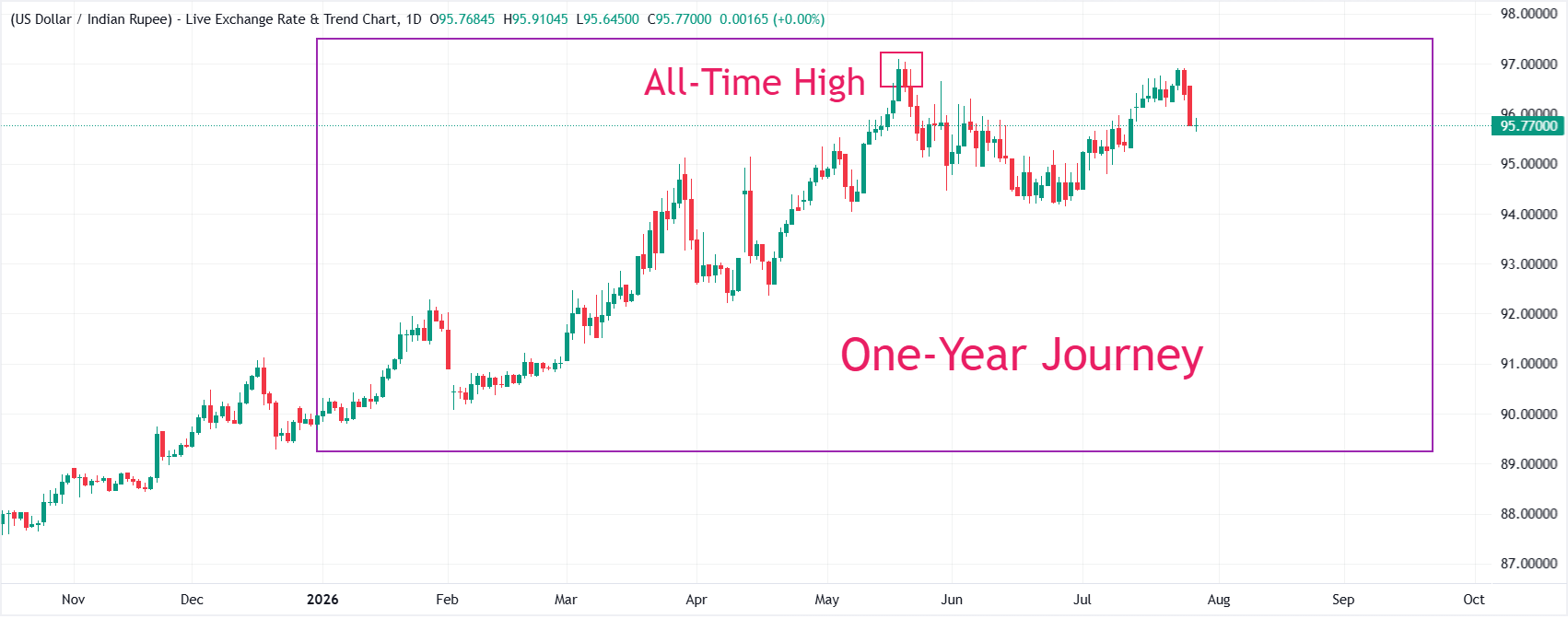
The Indian Rupee has fallen over 7% against the US Dollar (USD) year-to-date, trading above 96.00, very close to its all-time low of around 97.10 posted on May 20. There was a clear underperformance by a majority of risky currencies against the US Dollar in the first half of 2026, but the Indian Rupee’s sharp depreciation was among the most severe in Asia overall.
The great Rupee fallout: Mideast crisis lifts Oil prices
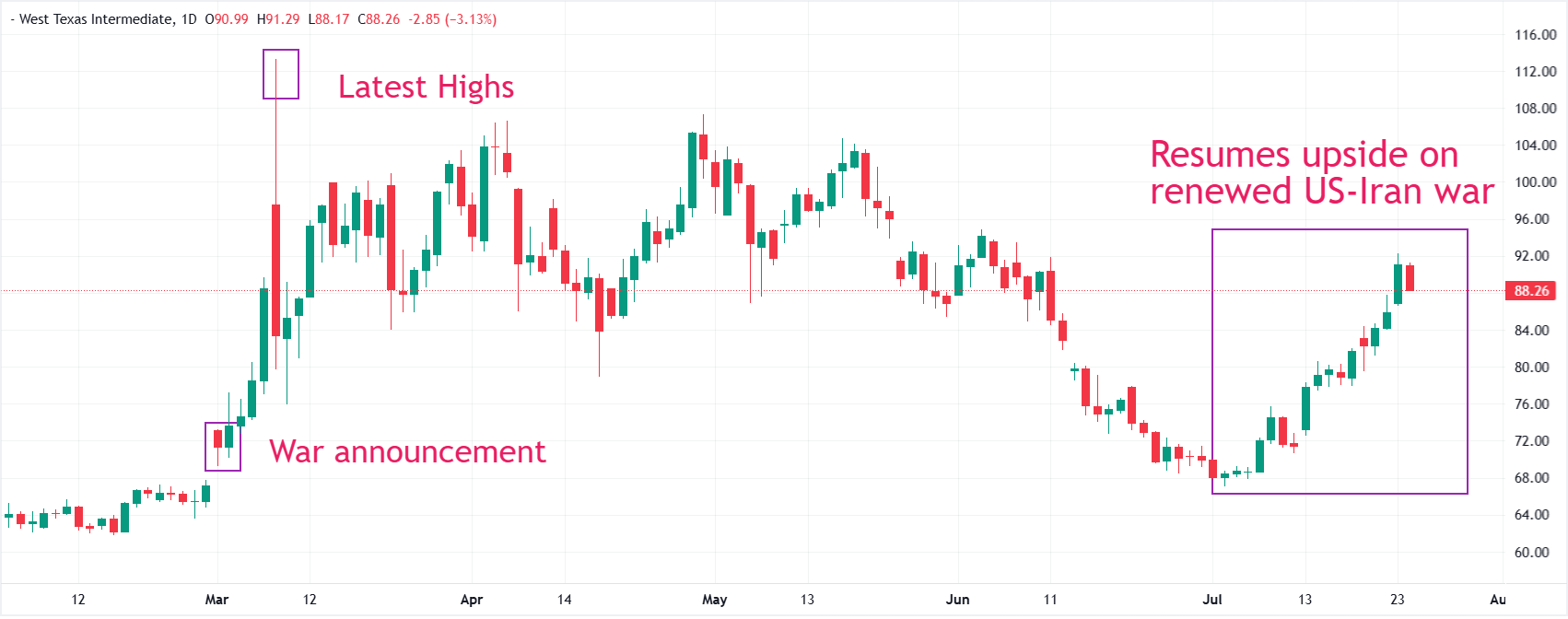
Oil prices rallied significantly in the first half of the year as the energy supply from the Middle East was significantly squeezed due to the closure of the Strait of Hormuz amid the war between the US and Iran. This led to the WTI Oil price surging over 70% in less than two weeks to near $113.30 since the official war confirmation.
The bloodshed in the Middle East halted after both nations reached a ceasefire, which pushed Oil prices back to square one. However, it didn’t last long, and there was a resurgence in Oil prices, which is still largely intact.
Elevated Oil prices have boosted India’s import bill significantly, leading to strong demand for US Dollars by importers. According to data from Mint, India's crude oil import bill surged 60% to $49.8 billion in the first quarter of fiscal year 2027.
India meets 85% of its energy requirements through imports. Because India imports almost all of its crude Oil, expensive energy forces the country to spend heavily on foreign exchange, which drives down the value of the local currency.
US-India trade uncertainty weighed
The year started with fears of prolonged trade tensions between the US and India, as Indian exports to Washington were facing 50% tariffs, which included a 25% levy for buying Oil from Russia. The tariff percentage from Washington on New Delhi was the highest among its trading partners, diminishing the competitiveness of Indian-manufactured goods in the global market.
US President Donald Trump criticized India several times for buying Russian energy products, alleging that it supported Moscow in the war with Ukraine.
However, US President Trump confirmed a bilateral trade pact with India on February 2, in which Washington slashed tariffs on imports from New Delhi to 18% from 50%. In exchange, the Indian economy agreed to reduce tariffs on imports from Washington to zero and committed to buying several American products including energy, agriculture, coal, and technology, worth $500 billion.
FII’s selling pressure in India stock market remained high
Sustained selling pressure in FY2025 in the Indian stock market due to the introduction of US tariff policy, higher Oil prices and the huge demand for global Artificial Intelligence (AI)-related stocks is seen continuing in FY2026 too.
Growth in equity markets in economies such as Taiwan and South Korea, being key producers of semiconductors and sophisticated memory chips, respectively, and especially strong demand for US technology stocks, dampened the appeal of the Indian equity market, calling it an AI laggard.
Indian Information Technology (IT) services stocks turned out to be the major victim of the AI trade, with markets projecting weaker revenue growth.
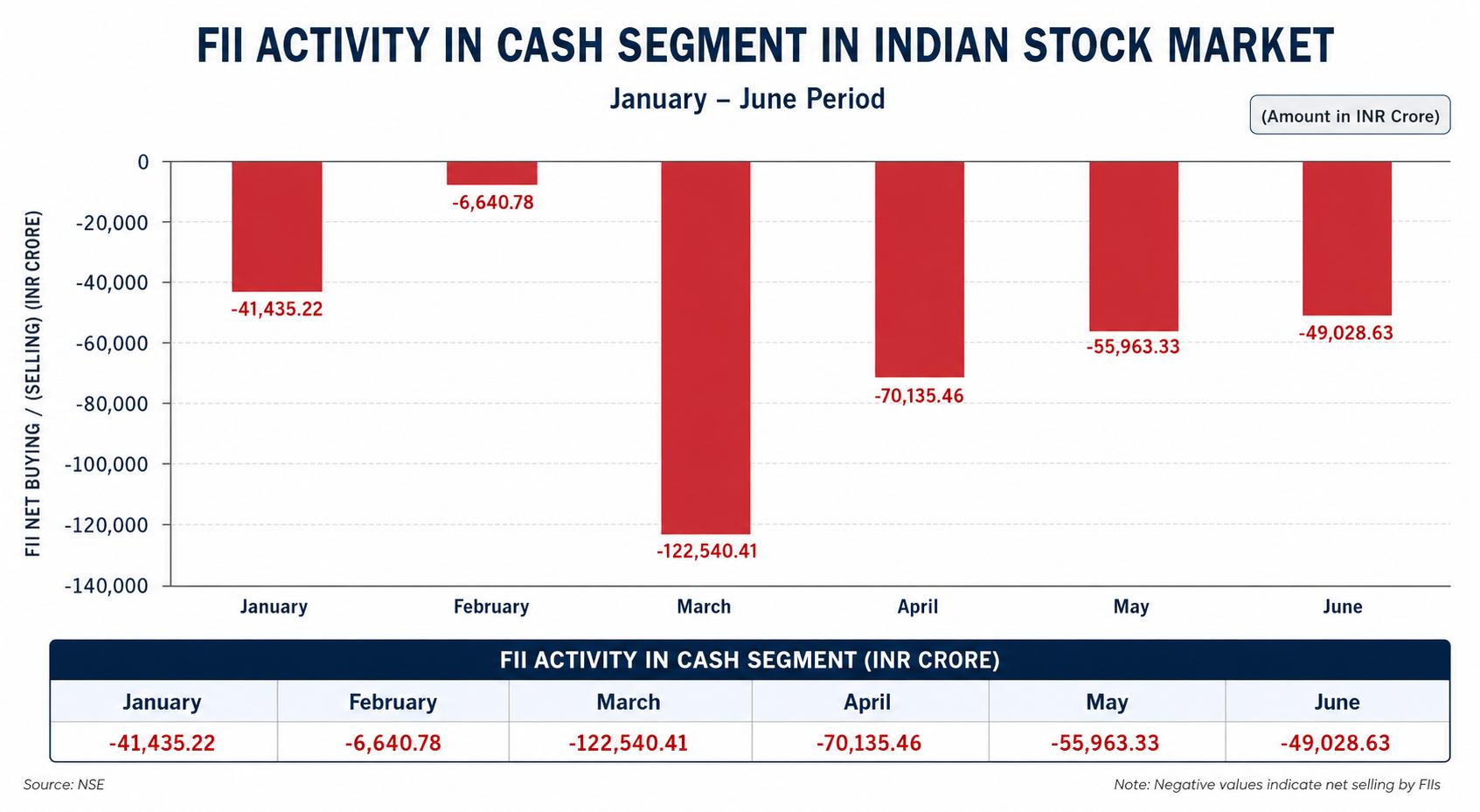
According to data from Moneycontrol, Foreign Institutional Investors (FIIs) remained net sellers in the cash market segment in all the first six months of 2026, offloading their stake worth Rs. 3.46 lakh crore ($36.4 billion). The highest selling was seen in March due to the onset of the Middle East war.
Initiatives taken to support Rupee
It would be unfair not to mention that the Indian government took a number of steps to support the domestic currency, such as an increase in import duty on precious metals or direct appeals to households to reduce energy usage.
The Reserve Bank of India (RBI) also intervened several times against the excessive depreciation of the INR in spot and non-deliverable forwards (NDF) markets. The RBI also introduced the Foreign Currency Non-Resident (FCNR) deposits in its June monetary policy announcement to boost foreign inflows.
But what are FCNR deposits and how much have they attracted foreign funds since their inception?
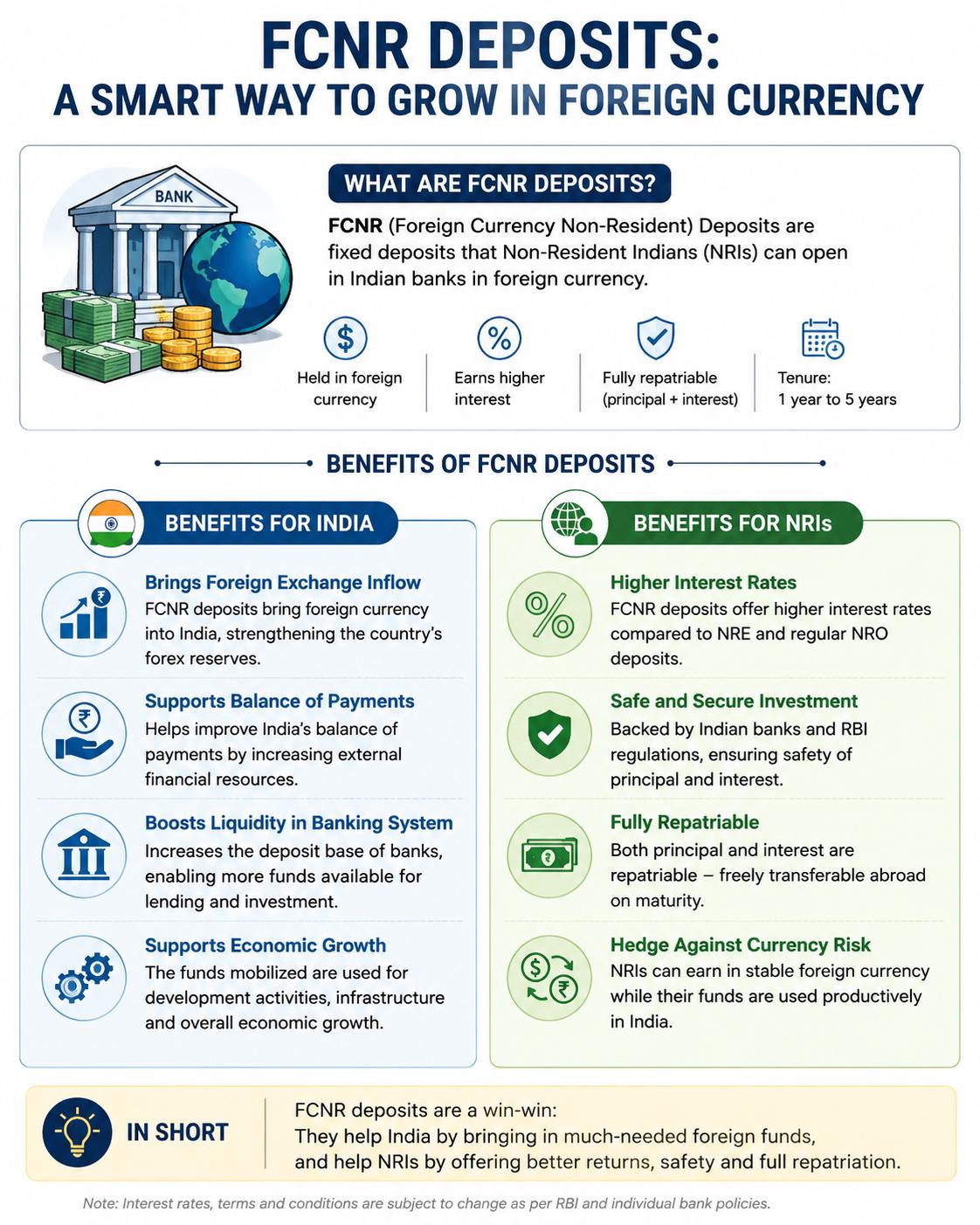
FCNR is a fixed deposit account that is specifically designed to provide non-residents (so-called NRIs) an option to keep their money in the foreign currencies of their choice in Indian banks and earn higher returns.
According to data from Moneycontrol.com, a whopping inflow of $17.4 billion in foreign currency is recorded through these deposits from non-residents in the June 8-July 17 period.
It appears that the high-interest rate environment in India has encouraged non-residents to deposit their savings in Indian banks through the scheme, without worrying about currency volatility. Still, it remains to be seen if the measure will outweigh the outflows seen in the local stock market.
Challenges and the way forward
If someone thinks the worst for the Indian Rupee is over, think again. Though latest comments from India and US officials indicate that both nations will sign the trade deal soon, issues such as the AI trade and elevated Oil prices are likely to be long-lasting.
According to a senior US official, the long-awaited US-India trade agreement could be signed within the next three to four months, Reuters reports on July 22. The US official added that negotiations between the two sides have been virtually completed. But the deal signing would hardly do anything good to the Indian Rupee as its impact was already discounted in February, when Trump slashed the levies.
Demand for AI-related stocks will likely extend further
Current situation: the appeal of South Korean equity markets is expected to strengthen further as its two giants, Samsung and SK Hynix, are expected to receive big orders for high-bandwidth memory (HBM) chips, following the announcement of a juggernaut AI spending plans by Alphabet, the parent company of Google, and other big-tech names.
Amidst ongoing US Q2 earnings season, Alphabet announced that it will spend $15 billion more in 2026 even after burning $5.9 billion in the second quarter, money.usnews reported.
Consequence: surging order book for sophisticated chip companies would encourage foreign investment, a scenario that is likely to keep Indian stock markets under pressure.
Oil prices boil again on renewed US-Iran war
Current situation: the WTI Oil price is flirting again with levels seen previously during the war as renewed hostilities between the US and Iran and the closure of the Bab el-Mandeb Strait, along with the Strait of Hormuz, have disrupted 27% of global energy supply. The odds are high that Oil prices will extend the rally amid no signs of a diplomatic breakthrough.
Consequence: Indian government’s efforts to reduce a surging import bill due to rising Oil prices would mean less spending on infrastructure and job creation, which could derail the country’s strong long-term growth story. Higher Oil prices would continue to strain India’s forex reserves and force the administration to find ways to slow down their depletion.
Higher Fed rates are also a key risk for the Indian Rupee
Current situation: it is evident that higher Oil prices have de-anchored US inflation expectations, and the Federal Reserve (Fed) will likely need to tighten monetary conditions at any point in time this year. The CME FedWatch tool shows that traders have almost priced in at least one interest rate hike by the end of the year.
Consequence: Higher Fed interest rates will be favorable for the US Dollar, which will technically bode poorly for the Indian Rupee.
My take
My base case scenario remains bearish on the Indian Rupee. However, the pace of decline will likely be slower than what we have seen so far this year.
The bearish bias is based on the assumption that Oil prices will likely stay high, even if the US and Iran reach a complete ceasefire. The energy supply shock is expected to stay, as the damage to Middle East energy infrastructure amid the exchange of attacks won’t get repaired overnight.
Analysts at KPMG have also warned that the "damage to gas infrastructure and delayed production mean the price impact could linger for months, even if headline risks fade."
Even a spokesperson for Iran's government has announced that Iran lost around 230 million cubic meters of its gas production capacity because of the war with the US.
Additionally, the AI theme that forced global investors to leave India’s equity market and divert their savings into South Korea, Taiwan and the US technology stocks has a long tail. It is expected to be a multi-decadal theme, with scope to widen across almost every industry, and it has not yet tightened its grip on its first prey, IT services. And, the Indian economy is known to be AI-lagged as the revenue of its technology companies relies heavily on IT services.
Despite the broad projection of a downtrend for the Rupee, investors should be prepared for some upside hiccups in the second half, as the peace announcement between the US and Iran and value-buying opportunities in the Indian stock market could result in temporary relief for the Indian currency.
Indian Rupee FAQs
The Indian Rupee (INR) is one of the most sensitive currencies to external factors. The price of Crude Oil (the country is highly dependent on imported Oil), the value of the US Dollar – most trade is conducted in USD – and the level of foreign investment, are all influential. Direct intervention by the Reserve Bank of India (RBI) in FX markets to keep the exchange rate stable, as well as the level of interest rates set by the RBI, are further major influencing factors on the Rupee.
The Reserve Bank of India (RBI) actively intervenes in forex markets to maintain a stable exchange rate, to help facilitate trade. In addition, the RBI tries to maintain the inflation rate at its 4% target by adjusting interest rates. Higher interest rates usually strengthen the Rupee. This is due to the role of the ‘carry trade’ in which investors borrow in countries with lower interest rates so as to place their money in countries’ offering relatively higher interest rates and profit from the difference.
Macroeconomic factors that influence the value of the Rupee include inflation, interest rates, the economic growth rate (GDP), the balance of trade, and inflows from foreign investment. A higher growth rate can lead to more overseas investment, pushing up demand for the Rupee. A less negative balance of trade will eventually lead to a stronger Rupee. Higher interest rates, especially real rates (interest rates less inflation) are also positive for the Rupee. A risk-on environment can lead to greater inflows of Foreign Direct and Indirect Investment (FDI and FII), which also benefit the Rupee.
Higher inflation, particularly, if it is comparatively higher than India’s peers, is generally negative for the currency as it reflects devaluation through oversupply. Inflation also increases the cost of exports, leading to more Rupees being sold to purchase foreign imports, which is Rupee-negative. At the same time, higher inflation usually leads to the Reserve Bank of India (RBI) raising interest rates and this can be positive for the Rupee, due to increased demand from international investors. The opposite effect is true of lower inflation.
Author

Sagar Dua
FXStreet
Sagar Dua is associated with the financial markets from his college days. Along with pursuing post-graduation in Commerce in 2014, he started his markets training with chart analysis.