Import Prices Decline Year-Over-Year, Export Prices Slightly Positive


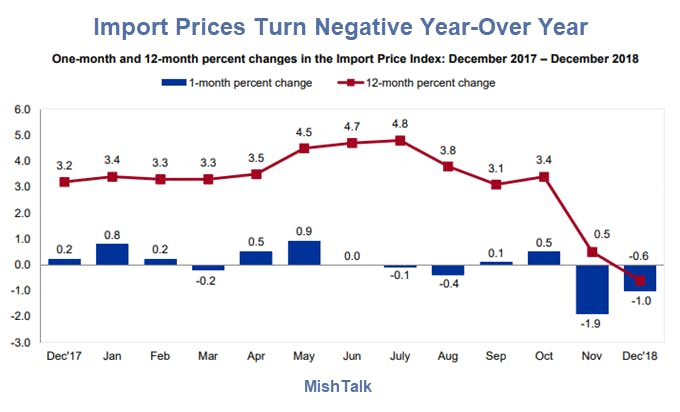
In the wake of the declining price of oil, import and export prices are on a downward slope.
Prices for U.S. imports decreased 1.0 percent in December, the Bureau of Labor Statistics reported today, after a 1.9-percent fall the previous month. Lower fuel prices drove the decline in December, and nonfuel prices recorded no change. U.S. export prices fell 0.6 percent in December following a 0.8-percent drop in November.
Imports
U.S. import prices declined 1.0 percent in December, after decreasing 1.9 percent in November and rising 0.5 percent in October. The November drop was the largest monthly decline since the index fell 3.2 percent in January 2015. Prices for imports decreased 0.6 percent in 2018 following a 3.2-percent increase the previous year. The decline in 2018 was the first calendar-year drop since import prices fell 8.3 percent in 2015.
Fuel Imports: Prices for import fuel declined 9.2 percent in December, after a 13.3-percent drop the previous month. The December decrease was driven by an 11.6-percent decline in petroleum prices which more than offset a 30.3-percent advance in natural gas prices. Import fuel prices fell 10.4 percent in 2018 following a 21.8-percent increase the previous year. The 2018 decline is the first calendar-year decrease since 2015, when import fuel prices fell 41.0 percent. In 2018, a 14.0-percent drop in petroleum prices more than offset a 67.6-percent increase in prices for natural gas.
All Imports Excluding Fuel: Prices for nonfuel imports recorded no change in December, after declining 0.3 percent in November. Higher prices for consumer goods; automotive vehicles; and foods, feeds, and beverages offset price declines for capital goods and nonfuel industrial supplies and materials. Nonfuel import prices advanced 0.5 percent in 2018 following a 1.3-percent rise in 2017. The price index for nonfuel imports has not recorded a calendar-year decline since a 3.4-percent drop in 2015. In 2018, higher prices for nonfuel industrial supplies and materials; consumer goods; and automotive vehicles drove the increase in nonfuel import prices.
Export Prices
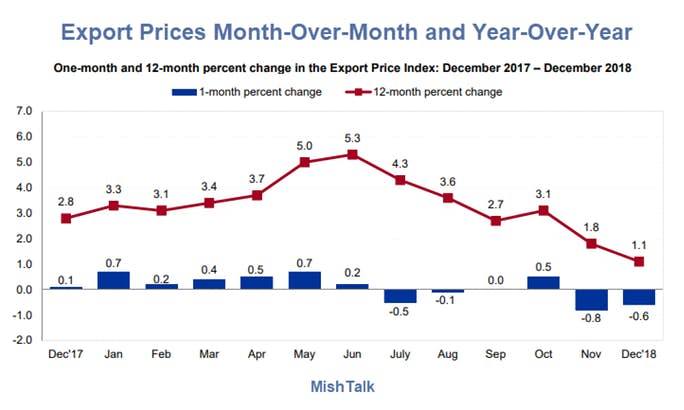
U.S. export prices fell 0.6 percent in December following a 0.8-percent decrease in November. Nonagricultural prices declined in December, more than offsetting higher prices for agricultural goods. Despite the December downturn, U.S. export prices increased 1.1 percent in 2018. The price index for U.S. exports has not recorded a calendar-year decrease since falling 6.6 percent in 2015.
Agricultural Exports: Prices for agricultural exports advanced 3.9 percent in December, the largest increase for the index since a 4.8-percent rise in August 2012. The December advance follows a 1.7-percent rise in November and a 0.1-percent drop in October. Price increases for soybeans and nuts contributed to the December advance, more than offsetting lower fruit prices. Agricultural export prices rose 2.5 percent in 2018, after increasing 1.9 percent in 2017. The 2018 increase was the largest calendar-year advance since the price index for agricultural exports rose 13.4 percent in 2012.
All Exports Excluding Agriculture: Prices for nonagricultural exports decreased 1.1 percent in December, after declining 1.0 percent in November and rising 0.5 percent in October. The December drop matched the decrease in December 2015; those were the largest monthly declines since the index fell 1.3 percent in August 2015. Lower prices for nonagricultural industrial supplies and materials led the December decrease, more than offsetting rising consumer goods and automotive vehicles prices. Despite the December decline, nonagricultural export prices advanced 1.0 percent in 2018.
Author
Mike “Mish” Shedlock's
Sitka Pacific Capital Management,Llc

















