Gold slides as rising Oil prices and Fed outlook weigh on sentiment

Gold (XAUUSD) remains under pressure as rising oil prices lift inflation expectations and shift focus toward a tighter policy outlook. Escalating tensions between the United States and Iran continue to support energy markets and add uncertainty. This backdrop is influencing sentiment and keeping gold under pressure. Attention is now on the Federal Reserve decision and signals from Jerome Powell, which will guide the next move.
Gold under pressure as Oil surge and Fed signals drive market direction
Gold is facing pressure as rising oil prices and geopolitical tensions weigh on sentiment. Price weakened as energy markets surged during escalating US–Iran tensions. The ongoing standoff increased uncertainty and supported oil prices. Higher energy costs raised inflation concerns and shifted expectations toward a tighter monetary stance.
At the same time, the decision by the United Arab Emirates to exit OPEC and OPEC+ added to bullish momentum in oil. This development raised concerns about potential supply disruptions. Rising oil prices kept inflation expectations elevated and increased the likelihood of a more cautious Federal Reserve stance. As a result, gold remained under pressure as markets adjusted to a more restrictive policy outlook.
Markets now focus on the Federal Reserve decision and the guidance from Jerome Powell. Expectations suggest that the Fed will hold rates steady in the 3.5% to 3.75% range. However, forward guidance remains critical. A data-dependent and cautious tone could ease the US Dollar and help gold move higher. Any hawkish signals from Jerome Powell could extend gold’s recent losses and shape the near-term direction.
Gold trades in expanding wedge as key resistance limits recovery
The gold chart below shows that price is trading within an ascending broadening wedge pattern. Price has respected both the rising support and expanding upper boundary over time. The structure shows rising volatility within the broader trend. After reaching a peak near the upper boundary, price reversed sharply and moved lower, signaling a shift in near-term momentum.
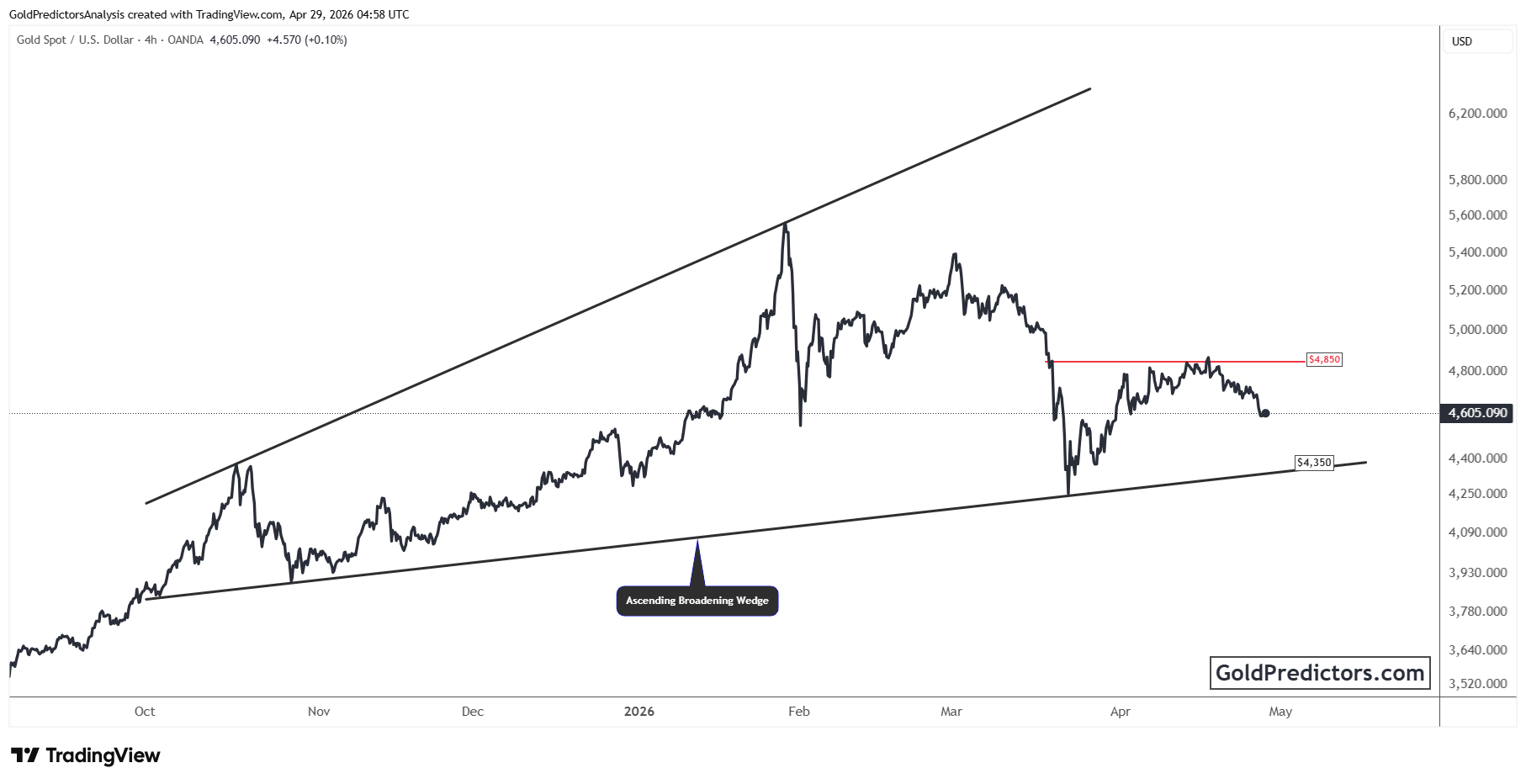
Following the decline, price found support near the lower trendline around the $4,300 area. This level acted as a key base and triggered a rebound. The bounce pushed price back into the structure, but momentum remained limited. Price failed to break above prior highs and moved into a consolidation range beneath resistance.
Currently, price is stabilizing below the $4,850 resistance level while holding above the rising support trendline. The inability to clear resistance continues to cap upside. At the same time, support is holding firm, limiting deeper downside. A decisive move beyond either level will likely define the next directional move.
Gold outlook: Fed signals and Oil prices to drive next move
Gold continues to face pressure as stronger oil prices and geopolitical tensions maintain inflation concerns and support a cautious policy stance. Markets now look to the Federal Reserve and signals from Jerome Powell for direction. Price is stabilizing within a defined range after the recent drop. Resistance near $4,850 continues to cap upside, while support around $4,350 is holding firm. A break above resistance could open the way for recovery, while a move below support may extend losses. The next move will depend on Fed guidance, Dollar direction, and developments in global tensions.
Unlock exclusive gold and silver trading signals and updates that most investors don’t see. Join our free newsletter now!
Author

Muhammad Umair, PhD
Gold Predictors
Muhammad Umair is a financial markets analyst and investor who focuses on the forex and precious metals markets.