Gold shows remarkable resilience

Everyone is talking about a cycle of Fed interest rate hikes, higher inflation for longer, and precious metals losing appeal. But it is nowhere near true. Gold is showing remarkable resilience, even as Treasury bond yields near twenty-year highs and everyone says the Fed’s quantitative tightening cycle has just started.
The Fed’s rate hikes
First, interest rate hikes and a quantitative tightening (QT) program are not the same. Although quantitative tightening, the Fed’s bond-selling, often goes hand in hand with interest rate hikes, it is still not always the case. I will explain what is happening now later in this article. The Fed increased the target range for the federal funds rate by 25bps to 3.75%-4.00% in September 2026 as expected, thus marking the first rate increase since 2023. During the meeting, the US central bankers said that inflation was high. So, more monetary tightening is necessary. According to recent projections, 16 of 18 FOMC members think that there would be at least one more 25bps rate increase later this year. Four members, however, accept the possibility of two additional rate hikes.
So far, since 2024, there has been only one rate hike, which took place in September.
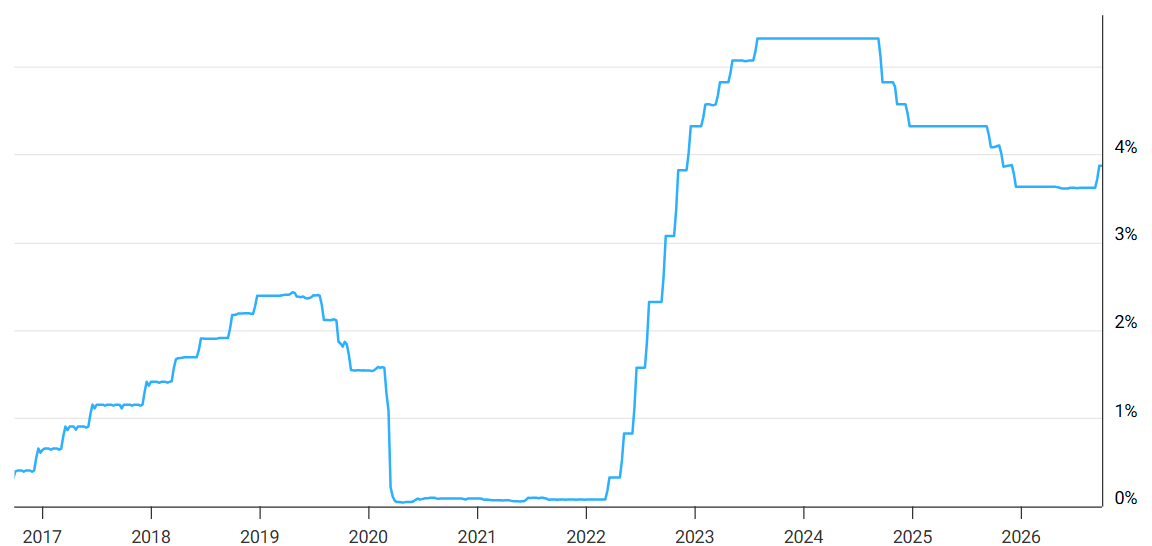
When further rate hikes are anticipated, bond yields rise to the highest level, the USD strengthens, while precious metals depreciate. However, there is no quantitative tightening program yet.
Quantitative tightening or… quantitative easing?
In my previous article published on 30 August, I wrote that the Fed was forced to intervene merely to decrease the Treasury bond yields that reached multi-decade highs. In order to achieve that, the Fed was forced to buy bonds, thus releasing additional liquidity to the market. This traditionally happens as part of monetary easing, which is not officially there right now. Rather, the opposite is claimed. As I have mentioned above, most policymakers, analysts, and market participants are expecting more rate hikes due to high inflation readings, caused by higher oil prices. Yet, high bond yields are dangerous to the US economy. The US government has a very high debt load that it obviously has to service. Higher interest rates and, most importantly, higher bond yields, mean higher servicing costs and therefore higher deficits for the US fiscal budget, which is in no one’s best interests.
US 10-year Treasury yields
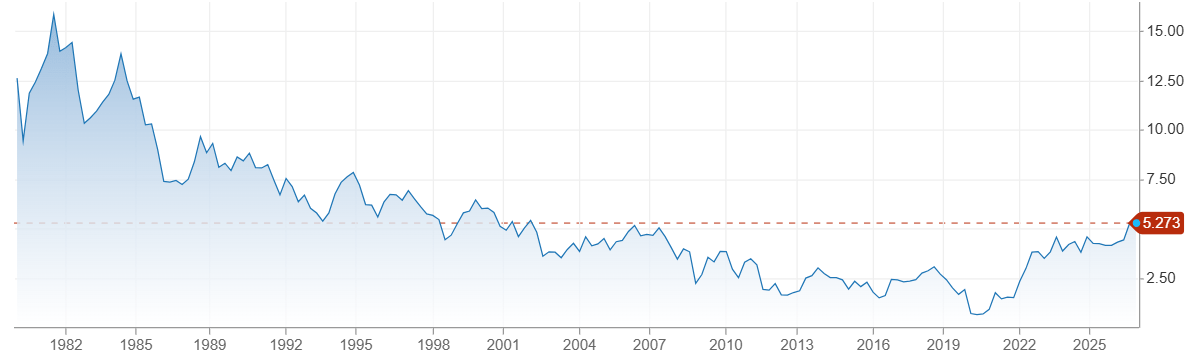
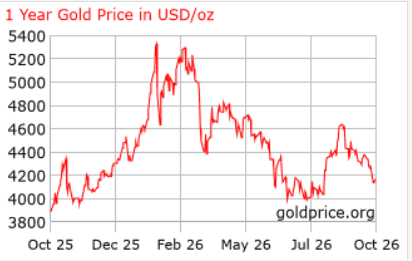
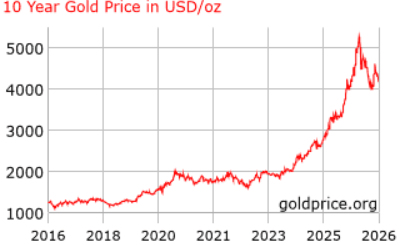
At the same time, gold prices are still above the $ 4,000-an-ounce mark despite the real yields standing at 2.24%. Neither the strong dollar nor the high yields nor the rate hikes expected substantially decrease gold prices. US 10-year Treasuries’ real yields are near 20-year highs, and they increase holding costs for non-yielding gold bullion. In other words, holding gold that does not generate any income might seem like an opportunity cost to investors, given the high-yielding Treasury bonds. Even though the yearly gold history graph below shows that gold is now trading substantially below its peak of $5,589.38 an ounce reached on 28 January 2026, in the context of gold prices’ ten-year history, the 6-month correction seems to be very moderate.
This can be seen from the diagram below.
So, why is gold not falling as much as it could? Here are several reasons:
Central bankers actively buy Gold
For several years in a row, central banks’ purchases have exceeded their gold sales.
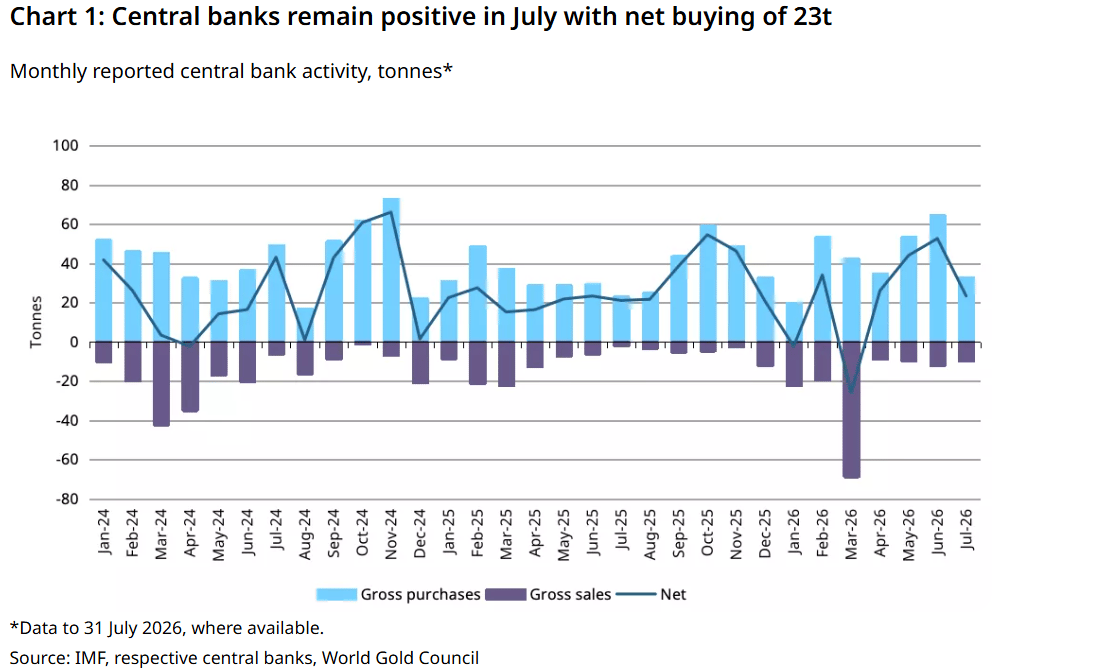
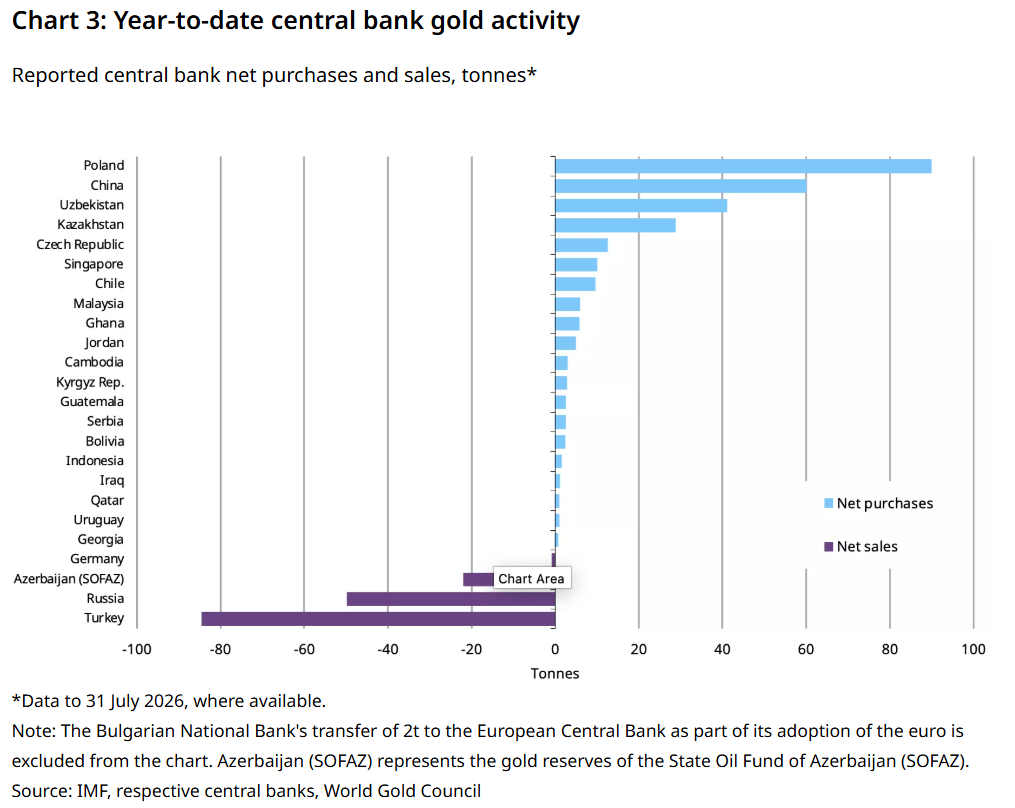
Among the countries that have recently been actively buying gold are Poland and China.
Also, as I have mentioned in my previous publications, gold is a hedge against geopolitical uncertainty. Many countries, especially BRICS+ members, have been diversifying away from the US dollar. And gold is a universal hedge because it cannot be weaponized, unlike fiat currencies and government bonds, and it is a monetary metal and does not get devalued due to inflation.
But the most obvious upside factor, in my view, is that eventually the Fed’s tightening would cause a recession and excessive money printing thereafter. This would obviously be an important growth factor for gold and other precious metals.
Downside risks
The only valid short-term risk factor I see is that of a recession. When there is an economic downturn or acute corporate credit stress, often caused by excessive central bankers’ tightening, the US dollar surges. This is due to many asset positions being liquidated. For example, this happened at the beginning of the Covid-19 pandemic or the 2008-2009 crisis. However, this process tends to be only short-term. In the long run, the Fed and other central bankers ease their monetary policies, which is bullish for gold.
Author

Anna Sokolidou
Independent Analyst
A research analyst, a freelance finance writer and an economics teacher looking for interesting investment opportunities. I have been investing for years. I am mostly interested in writing about commodities, precious metals and large corporations.