Gold Price Forecast: XAU/USD looks to the Trump-Xi meeting amid Indian curbs on bullion imports
- Gold holds its retreat from three-week highs, struggling around $4,700 early Wednesday.
- The US Dollar hangs near weekly highs on hotter US inflation, ahead of the Trump-Xi meeting.
- Gold bulls consolidate after the falling wedge breakout; a daily close above the $4,775 confluence resistance is critical.
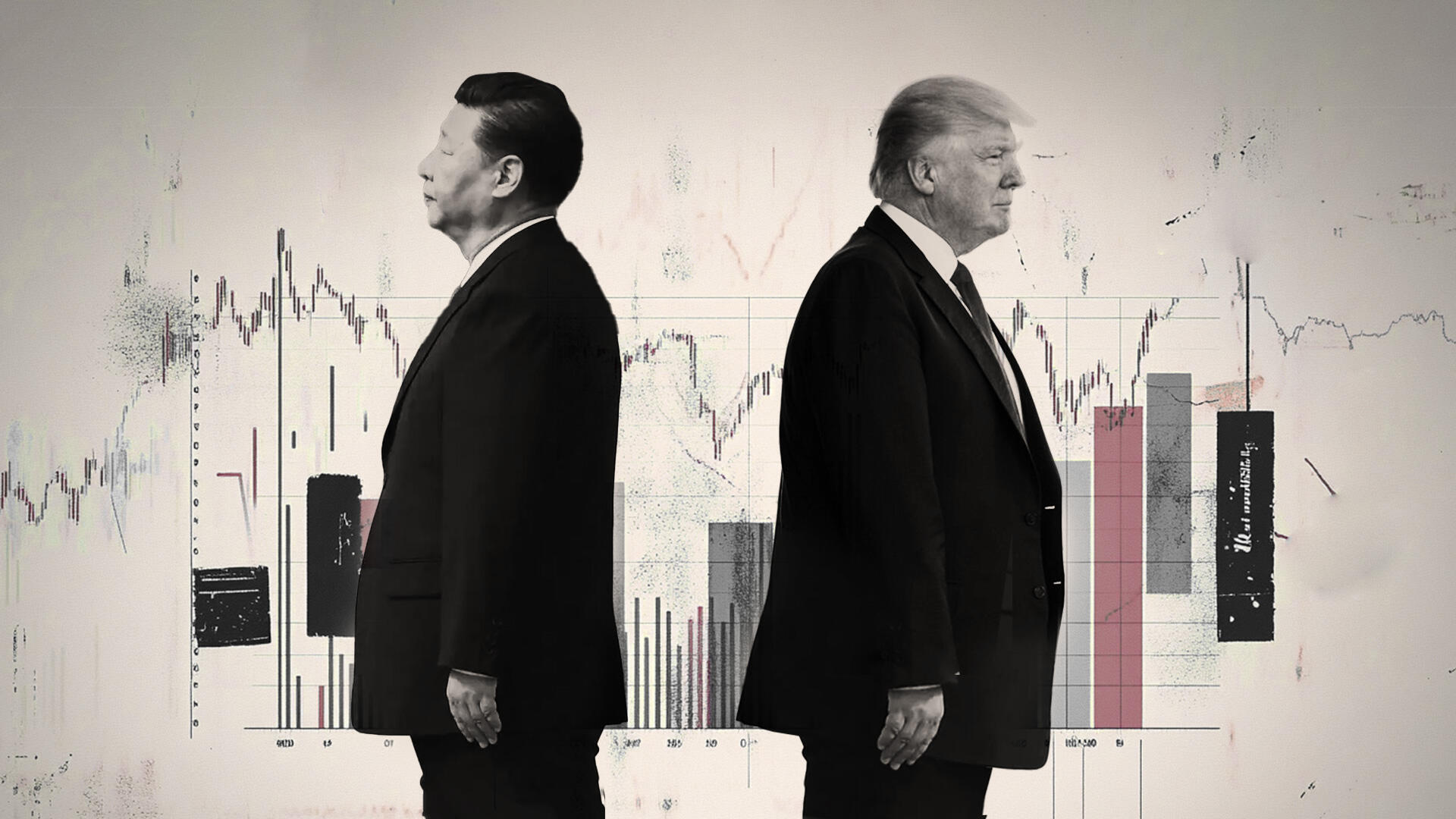
Gold is looking to extend the previous pullback from three-week highs of $4,774 in Wednesday’s Asian trades, as markets lean toward profit-taking ahead of the highly anticipated meeting between US President Donald Trump and his Chinese counterpart Xi Jinping.
Gold is down, still not out
The recent retreat in Gold has been led by a resurgent haven demand for the US Dollar (USD) alongside higher US Treasury bond yields amid hot inflation-led growing Federal Reserve (Fed) interest rate hike bets.
The Greenback consolidates its upswing, underpinned by hotter-than-expected US consumer inflation data, while capitalizing on fading hopes for a US-Iran peace deal.
“The US Consumer Price Index (CPI) rose 3.8% in the 12 months through April, the biggest year-on-year increase since May 2023, as the oil shock triggered by the war with Iran pushed prices higher,” per Reuters.
Gold has also received a blow from one of its world’s biggest importers, India. Prime Minister Narendra Modi urged citizens on Sunday to avoid buying Gold for a year to help protect foreign exchange reserves.
Furthermore, the government announced on Wednesday that it raised import tariffs on gold and silver to 15% from 6% to ease the pressure on the country’s foreign exchange reserves.
Additionally, Gold traders prefer to switch to the sidelines ahead of the Trump-Xi meeting, scheduled for later this week, especially after US President Donald Trump stated that trade will be the priority in the Summit with Xi, not Iran.
On the economic calendar front, the US Producer Price Index (PPI) data could also offer some trading incentives later in the North American session.
Gold price technical analysis: Daily chart
In the daily chart, XAU/USD trades at $4,692.51, maintaining a mildly bearish near-term tone as it hovers just above the 21-day simple moving average (SMA) at roughly $4,688 while remaining capped below the 50-day SMA near $4,749. This positioning keeps spot gold lodged beneath a layer of clustered medium-term resistance, with the longer-term 100-day SMA around $4,788 reinforcing the overhead supply zone, while the 14-day Relative Strength Index (RSI) holding close to the neutral 50 mark suggests only modest directional conviction for now.
On the topside, immediate resistance is seen at the 50-day SMA near $4,749, followed by the 100-day SMA around $4,788 and the broader downward resistance trend line that continues to weigh on rallies. On the downside, initial support is provided by the 21-day SMA just below the market near $4,689, with more substantive backing not emerging until the 200-day SMA down in the $4,335 region, where longer-term buyers could look to reassert control if the current consolidation breaks lower.
(The technical analysis of this story was written with the help of an AI tool.)
Gold FAQs
Gold has played a key role in human’s history as it has been widely used as a store of value and medium of exchange. Currently, apart from its shine and usage for jewelry, the precious metal is widely seen as a safe-haven asset, meaning that it is considered a good investment during turbulent times. Gold is also widely seen as a hedge against inflation and against depreciating currencies as it doesn’t rely on any specific issuer or government.
Central banks are the biggest Gold holders. In their aim to support their currencies in turbulent times, central banks tend to diversify their reserves and buy Gold to improve the perceived strength of the economy and the currency. High Gold reserves can be a source of trust for a country’s solvency. Central banks added 1,136 tonnes of Gold worth around $70 billion to their reserves in 2022, according to data from the World Gold Council. This is the highest yearly purchase since records began. Central banks from emerging economies such as China, India and Turkey are quickly increasing their Gold reserves.
Gold has an inverse correlation with the US Dollar and US Treasuries, which are both major reserve and safe-haven assets. When the Dollar depreciates, Gold tends to rise, enabling investors and central banks to diversify their assets in turbulent times. Gold is also inversely correlated with risk assets. A rally in the stock market tends to weaken Gold price, while sell-offs in riskier markets tend to favor the precious metal.
The price can move due to a wide range of factors. Geopolitical instability or fears of a deep recession can quickly make Gold price escalate due to its safe-haven status. As a yield-less asset, Gold tends to rise with lower interest rates, while higher cost of money usually weighs down on the yellow metal. Still, most moves depend on how the US Dollar (USD) behaves as the asset is priced in dollars (XAU/USD). A strong Dollar tends to keep the price of Gold controlled, whereas a weaker Dollar is likely to push Gold prices up.
Author

Dhwani Mehta
FXStreet
Residing in Mumbai (India), Dhwani is a Senior Analyst and Manager of the Asian session at FXStreet. She has over 10 years of experience in analyzing and covering the global financial markets, with specialization in Forex and commodities markets.
















