Gold just had its best day since August
Gold (XAU/USD) extends its recovery on Thursday, after recording its strongest daily performance since August on Wednesday. The precious metal surged 3.64% on Wednesday, reclaiming the psychological $4,000 level following a sweeping Democratic victory in the United States (US) midterm elections.
The rebound marks a significant change in momentum after months of selling pressure. Gold lost nearly 7% in October and recently touched $3,870, its lowest level in more than a year. However, the latest rally raises an important question: Is the precious metal finally recovering, or is this another temporary rebound within a broader bearish trend?
Why the US elections triggered Gold's biggest rally in months
The Democratic Party's victory in both chambers of the US Congress has fundamentally changed investors' expectations for US President Donald Trump's economic agenda. With Democrats controlling the House of Representatives and the Senate, the administration faces greater obstacles to implementing additional tax cuts, fiscal stimulus and spending initiatives.
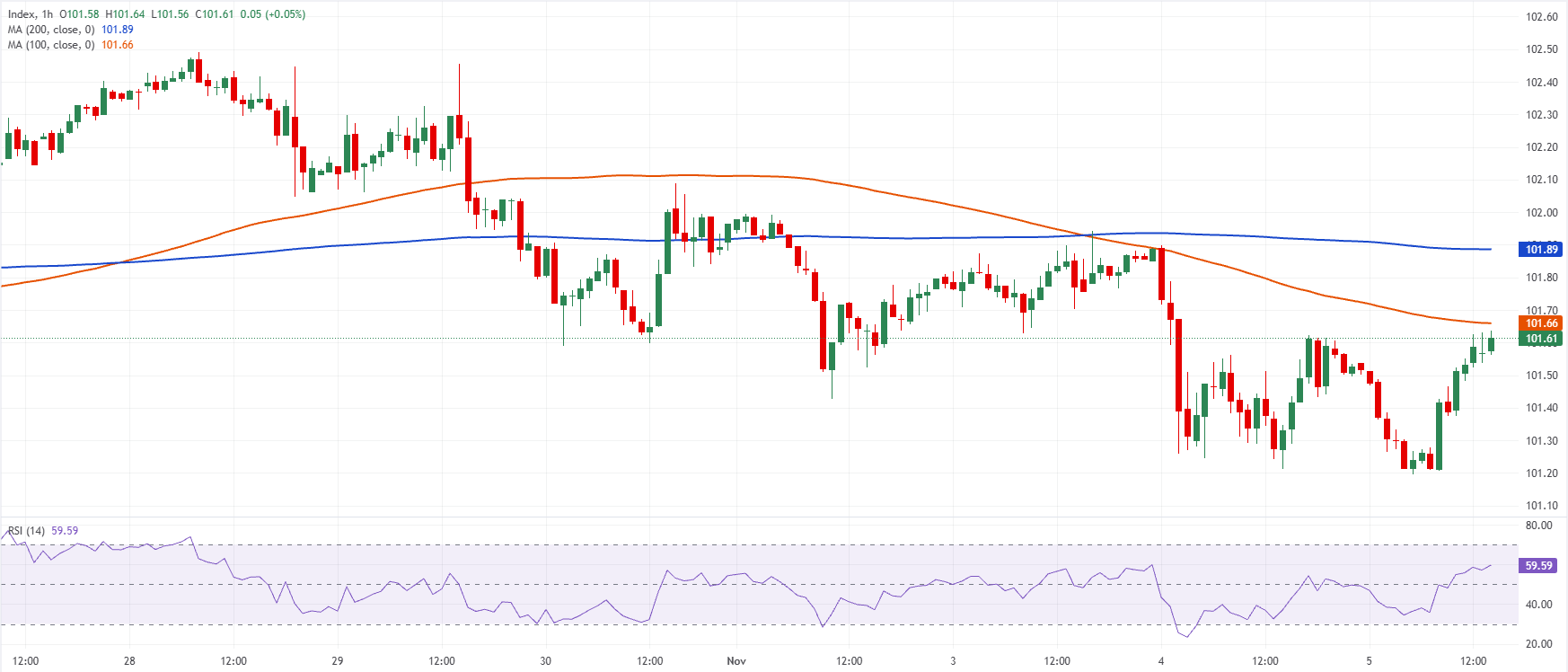
Investors anticipate that legislative gridlock could limit government borrowing and reduce inflationary pressure. This prospect has triggered a decline in US Treasury yields and the US Dollar (USD), creating favorable conditions for Gold.
The US Dollar Index (DXY) fell to its lowest level in more than a month on Wednesday, while the benchmark 10-year Treasury yield declined toward 4.84% on Thursday, its lowest level in over six weeks.
Lower Treasury yields reduce the opportunity cost of holding non-yielding assets such as Gold, while a weaker US Dollar makes the precious metal more affordable for international investors.
ING strategists Warren Patterson and Ewa Manthey explain the market reaction: "Spot [G]old jumped more than 3% yesterday, climbing back above $4,000/oz following a Democratic sweep in the US mid-term elections. Expectations of legislative gridlock, lower Treasury yields and a weaker [D]ollar are supporting the move."
However, political gridlock is not necessarily entirely positive for Gold. Reduced fiscal expansion could also ease concerns about excessive government debt, potentially weakening one of the longer-term arguments supporting demand for the precious metal.
Falling Oil prices could become Gold's unexpected ally
Another important development is the sharp decline in Oil prices following signs of a potential diplomatic breakthrough in the Middle East. West Texas Intermediate (WTI) Oil plunged around 8% on Wednesday as investors reassessed the likelihood of further US military escalation against Iran following the Democratic election victory.
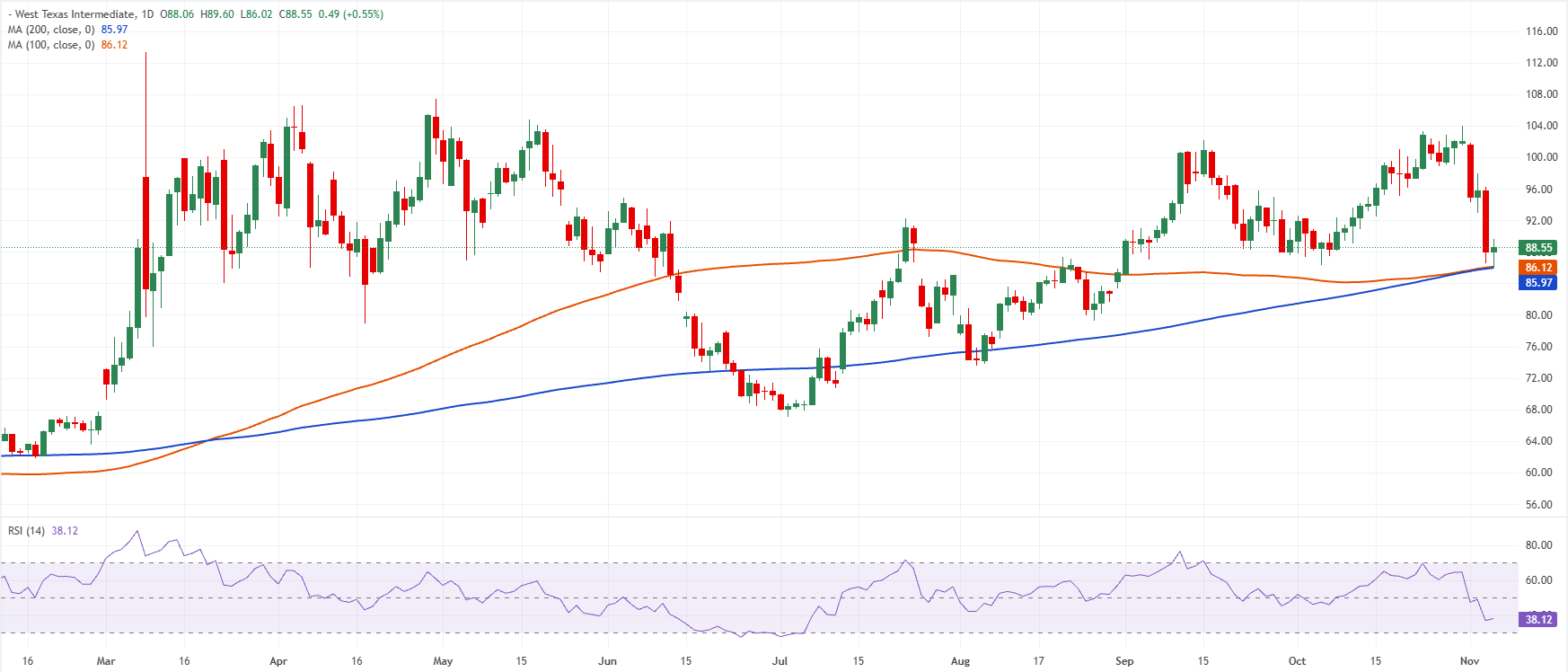
Lower energy prices could ease inflationary pressure that has intensified since the conflict began earlier this year. This creates an interesting situation for Gold. Although geopolitical de-escalation traditionally reduces demand for safe-haven assets, falling Oil prices could ultimately benefit the precious metal by reducing the need for restrictive monetary policy.
Citi Global Head of Commodities Research Max Layton highlights this possibility in a note: "Much lower [O]il prices could see the Fed shift from hiking to cutting rates, driving up investment demand for [G]old and re-igniting a momentum bull market globally underpinned by multiple structurally bullish dynamics."
Nevertheless, the Middle East conflict remains unresolved, and energy prices are still elevated compared with pre-war levels. A renewed escalation could quickly revive inflation concerns and complicate the outlook for Gold.
The Federal Reserve remains the biggest obstacle
Despite the impressive recovery, the Federal Reserve (Fed) remains a significant challenge for Gold bulls. According to the CME FedWatch Tool, investors assign about an 83% chance of another interest rate hike in December.
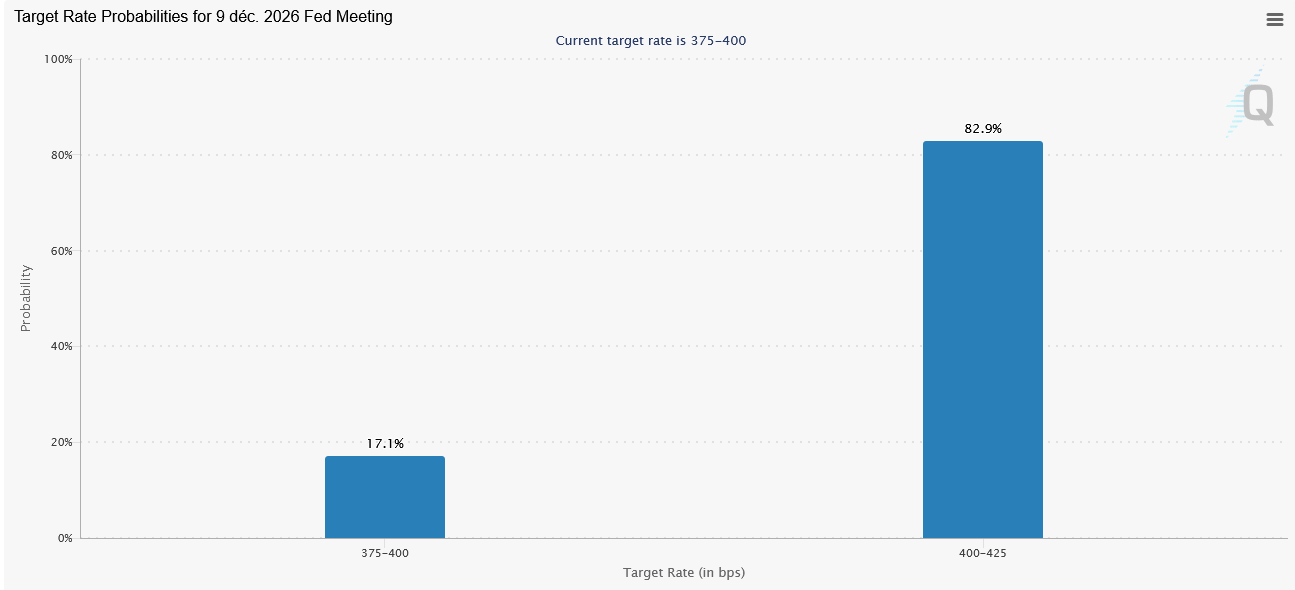
Persistent inflation, partly driven by the energy shock, has reinforced expectations that US borrowing costs will remain elevated for longer. Higher interest rates generally weigh on Gold by increasing the attractiveness of interest-bearing assets and supporting the US Dollar.
The next major catalyst arrives on Friday with the release of the October Nonfarm Payrolls (NFP) report. Economists expect 65K new jobs, following September's modest increase of 29K. A stronger-than-expected employment report could reinforce expectations of additional monetary tightening, potentially pushing Treasury yields and the US Dollar higher. Conversely, disappointing employment figures could challenge the Fed's hawkish outlook and provide further support for Gold.
Central banks provide a longer-term safety net
Beyond political developments and monetary policy, institutional demand remains an important factor supporting Gold's longer-term outlook. According to the World Gold Council (WGC), central banks purchased a net 321 tonnes of Gold during the third quarter, representing a 42% increase compared with the same period last year. Public sector purchases reached 675 tonnes during the first nine months of the year, highlighting continued efforts to diversify foreign exchange reserves.
Investment demand also remains resilient. Gold-backed Exchange-Traded Funds (ETFs) attracted approximately 211 tonnes of inflows during the third quarter, bringing global holdings to a record 4,256 tonnes.
These figures suggest that institutional investors continue to view Gold as a strategic asset despite the recent correction. However, sustained central bank purchases do not guarantee an immediate price recovery, particularly if monetary conditions remain restrictive.
Is Gold's recovery sustainable?
Gold's strongest daily advance since August represents an encouraging development for buyers, especially after the prolonged correction that pushed prices below $3,900. Nevertheless, a single exceptional day does not necessarily confirm a lasting reversal.
The recovery currently depends on three interconnected factors: continued weakness in the US Dollar, declining Treasury yields, and signs that inflationary pressure could moderate enough to change the Fed's monetary policy outlook.
Friday's employment report will provide the first major test of these conditions. If economic data encourage investors to reconsider expectations of further rate hikes, Gold could extend its recovery. Conversely, resilient employment and persistent inflation could revive selling pressure.
For now, the precious metal has regained momentum, but whether Wednesday's spectacular rebound marks the beginning of a sustainable recovery remains an open question.
Author

Ghiles Guezout
FXStreet
Ghiles Guezout is a Market Analyst with a strong background in stock market investments, trading, and cryptocurrencies. He combines fundamental and technical analysis skills to identify market opportunities.