Global bond market sell off haunts markets
- The UK’s debt servicing bill spirals.
- How to stabilise the bond market.
- Budget looms for Healey and Burnham.
- BOE set to keep rates on hold, yet Gilts get caught in the crossfire.
- Ceasefire in the Middle East could be the only way to calm bond markets.

Global sovereign bonds are selling off as we start a new month. The UK is, unsurprisingly, taking the biggest hit. Two and 10-year yields rose by 10 basis points at one point on Tuesday, and are currently higher by 7 and 8bps respectively.
The UK’s debt servicing bill spirals
UK 10-year yields are at their highest levels for nearly 20 years, while 30-year yields are at their highest level for nearly 30 years. This poses a major challenge for the chancellor ahead of next month’s budget. Every basis point increase in the cost of borrowing in the UK adds to debt servicing costs, which needs to be paid by the public purse. Since the Spring, the UK’s interest only bill has risen by up to £6bn by the end of this parliament. This is a large hole for the Chancellor to fill next month.
The UK is well used to pockets of Gilt market volatility, but today’s massive jump in yields, could sting for the Chancellor and the Prime Minister, who will face MPs at the commons later today. Increasingly, Labour backbenchers’ spending demands look unfeasible and unaffordable. Soon-to-be former MP Kier Starmer and Rachel Reeves could not push through relatively small spending cuts in recent years; unless Healey and Burnham can bite the bullet and slow down spending growth or make cuts, then UK borrowing costs will continue to rise.
How to stabilise the bond market
The global backdrop is not looking good for highly indebted countries. Japanese bonds were the first to sell off on Tuesday, and US Treasuries needed the US to provide a $1 trillion facility to stabilise yields.
So, what can the UK do? The BOE could slow down its bond sales further, however, there is a limit to how much the BOE can intervene, as any threat to the BOE’s independence could aggravate the Gilt market even more. Of greater importance for the bond market is the upcoming budget. If bond yields continue to rise then the chancellor will be forced to focus on spending cuts, not giveaways on October 28th. Even if Burnham funds spending by new tax hikes, this may not tame the bond market, since it will lead to more fears about the UK’s economic growth.
Budget looms for Healey and Burnham
The chancellor and the PM are in a tricky position as we lead up to the Budget. The bond market vigilantes are watching every move Burnham makes. The UK Gilt market will act as a mirror to how well they can execute this Budget when the UK has a debt load that is close to £3trillion, and a debt interest bill of £109bn a year.
Oil price dents bond market sentiment
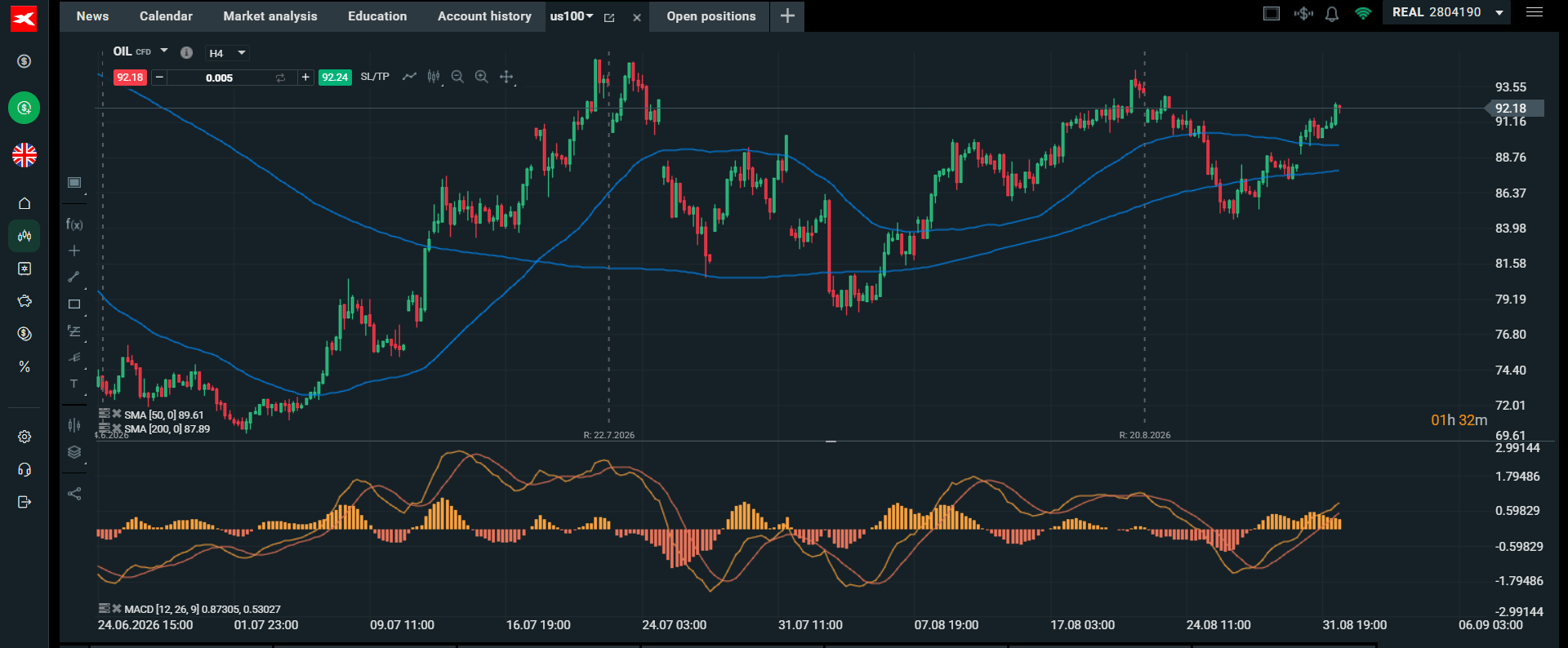
Rising oil prices are partly to blame for rising yields on Tuesday. The Brent crude oil price is up by nearly 2% again on Tuesday, and is trading above $92 per barrel. This is an increase of 6% in less than a week. Fears about inflation are leading to a repricing of interest rate risk. Rates are expected to rise in Japan and the Eurozone this month, with a 66% chance of a hike from the Federal Reserve after Warsh’s ‘hawkish’ Jackson Hole speech opened the door to near-term hikes.
BoE set to stay on hold, yet Gilts get caught in the crossfire
Ironically, although UK yields have underperformed peers on Tuesday, the BOE is not expected to hike interest rates this month, with only a 15% chance of a hike priced in, although this could rise as we lead up to the meeting on September 17th, especially if oil prices continue moving higher. However, this puts even more pressure on the government to make fiscal adjustments to ease pressure on Gilt yields.
Ceasefire in the Middle East could be the only way to calm bond markets
Today’s rout in sovereign bond markets is souring sentiment towards stocks. European markets are down sharply, including a 1.25% decline for the Dax. US indices are pointing to a lower open later today, and Nasdaq futures are currently predicting a 1.15% drop.
So far, the sell-off in UK Gilts is not spreading to other UK asset classes, the FTSE 100 is outperforming peers on Tuesday, and the pound remains above $1.35 vs. the USD, and is a mid-table performer in the G7 FX space.
It is worth noting that a ceasefire in the Middle East could reverse this move in oil prices and in bond markets, but until this happens it could be a choppy start to the month.
Chart 1: Brent crude Oil price
Author

Kathleen Brooks
XTB UK
Kathleen has nearly 15 years’ experience working with some of the leading retail trading and investment companies in the City of London.