|

GBP/USD outlook: Stronger than expected UK GDP numbers lift cable to four-month high

GBP/USD

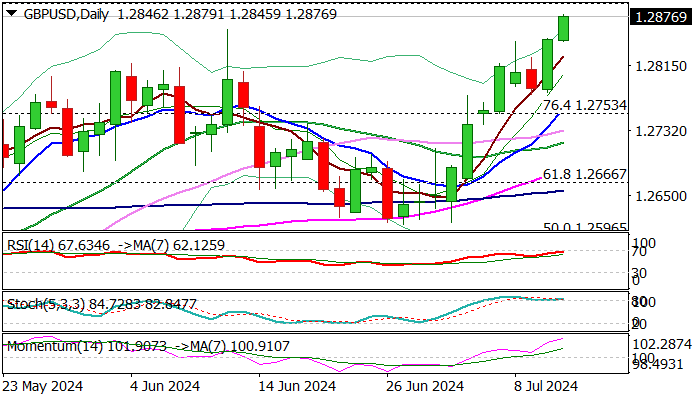
Cable hit new four-month high in European trading on Thursday, lifted by better than expected UK May GDP numbers, which poured cold water on expectations for BoE rate cut next month.

Fresh strength broke through pivotal barriers at 1.2846/60 (200WMA/former top June 12) and pressuring key barrier at 1.2893 (2024 high, posted on March 8).

Firmly bullish technical picture on daily chart (Tenkan/Kijun-sen forming a bull-cross and bullish momentum is strengthening) support the action, though headwinds on approach to 1.2893 could be expected, due to overbought conditions and significance of barrier.

Markets shift focus towards release of US June inflation report which is expected to provide fresh signals.

Weaker than expected US CPI numbers would further boost pound as further easing in consumer prices would bring the Fed one step closer to rate cut and subsequently deflate dollar.

Cable could accelerate through 1.2900 and probably challenge psychological 1.30 barrier, in case of stronger CPI downside miss.

Conversely, bulls may lose traction if US price pressures rise in June.

Session low (1.2845) offer initial support, followed by 1.2800/1.2780 (psychological / daily higher base and 1.2760/53 (rising 10DMA / broken Fibo 76.4% of 1.2893/1.2299).

Res: 1.2893; 1.2900; 1.2950; 1.3000.
Sup: 1.2845; 1.2800; 1.2780; 1.2753.
GBPUSD

Interested in GBP/USD technicals? Check out the key levels

    1. R3 1.2935
    2. R2 1.2892
    3. R1 1.287
  1. PP 1.2827
    1. S1 1.2805
    2. S2 1.2762
    3. S3 1.274

Author

Slobodan Drvenica

Slobodan Drvenica

Windsor Brokers

Industry veteran with over 22 years’ experience, Slobodan Drvenica joined Windsor Brokers in 1995 when he was an active trader for more than 10 years, managing the trading desk and own account departments.


More from Slobodan Drvenica
Share:

Editor's Picks

AUD/USD flirts with 0.7000, lowest since early August amid bullish USD

AUD/USD hits a fresh low since early August during the Asian session on Friday and looks vulnerable near 0.7000 after breaking below the 200-day SMA overnight. Against the backdrop of the hawkish Fed, a two-day rally in oil prices revives inflation fears and continues to push US bond yields to multi-year highs. Adding to this, geopolitical risks lift the US Dollar to a two-month high, overshadowing RBA rate hike bets and weighing on the pair.

USD/JPY pulls back from three-week high after failing near 159.00

USD/JPY edges lower during the Asian session on Friday, stalling its recent strong move to a three-week high of 159.00 as Japanese Yen bears turn cautious amid intervention fears. Meanwhile, the US Dollar retains a strong bullish undertone as the Fed's hawkish outlook and oil-driven inflation fears continue to push US bond yields to multi-year peaks. Furthermore, the BoJ's dovish rate hike last week might cap JPY and support spot prices.

Gold treads water below $4,300

Gold grabs some buying attention and advances marginally at the end of the week, partially retracing the weekly decline, although it is still navigating below the key $4,300 mark per troy ounce. The fresh selling bias on the Greenback and the modest decline in US Treasury yields appear to support the humble advance in the precious metal.

Week ahead: Rate hike bets face a crucial data week
Despite the solid drop from the mid-September high, oil prices remained in the driver’s seat for another week, setting the tone in financial markets. Six months have passed since the late-February start of the US-Iran conflict, and there is still no breakthrough in the stalled talks, despite pressure from regional leaders and the rest of the world.
CFTC Report: Defensive currency positioning takes hold
The week in one sentence: Sterling and Euro shorts deepened in the week to September 22, while Yen longs were cut sharply. Oil positioning improved despite a steep price decline, and Gold exposure remained crowded. The main signal was a more defensive currency positioning backdrop.
Fed vs BoJ: Both hiked. The market only believes one of them – and the chart shows which

The Fed and the BoJ have just done something remarkably similar. Both central banks raised interest rates by 25 bps last week, both are confronting inflation risks, and both signal that future decisions will depend on incoming economic data.