GBP/USD forecast: Two hawks, one winner, a range that hasn't cracked yet
- The Dollar is still gaining momentum, and GBP/USD is pressing the bottom of its range near 1.3240.
- The Fed's Williams called another hike this year "reasonable," so the dollar stays firm into New York.
- I only sell if the range breaks, either on a deep bounce after the break or on a clean breakdown.

This GBP/USD forecast isn't really about the pound. It's about two central banks that both sound tough, and a market that has already decided which one it believes. The Fed hiked last week, and its officials keep hinting at more. The Bank of England held and said it might hike. That sounds similar, but it isn't, and the chart shows it. The pound sits near 1.3240, below its major moving averages, leaning on the bottom of a range it has been building for days. Tonight, New York gets to push.
The scorecard: Fed vs Bank of England
Put the two side by side and the gap is obvious.
Federal Reserve | Bank of England | |
|---|---|---|
Last move | Hiked to 3.75–4.00% last week | Held at 3.75% last week (6–3 vote) |
Next hike, as priced | About 70% for October | About 67% for November |
Latest tone | Williams: another hike this year is "reasonable" | Door left open, no commitment |
Officials on board | 16 of 18 see at least one more hike | Split committee |
Backdrop | 10-year Treasury yield near 5.1%, a 2007 high | Economy running below capacity, per BBH |
One bank is acting. The other is still deciding. Markets pay for action, and that's why the dollar keeps winning this pair.
There's a detail most people miss. The pound's support rests on that 67% November hike, and Brown Brothers Harriman thinks the Bank may not need to tighten as much as markets expect. If traders start to doubt that hike, the pound loses its one real support while the Fed is still pushing.
What the Dollar is telling me
I never trade this pair without checking the dollar first, and today it's giving three clear signals:
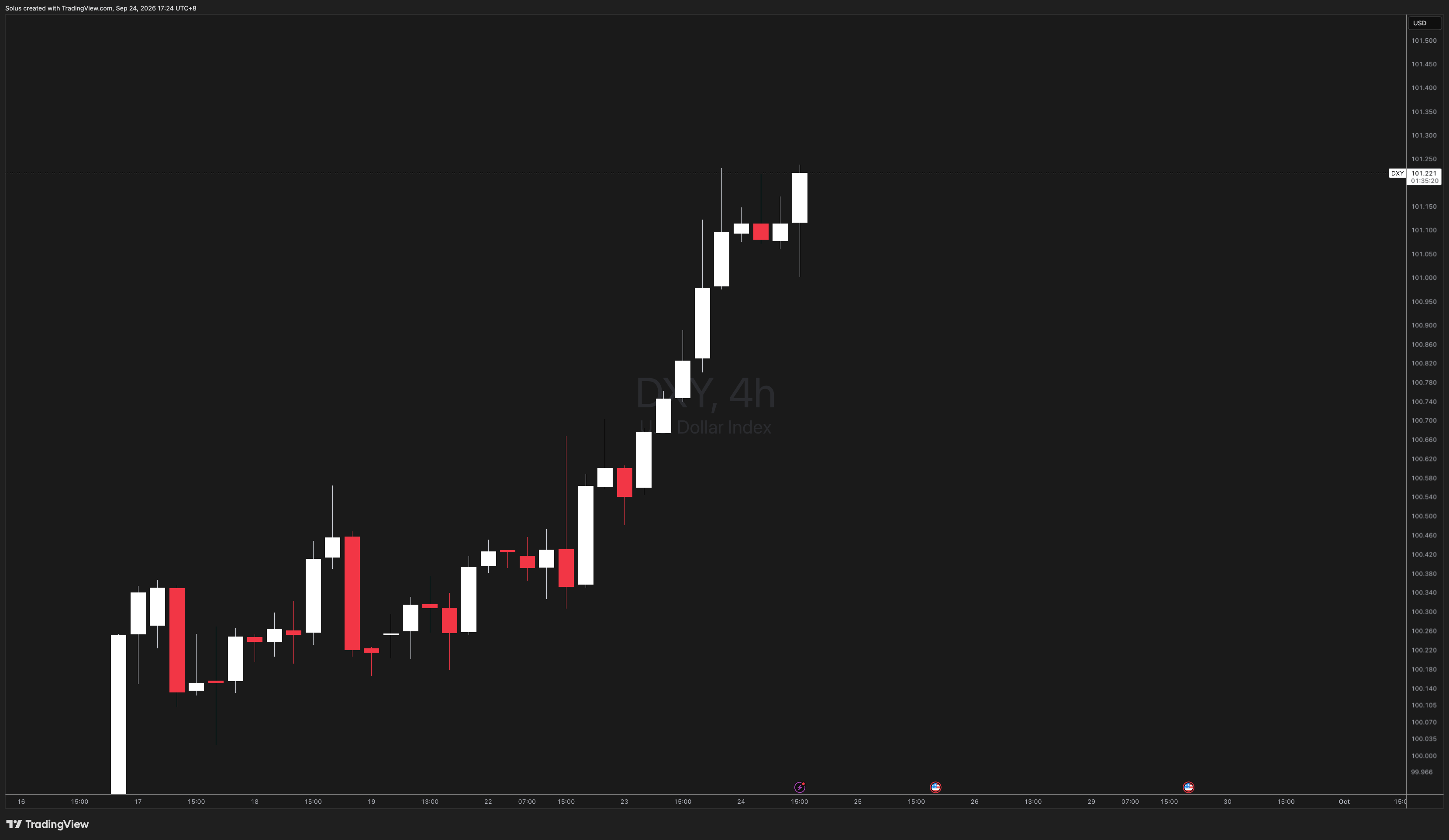
1. It's at a two-month high. The US Dollar Index touched 100.96 and is holding around 100.85. Scotiabank's fair-value estimate is 101, so it isn't stretched yet.
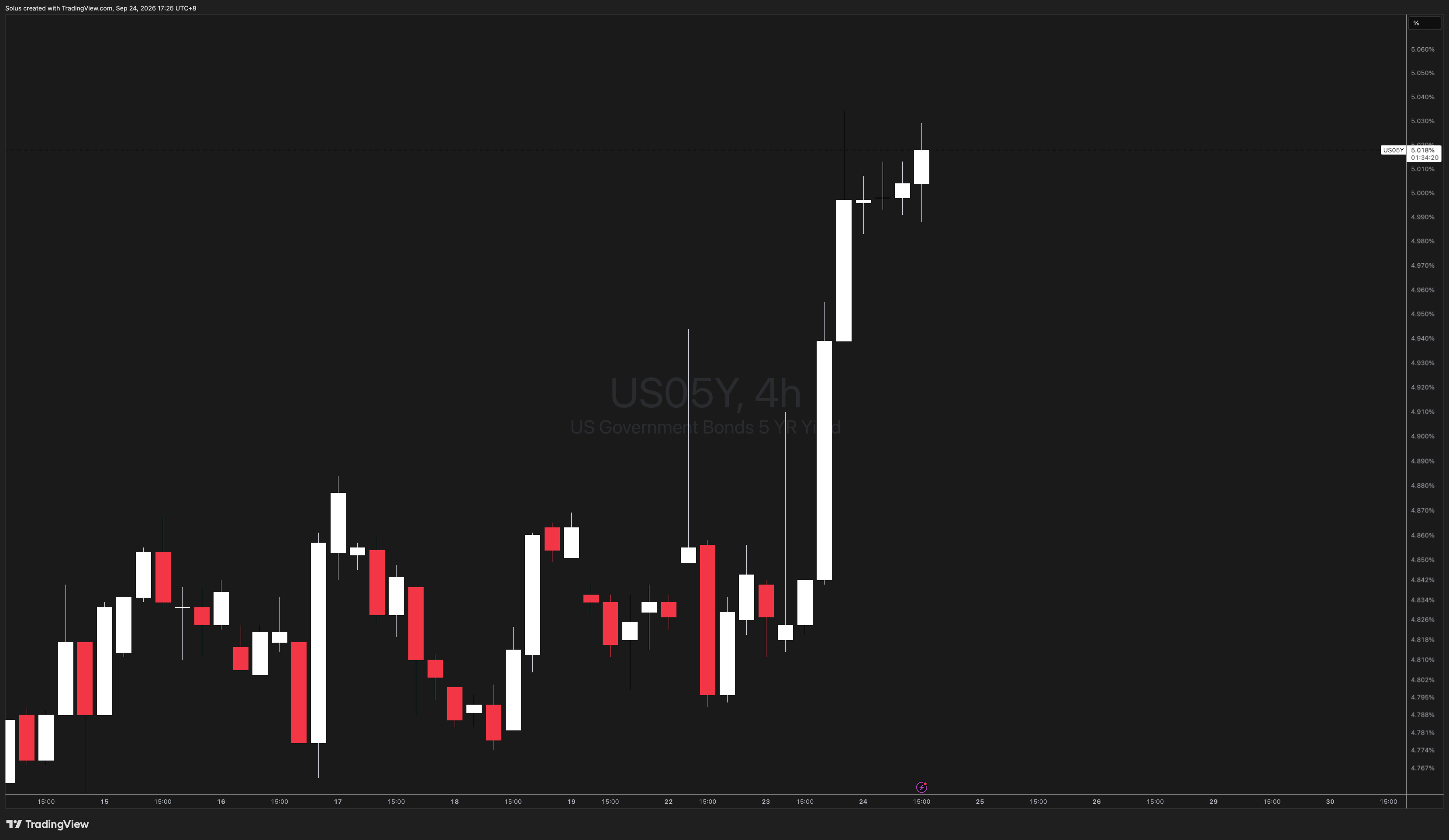
2. The 5-year Treasury yield is above 5%. That's the part of the curve that tracks Fed expectations. When it rises, the market is pricing more hikes, and the dollar follows.
3. Williams didn't push back. He had the chance to cool hike bets this morning and didn't. The dollar edged up and yields ticked higher after he spoke.
All three point the same way. Until one of them turns, the pressure on the pound stays on.
Where Is the Pound right now?
Short answer: at the edge of its range, with a failed rally just behind it.
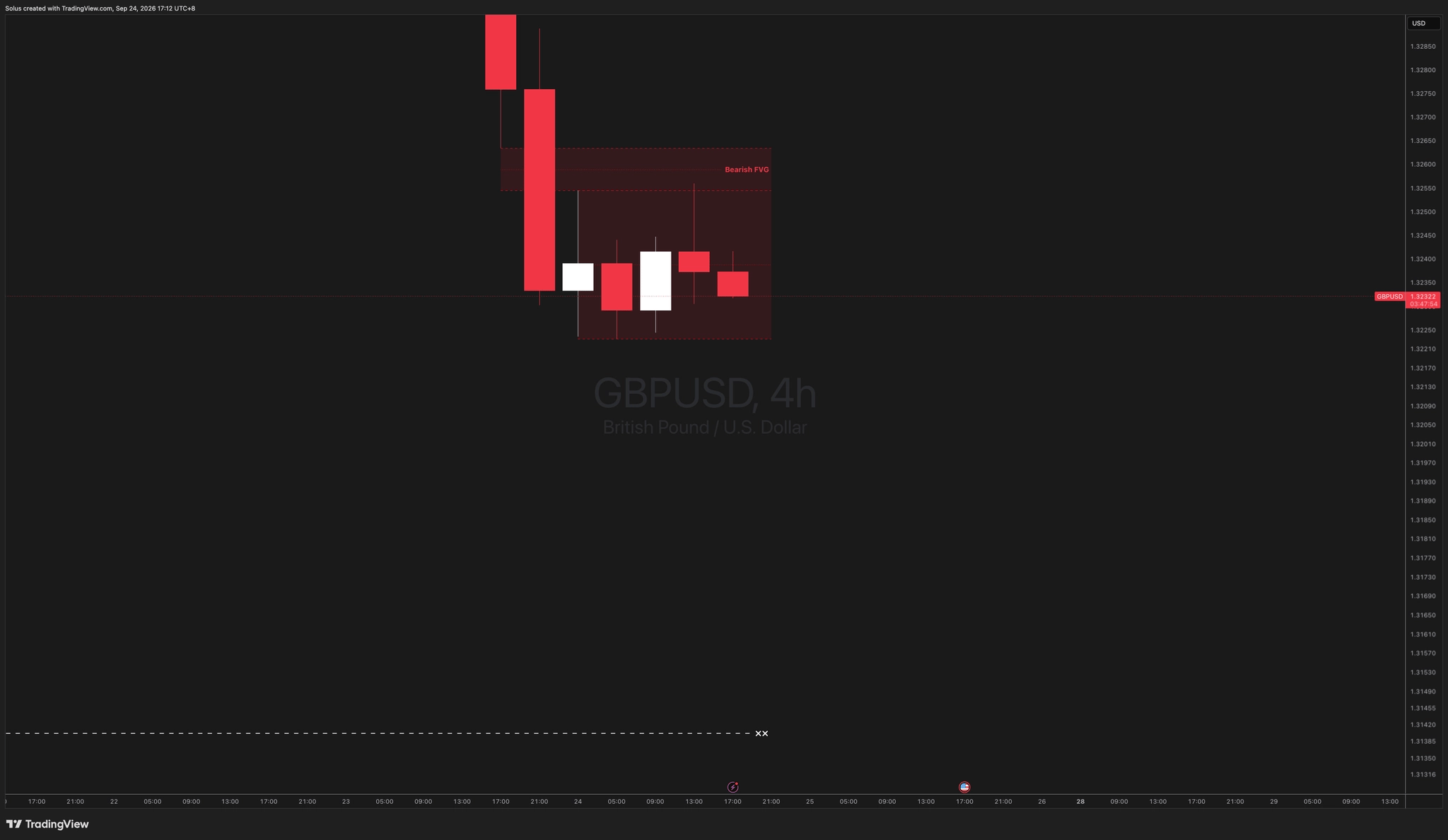
GBP/USD trades near 1.3240, below its major moving averages, and the daily trend is pointing down. On the 4-hour chart, the last push higher didn't hold. Price moved just above its recent highs, triggered the stop-losses sitting there, and got rejected at an area it had raced through on the way down. Rallies that fail like that often come right before a leg lower.
But the range hasn't broken. That single fact decides whether there's a trade at all.
If the floor gives way, these are the levels in play:
Level | What it is | Role |
|---|---|---|
1.3140 | June 24 low | First target |
1.3038 | Low from November 20, 2025 | Extension |
1.3000 | Round number | Where selling may pause |
1.3428 | 100-day moving average | The level that would change my view |
What could move it tonight?
Short answer: US jobless claims, right after New York opens.
ForexFactory's impact colours didn't load on my pull, and none of these is normally a red folder. The UK calendar is quiet, so the dollar drives the session.
Event | Currency | Time (ET / PHT) | Forecast | Previous |
|---|---|---|---|---|
Jobless Claims | USD | 8:30 AM / 8:30 PM | 201K | 196K |
Fed's Hammack Speaks | USD | 8:50 AM / 8:50 PM | — | — |
New Home Sales | USD | 10:00 AM / 10:00 PM | 615K | 607K |
GfK Consumer Confidence | GBP | 7:01 PM / 7:01 AM Fri | -16 | -14 |
Here's how I'll read the claims number:
- Low claims, dollar pushes higher: the push the range needs to break.
- In line, dollar flat: no new fuel, and the range probably holds.
- High claims, yields drop: dollar relief, a bounce inside the range, no trade.
The Trump–Xi talks in Washington are the wild card. A friendly headline could lift risk appetite and take some shine off the dollar.
How would I trade it?
Short answer: short, but only after the range breaks, and in one of two ways.
Path one: Break, bounce, sell
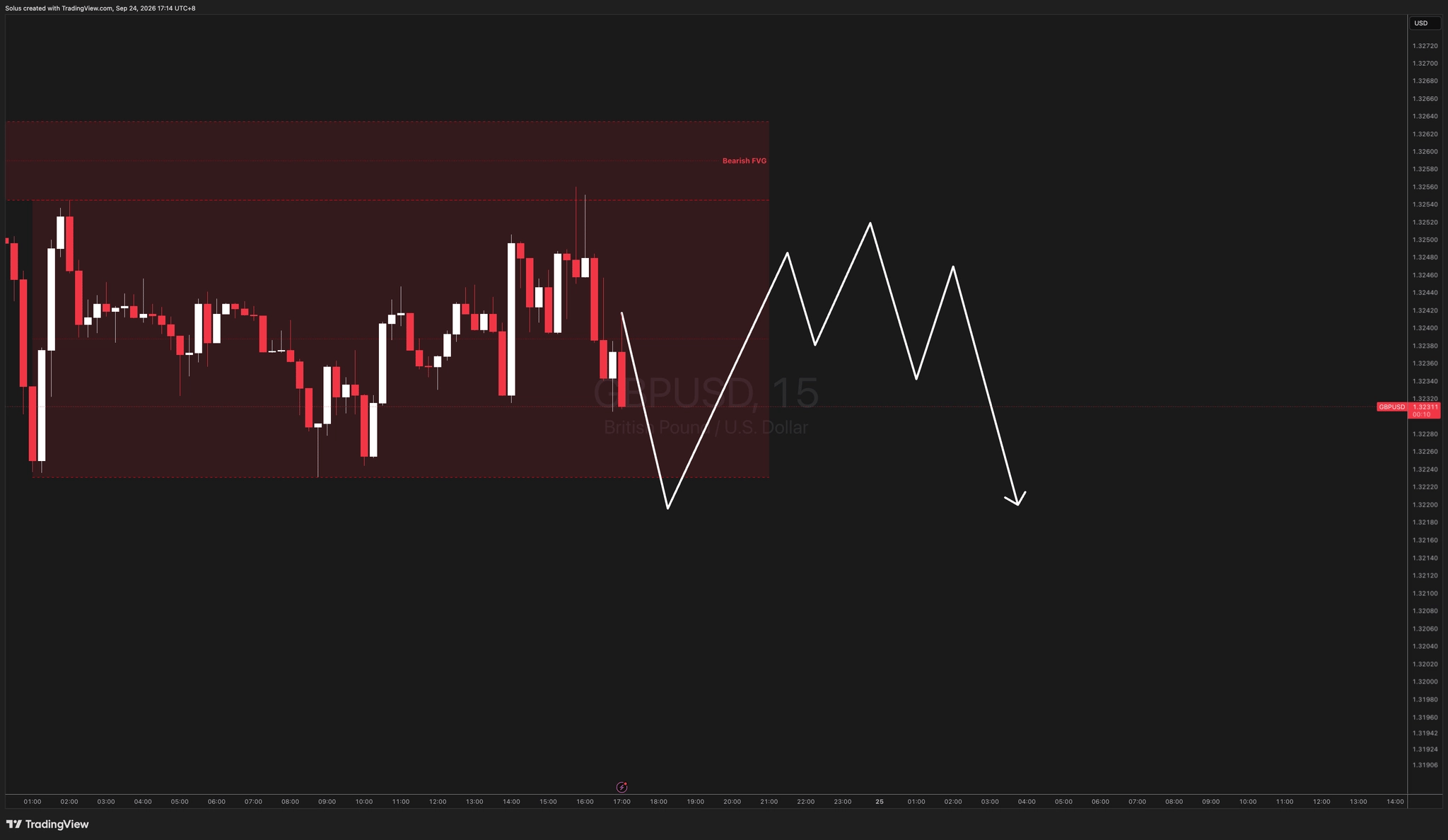
The range breaks, then price snaps back up to around 79% of the breakdown move. That bounce squeezes anyone who sold late. Once it stalls and breaks a recent low on the 15-minute chart, I sell. The target is 1.3140.
Path two: Break and go
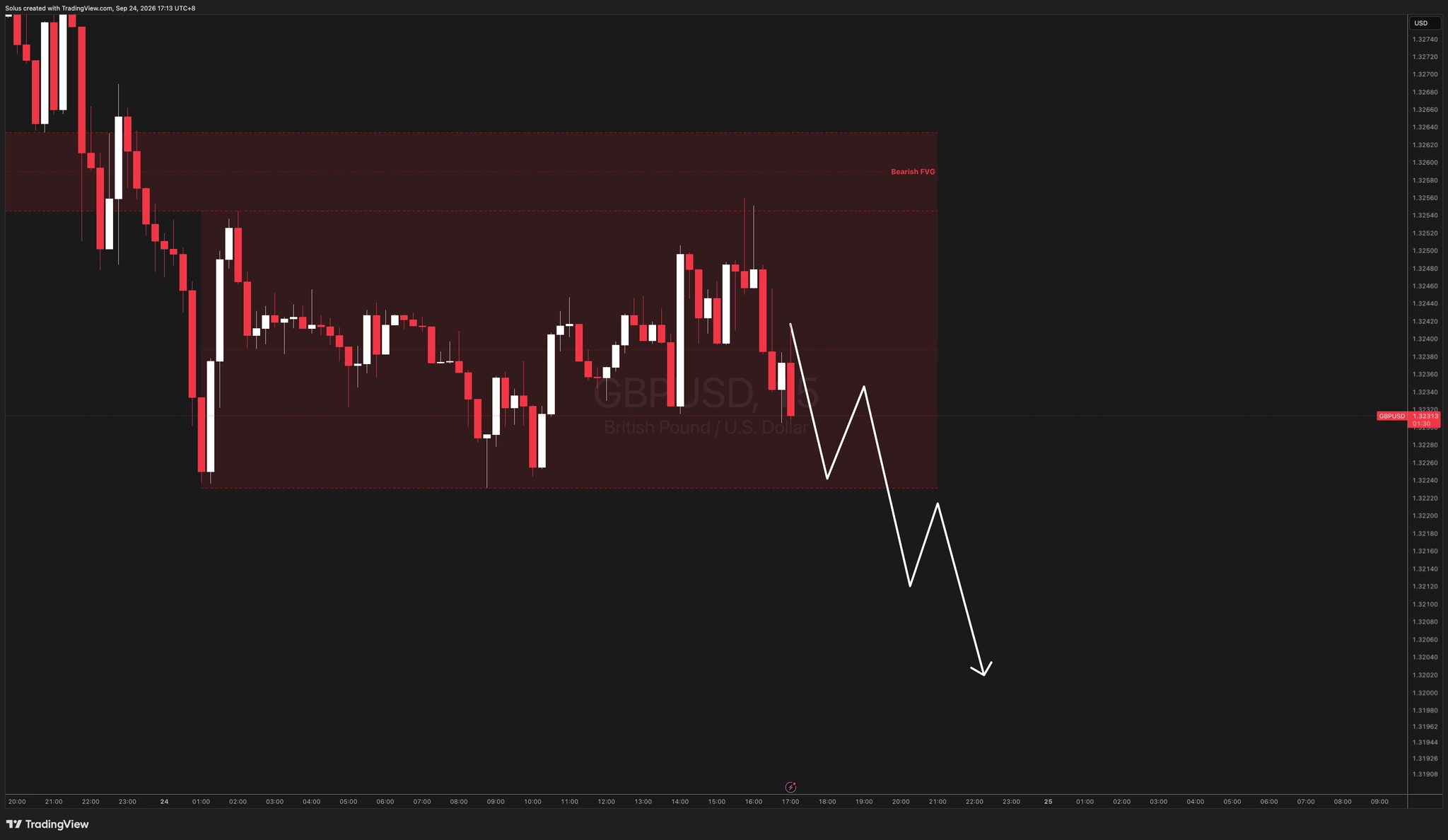
The range breaks and price keeps falling with barely a pause, the kind of move a low claims print can trigger. I don't chase it. I sell the first small pause after the break, targeting the same levels.
What would prove me wrong?
Short answer: a range that refuses to break, or a break that doesn't stick.
If price breaks, then climbs back inside the range and closes there on the 1-hour chart, the breakdown failed and I stand aside rather than flip long.
There are three ways that could happen. The pound is already oversold, with an RSI near 25, so a sharp bounce can come at any time. A high claims number could pull the dollar back. And a friendly Trump–Xi headline could spark a risk-on move.
There's also a risk building at home. The pound's support rests on that 67% November hike, and Brown Brothers Harriman thinks the Bank of England may not need to tighten as much as markets expect. If traders start doubting the hike, the pound loses its one real support. That's bearish, but it can also produce a sharp, messy move rather than a clean one.
The bottom line
Bearish, but conditional. Medium Conviction. The dollar backdrop and the 4-hour rejection agree, but the range is still intact, and without a break there is no trade. Watch the range floor first, then 1.3140. On the dollar, watch 101 on the index and 5% on the 10-year.
Author

Jasper Osita
Independent Analyst
Jasper has been in the markets since 2019 trading currencies, indices and commodities like Gold. His approach in the market is heavily accompanied by technical analysis, trading Smart Money Concepts (SMC) with fundamentals in mind.