|

GBP and Interest rates: levels, Ranges, Targets
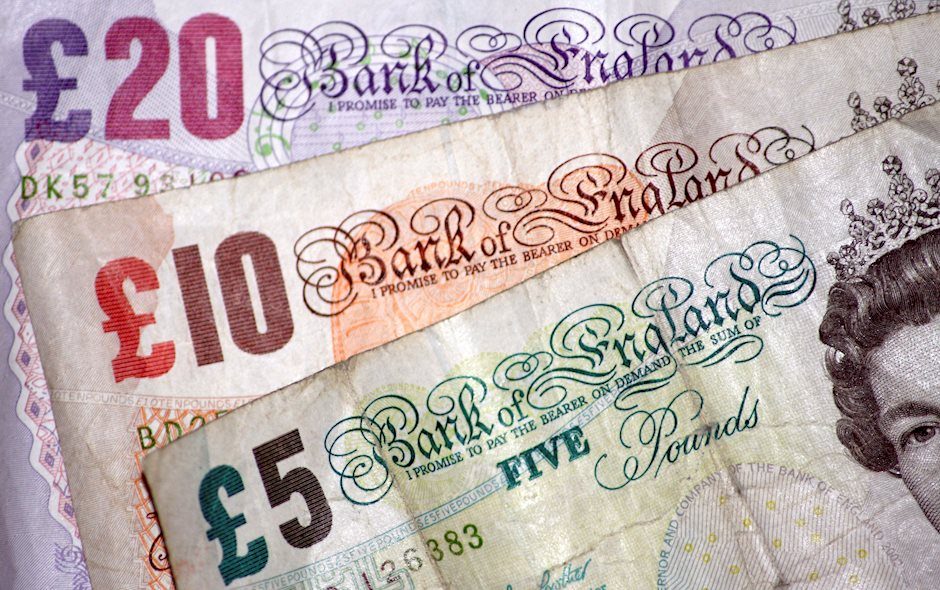
GBP/USD ranged for the week 185 pips from 1.3042 to 1.2857 or barely 2% in total. FOMC, GBP/USD ranged 69 pips from 1.2998 to 1.2929. For the week, 185 pips factors to 37 pips per day. UK and all nations' money markets  are volatile and active. The UK for example ranges roughly 30 points per day or 150 actively traded points for the week. GBP/USD gained barely 35 pips above the UK money market range.

The problem inside all nations' money markets is interest rate traders are practically trading the same old rates and ranges day in and day out. The daily changes to interest rates are slight. Interest rate traders by their actions are doing quite well but at the expense to advance interest rate causes and ranges as well as exchange rates. To ask the question will the BOE raise answers by why should the BOE raise when the system is functioning.  A functional system in todays markets I term the containment policy as the same money sloshes around the same old daily rates.

I termed GBP a starnge currency pair when in reality GBP is a normal currency pair but its the interest rate traders responsible for containment of GBP. On Wednesday, FOMC, interest rate traders knew exactly  GBP's destination  upon the FOMC announcement. How they knew is by the triggers that move exchange rates as every nation has its own distinct trigger. The trap nation and least understood  in my estimation is USD because many triggers exist. Nation's established their own interest rate system based on USD but against uniqe features to triggers, rates and ranges. So what is GBP but USD in another form.  More later.

EUR/USD today's vital points. 1.1123  V 1.1275.

GBP/USD. 1.2833 and 1.2872 Vs 1.2889 and 1.2928. Watch 1,2940 as this is the range point.

GBP/JPY. 143.04 and 143.48 Vs 144.09 and 144.53.

Author

Brian Twomey

Brian Twomey

Brian's Investment

Brian Twomey is an independent trader and a prolific writer on trading, having authored over sixty articles in Technical Analysis of Stocks & Commodities and Investopedia.


More from Brian Twomey
Share:

Editor's Picks

EUR/USD weakens as US jobs data trims Fed rate cut bets

The EUR/USD pair trades in negative territory for the third consecutive day near 1.1860 during the early European session on Thursday. Traders will keep an eye on the US weekly Initial Jobless Claims data. On Friday, the attention will shift to the US Consumer Price Index inflation report. 

GBP/USD bullish outlook prevails above 1.3600, UK GDP data looms

The GBP/USD pair gains ground near 1.3635, snapping the two-day losing streak during the early European session on Thursday. The preliminary reading of UK Gross Domestic Product for the fourth quarter will be closely watched later on Thursday. The UK economy is estimated to grow 0.2% QoQ in Q4, versus 0.1% in Q1. 

Gold down but not out as focus shifts to more US data

Gold is back in the red near $5,050 early Thursday, having faced strong offers at around the $5,100 mark once again. Buyers keep a close eye on the mid-tier US Jobless Claims data and US-Iran geopolitical developments to regain control.

UK GDP set to post weak growth as markets rise bets on March rate cut

Markets will be watching closely on Thursday, when the United Kingdom’s Office for National Statistics will release the advance estimate of Q4 Gross Domestic Product. If the data land in line with consensus, the UK economy would have continued to grow at an annualised pace of 1.2%, compared with 1.3% recorded the previous year. 

The market trades the path not the past

The payroll number did not just beat. It reset the tone. 130,000 vs. 65,000 expected, with a 35,000 whisper. 79 of 80 economists leaning the wrong way. Unemployment and underemployment are edging lower. For all the statistical fog around birth-death adjustments and seasonal quirks, the core message was unmistakable. The labour market is not cracking.

XRP sell-off deepens amid weak retail interest, risk-off sentiment

Ripple (XRP) is edging lower around $1.36 at the time of writing on Wednesday, weighed down by low retail interest and macroeconomic uncertainty, which is accelerating risk-off sentiment.