Fundamentals to take over

USD edges higher as inflationary worries are renewed
The USD edged higher in today’s opening, with safe-haven flows possibly supporting it. The continuous hostilities between the US and Iran in the Persian Gulf, raise concerns for a possible reignition of price hikes, and thus an intensification of inflationary pressures. Thus, expectations for the Fed to keep its monetary policy tight or tighten it further seem to intensify boosting the US Dollar. Given the absence of high-impact financial releases, we expect fundamentals to lead the market, and a possible intensification of the market’s worries could support the USD further.
Oil prices get a boost from Middle East tensions
Oil prices edged higher given the escalation of tensions between the US and Iran. Renewed exchange of air strikes, tended to raise doubts about the prospect of the US-Iran negotiations. Market worries for a possible re-closure of the Straits of Hormuz are still present. Yet the rise of oil prices seems to be modest for now, which may imply that the market may still not be convinced for a full restart of the US-Iran conflict and a renewed full shut down of the Straits. A possible restart of the US-Iran negotiations may ease market worries weighing on oil prices, while a continuation of the hostilities could allow for further oil price hikes.
Strengthening of the USD weighs on gold’s price
Gold’s price edged lower as the strengthening of the USD tended to weigh on the precious metal’s price. We expect volatility for the precious metal to remain as the US CPI rates are to be released tomorrow, while Fed Chairman Warsh is to testify before the Senate. Market expectations for a possible acceleration of the US CPI rates for June and/or possible hawkish signals by Warsh could weigh on gold’s price further.
Other highlights for today
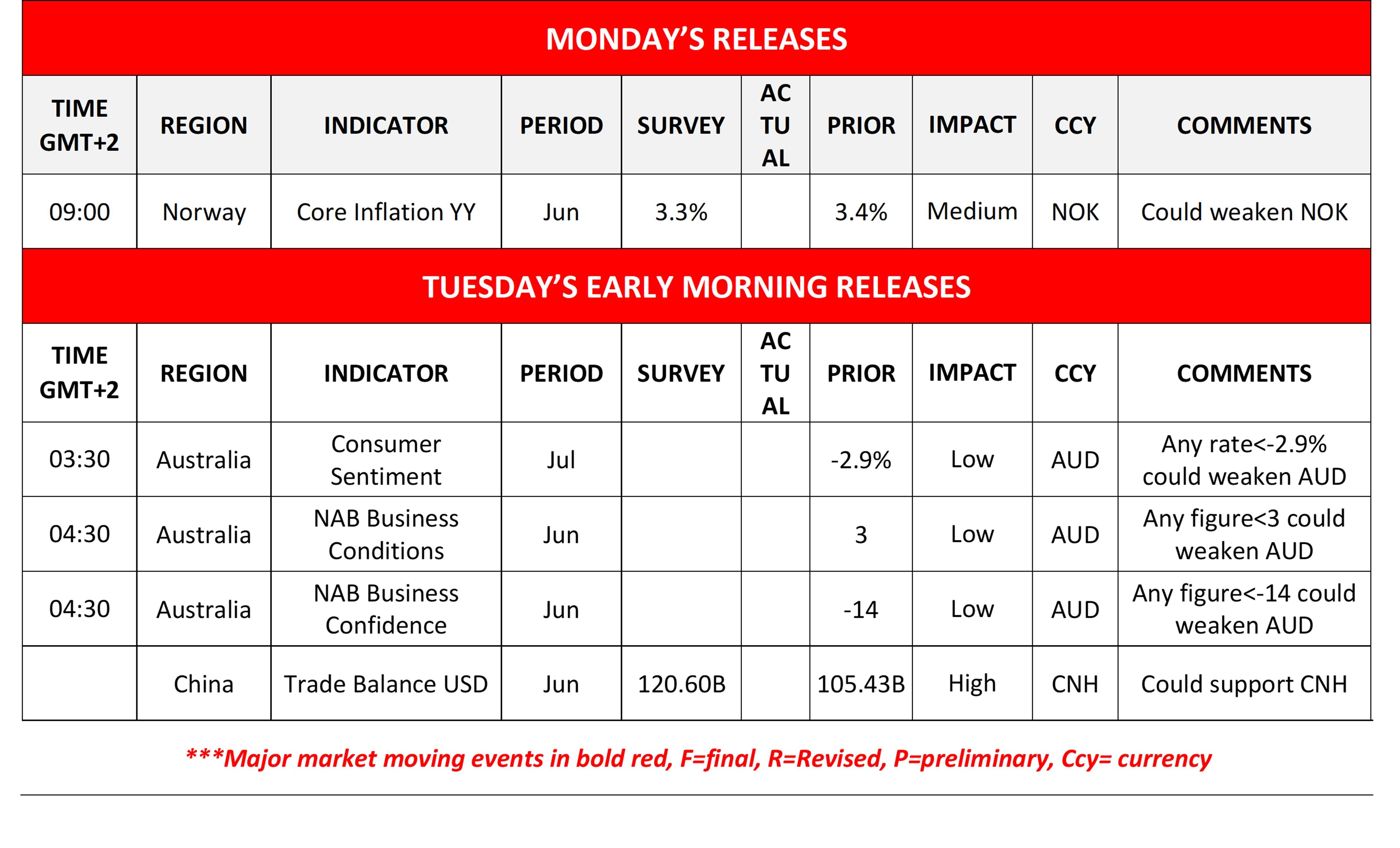
Today we get Norway’s CPI rates for June, and in tomorrow’s Asian session, we note the release of Australia’s consumer confidence for July, business conditions and confidence for June as well as China’s June trade data.
As for the rest of the week
On Tuesday we get the US CPI rates for June and on Wednesday we get Japan’s machinery orders for May, China’s GDP rate for Q2, the US PPI rates for June, while from Canada BoC is to release its interest rate decision. On Thursday we get UK’s GDP rate and manufacturing output for May, and from the US the weekly initial jobless claims figure, July’s Philly Fed Business index and June’s retail sales. On Friday we note the release for the US industrial output for June and July’s preliminary UoM Sentiment.
Charts to keep an eye out
AUD/USD tended to remain well between the boundaries set by the 0.6980 (R1) resistance line and the 0.6830 (S1) support level. We maintain a bias for a sideways motion of the pair despite a bearish predisposition of the market being implied by the RSI indicator which remain below the reading of 50. Should the bears take over, we may see AUD/USD breaking the 0.6830 (S1) support line clearly and start aiming for the 0.6665 (S2) support level. Should the bulls be in charge we may see AUD/USD breaking the 0.6980 (R1) resistance line and start aiming for the 0.6665 (R2) resistance level.
XAU/USD’s price action remained relatively stable between the 4380 (R1) resistance line and the 3960 (S1) support level. The RSI indicator still remains below the reading of 50, yet nothing convincing for the bear, hence we tend to expect the sideways motion to continue. Should the bears gain control over XAU/USD’s price we may see it breaking the 3960 (S1) support line, opening the gates for the 3600 (S2) support level. Should the bulls take over we may see XAU/USD’s price breaking the 4380 (R1) resistance line with the next possible target for the bulls being set at the 4770 (R2) resistance level.
AUD/USD daily chart
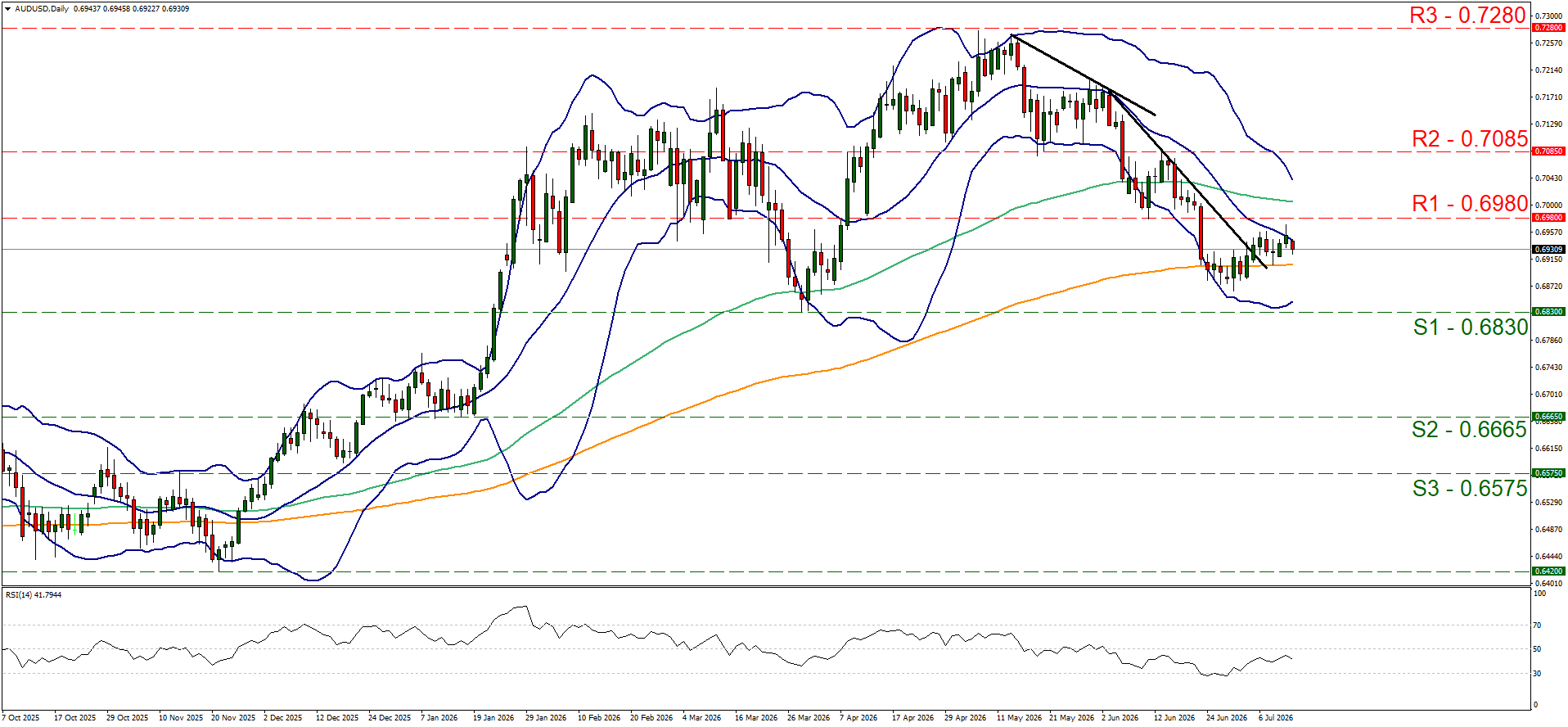
- Support: 0.6830 (S1), 0.6665 (S2), 0.6575 (S3).
- Resistance: 0.6980 (R1), 0.7085 (R2), 0.7280 (R3).
XAU/USD daily chart
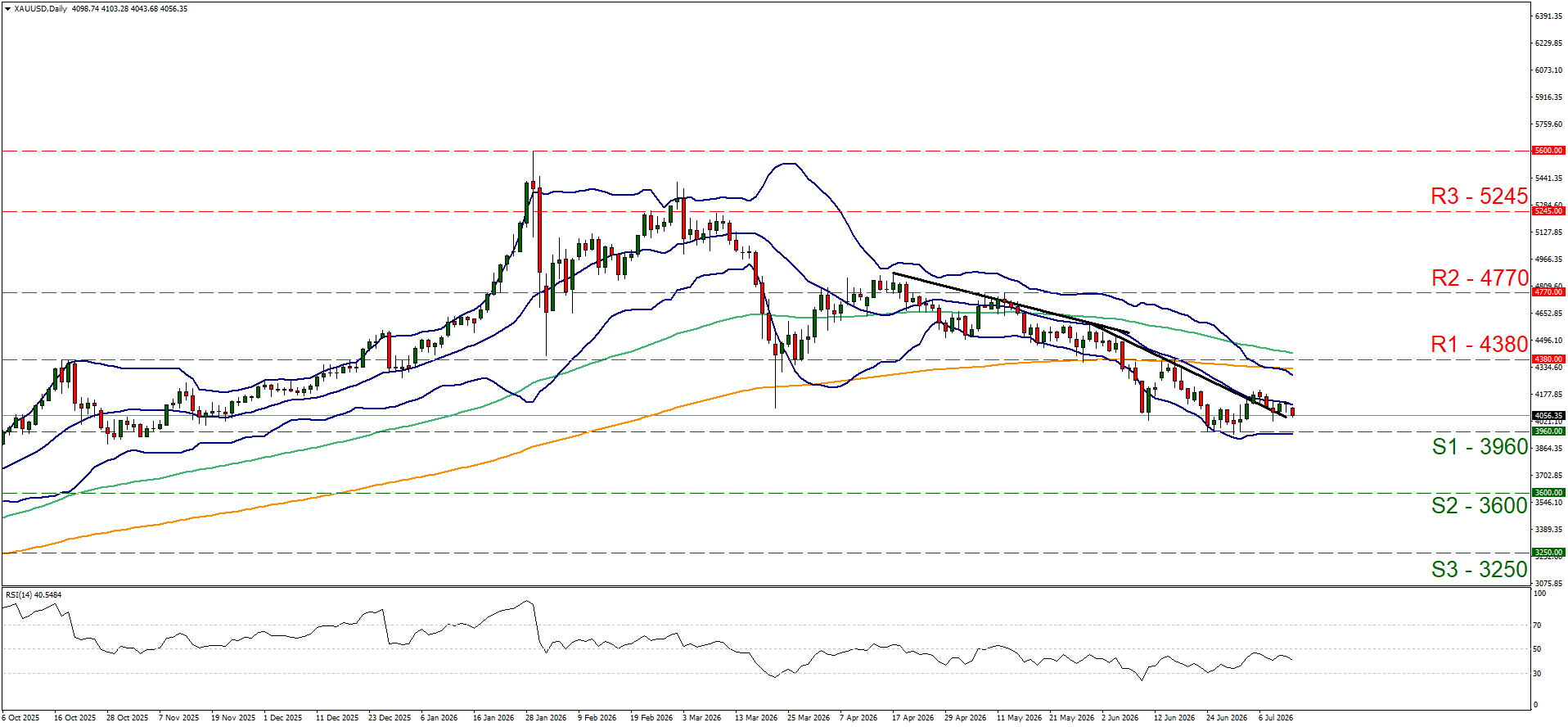
- Support: 3960 (S1), 3600 (S2), 3250 (S3).
- Resistance: 4380 (R1), 4770 (R2), 5245 (R3).
Author

Peter Iosif, ACA, MBA
IronFX
Mr. Iosif joined IronFX in 2017 as part of the sales force. His high level of competence and expertise enabled him to climb up the company ladder quickly and move to the IronFX Strategy team as a Research Analyst. Mr.