FOMC preview: Kevin Warsh takes the helm, when words matter more than dots
- No change expected in rates.
- Fed likely on extended pause.
- Words not Dots matter at this meeting.
- Will Warsh override forward guidance?
- Trump’s reaction.
The Federal Reserve will announce its latest policy decision this evening. The market expects rates to remain unchanged, and there is a 99.4% chance that rates will remain at 3.5-3.75% at this meeting. However, this is an extremely significant moment for the Fed, since it is the first meeting under new chairman Kevin Warsh.
Warsh must navigate a complex set of circumstances as he steps into the role of chair, including:
- Pressure from President Trump to lower rates.
- There is higher inflation in the US economy, which is not only caused by the energy price spike.
- There is a 2-speed US economy, with AI-related sectors surging and propping up weak pockets of growth elsewhere.
- The Fed is divided, which is historically very rare.
This is a tricky time for a new Fed chair to set policy. With rates expected to remain unchanged in the coming months, the biggest focus will be on the FOMC Press conference, which could be more interesting than usual.
Warsh and forward guidance
Warsh’s messaging and how he frames his views on the economy and the future of monetary policy will be closely scrutinized. However, there is an added dimension to Warsh’s press conference, he has stated his preference for less Fed communication, so how he deals with the media this week is crucial for market sentiment. It will also give us a clearer idea of how the Fed could operate under Warsh.
The market is fully expecting less reliance on forward guidance, but what will this look like? Could it see the removal of the Dot Plot altogether? That would be a bold move for his first meeting, more likely, in our view, will be a focus on trimmed mean inflation, which is closer to the Fed’s 2% target rate than headline CPI, potentially no personal dot from Warsh included in this Dot Plot, and no roadmap for the July rate decision.
Will the Fed hike this year?
This meeting will also include the updated Summary of Economic Projections from the FOMC. The SEPs could show inflation staying above target for longer than previously assumed. The high inflation/ low unemployment economy makes it hard for the Fed to point to future rate cuts, and the Dot Plot could signal that rates are more likely to rise rather than fall this year. Currently, there is a 42% chance of a rate hike by the end of 2026.
Interestingly, interest rate expectations for the US have barely shifted even though the oil price has fallen sharply in the past week. This suggests that traders do not want to make any big bets on the direction of US rates until they get some clarity from Warsh later today.
Warsh’s next challenge, a divided Fed
The question is, can Warsh marshal Fed members into sharing one view? In recent months, the Fed has been more divided than it has been in decades. There were 4 dissenters at the last FOMC meeting, the largest number since 1992. This meeting could see FOMC members vote with the governor in keeping rates on hold, but they may use the SEP to express their independent views on the economy. Thus, we could get a hawkish set of updated economic projections, even if Kevin Warsh sounds dovish during the press conference.
Words not Dots matter most
What Warsh says at this evening’s meeting matters more than the Dot Plot, in our view. A change to forward guidance will have implications for financial markets. Under Jerome Powell, forward guidance was seen as helping to contain volatility in bond markets and it kept yields relatively stable. If that is removed, then we could see volatility rise and the 10-year Treasury yield drift higher.
As we lead up to this meeting, Treasuries have underperformed their global peers, and US yields have had a milder reaction to the decline in oil prices, the Brent crude price fell below $80 per barrel at one stage on Tuesday, after Trump said that the Strait of Hormuz was reopening. Treasuries lack of sensitivity relative to other sovereign bonds is down to a couple of factors: 1, the US is energy independent, so it is less sensitive to changes in the price of oil, and 2, inflation in the US is elevated relative to elsewhere and headline CPI is trading above a 4% handle due to domestic factors, and not only due to the energy price spike.
Which asset classes benefit from a Warsh Fed?
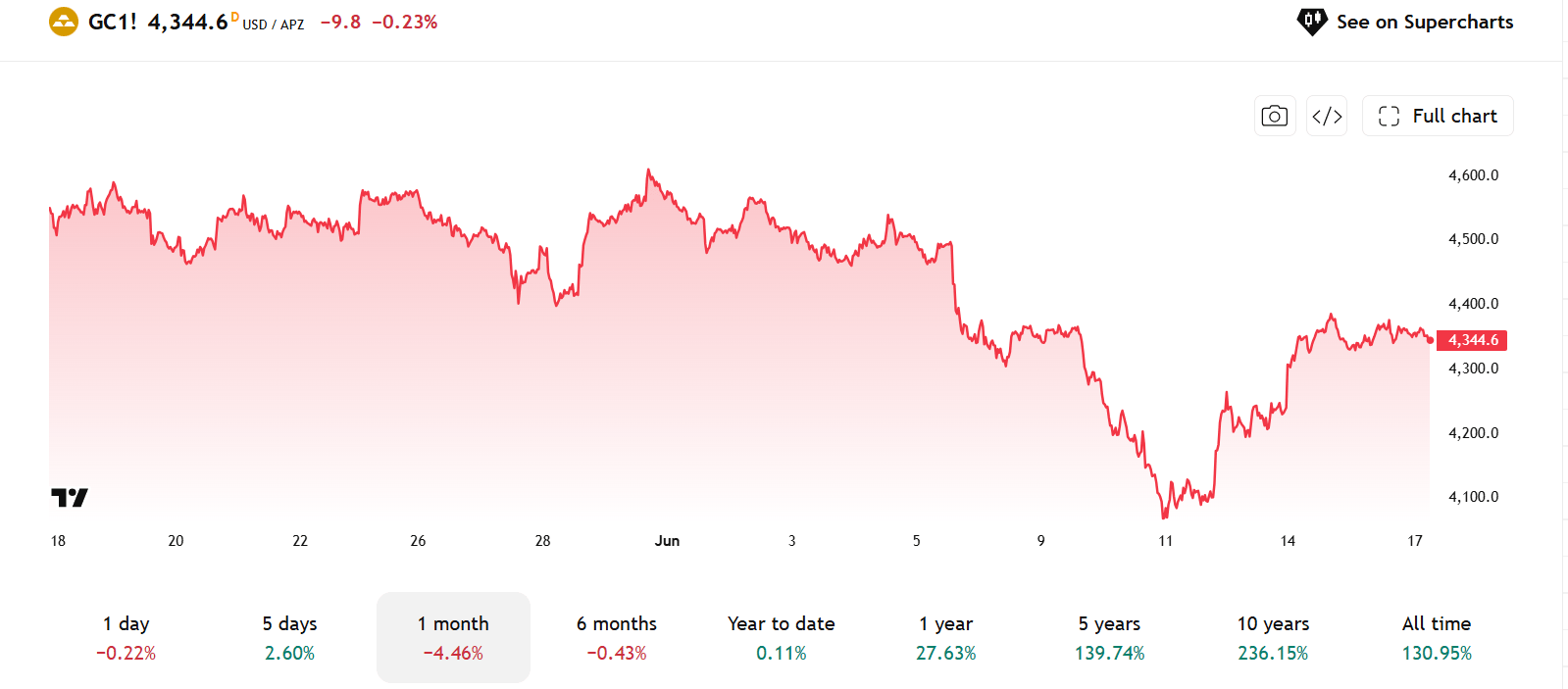
Communication uncertainty from the Fed coupled with stickier inflation may weigh on Treasuries and boost the dollar in the short to medium term. It also works in favour of real assets, like gold, which has recouped losses in recent days and is higher by 6% in the past week. Cash-rich large cap tech stocks, have rallied into this meeting, and are likely to be more resiliant in the current environment.
Overall, communication is key at this meeting. In the lead up, risk sentiment and equities have made record highs, although stocks slipped on Tuesday. In recent months, the interest rate futures market has stopped pricing in rate cuts from the Fed this year, so what Warsh says or doesn’t say, will determine the market reaction.
Chart 1: The Gold price has started to recover as we lead up to the Fed meeting
Author

Kathleen Brooks
XTB UK
Kathleen has nearly 15 years’ experience working with some of the leading retail trading and investment companies in the City of London.