Fed governors see far less room to cut rates next year

Markets
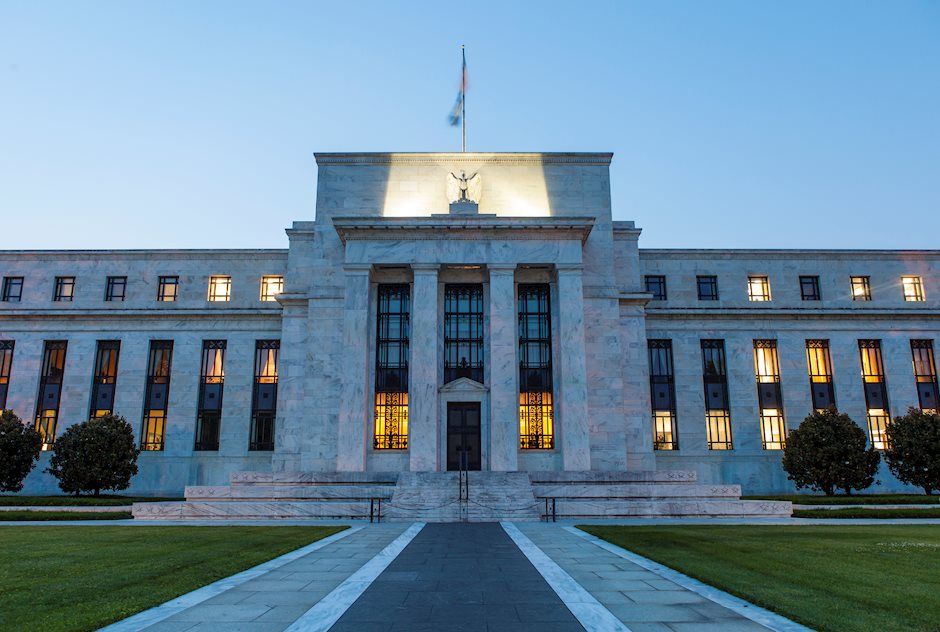
US yields at all tenors had settled near/mostly just below cycle peak levels going into the Fed decision. The Fed as telegraphed kept its policy rate unchanged at 5.25%/5.50%. However, for markets, the guidance on what was to come was key. Powell indicated that the Fed had reached a point where it can proceed carefully in determining what rate will be restrictive enough to bring inflation back to target as there is still some work to do. In the new Summary of Economic Projections (dots) the majority of governors still sees one additional rate hike this year amid higher expected growth (2023 2.1% from 1.0%; 2024 1.5% from 1.1%). The ‘peak’ in the unemployment rate also has been put substantially lower (4.1% in 2024/25 from 4.5%). Expected headline PCE inflation was seen slightly higher this year (3.3 from 3.2%, unchanged in 2024 at 2.5%). Core inflation was put slightly lower at 3.7% this year (from 3.9%) (unchanged at 2.6 next year) and returning to target in 2026. The main message however was that for the Fed to engineer the hoped for soft landing, governors see far less room to cut rates next year. Expectations for the end 2024 policy rate were raised from 4.6 to 5.1%! A decisive further upgrade of the higher for longer scenario! After the price conference, yields forced the break higher (2-y +8.6 bps, 30-y +2 bps) with maturities up to 10-y jumping to new cycle highs. The 10-y real yield surpassed the 2.0% barrier. The dollar reversed a pre-Fed intraday dip (DXY close 105.35). EUR/USD dropped from the 1.073 area to close at 1.066. USD/JPY cleared the 148 big figure (close 148.34). A stronger dollar, a higher real yield and the reinforcement of the higher for longer narrative, hammered equities (S&P 500 -0.94%, Nasdaq -1.53%). Earlier, the EuroStoxx50 still closed with a decent gain of 0.78%. Oil corrected further with brent closing near $93 p/b.
This morning, sentiment in Asian turned further risk off as the trends of higher US yields and a stronger dollar continue. In the wake of yesterday’s Fed guidance, US eco data (Philly Fed business outlook and jobless claims) continue to deserve attention. Even so, the focus today turns to several other central banks deciding on monetary policy. The prospect of the Fed keeping its policy rate above 5.0% throughout 2024 of course is also important input for all other central bankers. The Norges Bank, the Riksbank and probably also the Swiss national bank will raise rates by 25 bps. The Turkish central bank is expected to take a bigger step from 25% to 30%. Yesterday’s much softer than expected UK August inflation caused market to see an almost even chance between a pause or a 25 bps hike today. Some even see the end of the hiking cycle. If the BoE today skips a further rate hike in a context where US yields are expected to stay elevated for long, sterling might become even more vulnerable. Further global market repositioning post Fed probably will extend the trends of a strong dollar and higher yields, also in the EMU.
News and views
The Brazilian central bank cut its key benchmark rate as expected by 50 bps yesterday, from 13.25% to 12.75%. It’s the second consecutive cut by this size after holding the policy rate steady for a year at 13.75%. Contrary to last month’s split decision (5-4), it was unanimous this time. The MPC (Copom) anticipates further reductions of the same magnitude at the next meetings if the base scenario plays out, bringing the Selic rate at 11.75% by year-end. Copom's inflation projections in the reference scenario stand at 5% for 2023, 3.5% for 2024, and 3.1% for 2025. That’s slightly higher than in June, mainly because of a weaker than expected local currency. In its opening statement, the BCB stressed that the global environment became more uncertain. The Committee noted an increase in long-term interest rates in the US as well as forecasts of lower growth in China, both demanding further attention from emerging market economies. USD/BRL rose from 4.8450 to 4.88, but this was mainly post-Fed USD strength.
New Zealand GDP growth significantly beat forecasts, rising by 0.9% Q/Q in Q2 (vs 0.4% consensus). GDP rose 3.2% over the year ended June 2023 compared with the year ended June 2022. Business services was the biggest driver of growth, largely due to computer system design. A minor, but symbolic upward revision to Q1 growth (0% from - 0.1%) implies that the country narrowly dodged the technical recession bullet (Q4 2022: -0.5% Q/Q). Looking at GDP from the expenditure side, growth clocked in at 1.3% Q/Q. Private consumption (+0.4%), government expenses (+2%) and net exports (+3% Q/Q) were the main drivers. The kiwi dollar can’t keep up with global USD strength, though money market now almost completely discount another 25 bps rate by the RBNZ by early next year.
Author
KBC Market Research Desk
KBC Bank