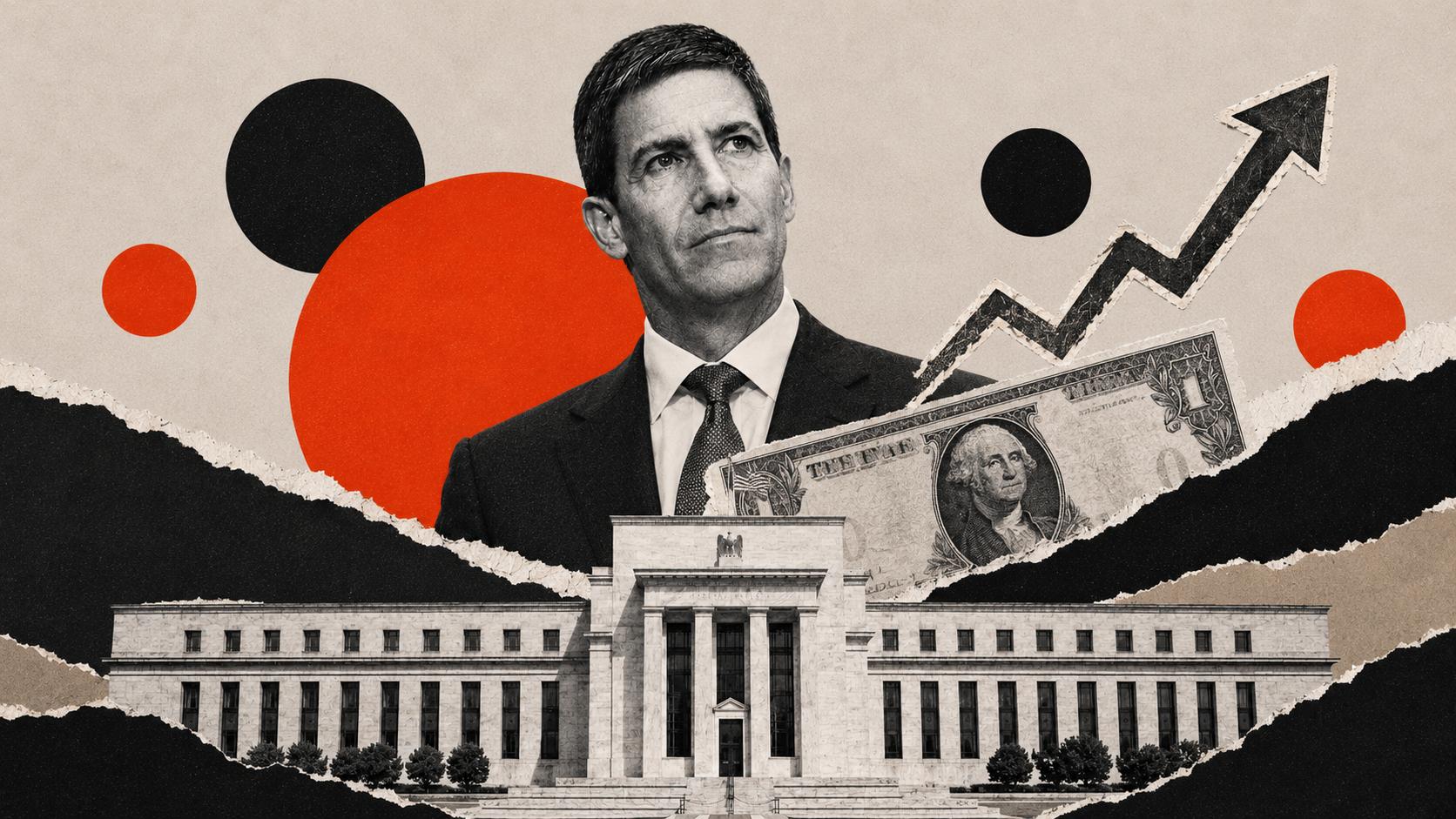
Fed: Central planning, hubris, and a lesson from 1953

Don’t worry. It's fine. The Federal Reserve has everything under control.
This seems to be the prevailing attitude in the marketplace.
Sure, the Fed lost control of price inflation for a while, but that wasn’t really its fault. It was due to supply chain issues, greedy corporations, and Putin’s price hikes.
And regardless, the Fed hiked rates and killed the inflation dragon. Now we can look forward to a return to easy money and a nice soft landing.
But should we really put so much faith in monetary central planning by a handful of men and women at the Federal Reserve? After all, they don’t have a crystal ball. And if we scrutinize their past projections, we find their accuracy – shall we say – lacking. In fact, it almost feels like the Fed is running monetary policy based on speculation and wild guesses.
And yet the mainstream investment world treats central bankers as if they were demigods handing down wisdom from on high.
An interview with financial analyst Jim Grant on Fox Business got me thinking about how much faith people put in central planning.
Maybe they shouldn’t.
A lesson from 1953
In a recent article published in his newsletter, Grant warned us about trying to predict the future.
“Assumptions are harmless as long as the assuming party doesn’t confuse them with foreknowledge. The future is a phenomenon both strange and wonderous, though it doesn’t exist unless we reckon with it.”
He jumped off from this bit of wisdom during the interview, warning us to be careful lest we become victims of hubris.
He pointed out that if you invest, you are in the “future business," and we must somehow envision a thing that does not exist.
The same is true for central bankers and government policymakers. They’re trying to get monetary and fiscal policy "just right" to achieve a desired future outcome.
And therein lies the hubris trap.
Grant noted that if you get a couple of calls right, you’re walking down the street feeling pretty good.
“You’re likely to think you’re getting a word from on high, and this has happened to every successful investor.”
On the contrary, when you miss a few, “You feel as if you were somehow shut out from that same source of futurity.”
But Grant reminded us that we always have to remember, “The future don’t exist!”
“It’s important to recognize that, as humbling as humbling as that realization is.”
It seems like central planners forget this. They become so wrapped up in their own sense of intelligence and wisdom that they begin to imagine that they can control the world. Just listen to Jerome Powell talk. You hear a certain level of certainty wrapped in hubris when he speaks about the future.
It’s true that as investors or policymakers, we must grope around and somehow imagine and conceive the outlines of that future. But it’s important that they do so with humility.
Grant said one way to better grasp the future is to understand the past. With that in mind, he wrote, “The more you know about 1953, the greater your understanding of 2024.”
Looking back, the mindset of officials that year contrasts sharply with the attitude with which most policymakers approach things today.
It was the first year of President Dwight Eisenhower’s administration. The GOP came into power intent on balancing the budget and restoring the dollar to gold convertibility.
If only, right?
Of course, the administration didn’t achieve those goals. But I find it striking that it was even a stated policy.
Grant does too.
“What is so striking to me in reviewing this particular chapter of the past is that the Federal Reserve - we had one even then - it was bound and determined not to get in the way of the market for short-term loans. It was bound and determined to … drop this command of the past dozen years or so ending in 1951 to fix the yield curve, to manipulate interest rates.”
Eisenhower appointed William McChesney Martin as the Federal Reserve chairman. The new Fed chair gave an inspiring speech lauding the free market saying fixed interest rates are fixed prices along with economic dysfunction elsewhere, and “they are not a part of our institutions.”
Imagine that! A central banker with humility recognizing that he wasn’t capable of micromanaging the economy.
Fast forward to today. As Grant put it, “The Fed can’t keep its hands off our markets and interest rates.”
No matter how good the storyline the Fed writes, things are never going to go according to the script. Unfortunately, hubris blinds people to their fallibility. They begin to believe their poo doesn’t stink.
After crashing the economy in 2008, the powers that be managed to pin the blame on “deregulation” and “greed,” as the Fed launched unprecedented intervention into the financial markets. It printed nearly $4 trillion and injected it into the economy while simultaneously artificially holding interest rates at zero for nearly a decade. When the bubble economy created by this policy started to lose air, the pandemic bailed the Fed out, giving it an excuse to double down on this extraordinary monetary policy.
Today, everybody has a false sense of security. I think most people sincerely believe the central bankers at the Fed and the central planners in Washington D.C. have everything under control. Things have basically been fine for almost two decades (the pandemic notwithstanding).
Grant summed it up perfectly.
“I think one of the consequences of the Fed’s manipulation of rates and manipulation of expectations lo these many, many years, is that the constructive fear of things going bad is almost conditioned out of the marketplace.”
I’m reminded of the story of Icarus. As you may recall, he and his father Daedalus were imprisoned on the island of Crete.
To escape, Daedalus crafted wings of feathers and wax. Before flying to freedom, Daedalus warned his son not to fly too high lest the heat of the sun melt the wax. But Icarus forgot his father’s warning. Excited by the thrill of flying, he rose higher and higher. Ultimately, he flew too close to the sun, melting the wax in the wings.
Because of his hubris, Icarus fell into the sea and drowned.
To receive free commentary and analysis on the gold and silver markets, click here to be added to the Money Metals news service.
Author

Mike Maharrey
Money Metals Exchange
Mike Maharrey is a journalist and market analyst for MoneyMetals.com with over a decade of experience in precious metals. He holds a BS in accounting from the University of Kentucky and a BA in journalism from the University of South Florida.