|

Euro-Yen holds around ¥185 amid ongoing intervention

Euro-yen has recovered slightly from 30 April’s large drop in recent days amid ongoing moderate optimism of a resolution in the Gulf and comments from senior Japanese officials about being ready to intervene if necessary. The price remains very close to the record high of ¥188.

News of indirect negotiations between the USA and Iran continues to be inconsistent with the two sides sending mixed messages and threats and commenting on a range of points for peace. Sentiment doesn’t appear to favour a large reescalation for now with indices generally doing well and oil not showing consistent gains in recent sessions. Progress, or lack thereof, in the negotiations is a significant potential opportunity and risk for most major instruments.

Monetary policy broadly favours the euro for the time being with the European Central Bank (ECB) being 1.4% higher than the Bank of Japan (BoJ). Both central banks are widely expected to hike in June, which would take their main rates to 2.4% and 1% respectively.
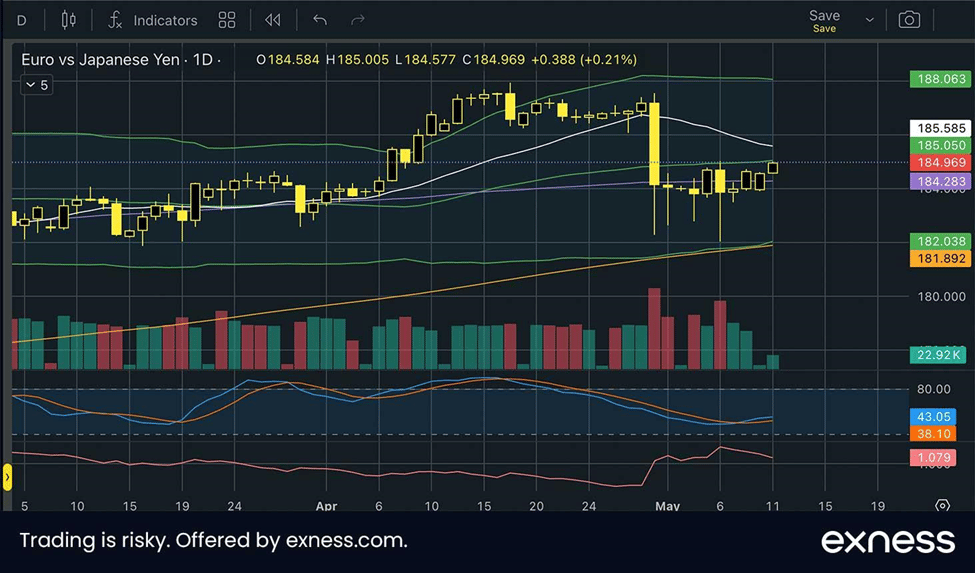
Chart

Euro-yen has been in a sideways trend on the daily chart for all of 2026 so far. With 30 April’s large loss not pushing below the 100 SMA and several tails overlapping this area, this SMA is a likely support for now. Selling volume has increased since the end of April which might suggest losses in itself; the slow stochastic is closer to neutral though than overbought or oversold.

In the current situation of intervention from the BoJ likely to have occurred, it’s important to monitor USDJPY and EURUSD’s movements too because if the dollar generally declines and the euro strengthens, euro-yen has the opportunity to break out upward. However, if the yen remains generally weak against all other major currencies, the likelihood of a clear break above ¥188 would be much lower. A relatively conservative target around the all-time high might help to derisk buying somewhat in this situation.

Author

Michael Stark

Michael has been investing since 2007 and trading CFDs since 2013. He favors considering both fundamental and technical analysis where possible, with a focus on swing and position trading.


More from Michael Stark
Share:

Editor's Picks

GBP/USD trims gains, back to around 1.3500

GBP/USD now surrenders part of the earlier move to multi-week peaks around 1.3530 and comes close to the 1.3500 support on Monday. Cable’s uptick comes in tandem with decent gains in the Greenback, always amid persistent uncertainty lingering over the reopening of the Strait of Hormuz and US-Iran talks.

EUR/USD slips to daily lows near 1.1540

EUR/USD now loses further momentum and recedes toward the 1.1540 zone, or daily lows, on Monday. The pair’s bearish performance action comes as investors continue to assess Friday’s disappointing US jobs data in a context where renewed tensions in the Middle East lend decent support to the US Dollar.

Gold clings to daily gains; focus is back to $4,400

Gold picks up pace and advances past the $4,350 mark per troy ounce, adding to Friday’s gains. That said, the yellow metal keeps pushing harder despite the better tone in the US Dollar, and is closely following the Fed’s interest-rate outlook as well as developments in the Middle East

Crypto Today: Bitcoin, Ethereum, XRP eye short-term recovery amid ETF inflows
Cryptocurrency prices are gaining traction on Monday, with Bitcoin (BTC) trading above $65,000, Ethereum (ETH) holding the near-term $1,900 support and Ripple (XRP) hovering above the critical $1.00 demand zone. The broad recovery comes amid capital inflows through US-listed Exchange-Traded Funds (ETFs).
US Payrolls miss – RBA on deck tomorrow
It would be remiss of me not to kick off this morning’s report with a rundown of last Friday’s US jobs report, which was a belter. Headline payrolls fell by 23,000, versus expectations of an 80,000 gain. The BLS noted that May was revised down by 66,000 (from 129,000) and June by 37,000 (from 57,000), resulting in combined May-June revisions of 103,000 lower than previous reports.
9-3: Is the Federal Reserve’s vote tally Warsh's new forward guidance?
The rate did not move. Neither did the statement, and that’s the more interesting fact. Set the July 29 Federal Open Market Committee (FOMC) statement beside the one issued on June 17, and the two documents are identical apart from a single verb and a paragraph at the bottom naming three dissenters.