EasyJet bids farewell to UK, and Oil prices in retreat

The story of the day is how American asset management firm, Apollo, swooped in and outflanked Castlelake to secure the acquisition of EasyJet, in a £5.7bn deal. Earlier this week, it seemed like Castlelake had all but won the battle to own the low-cost British airline, but Apollo’s £200mn higher bid sealed the deal.
EasyJet’s share price is higher by 13.5% today and is up 20% in the last 5 days and is the top performing stock on the FTSE 250. Once the deal is finalized, the company will leave the FTSE 250 entirely, however, Apollo will allow existing shareholders to roll their investments into the new business.
Growing American influence on UK corporates
Today’s deal highlights the growing American influence on UK corporates. There is a rush for US investment firms to buy up UK companies, especially iconic brands like EasyJet. For bigger UK firms, the onus is not on takeovers, but rather dual or primary listings on the much larger and deeper US stock market. The US is the new Middle East for takeovers and ownership of British firms. Time will tell how this shift changes UK corporate culture.
Oil demand set to decline
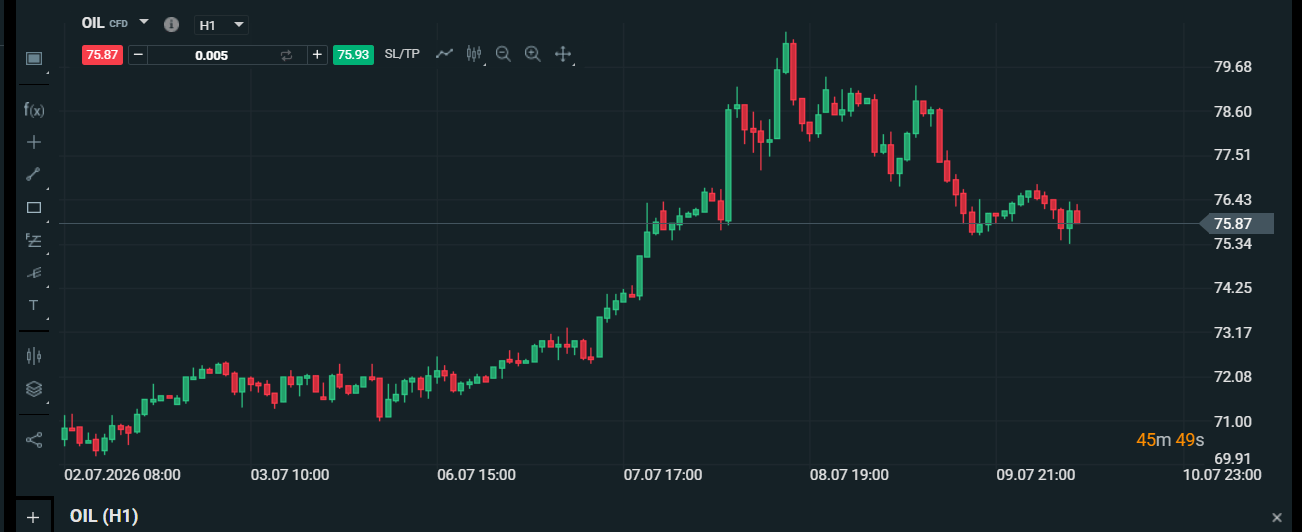
As we move to the end of the week, volatility has retreated and fears about an escalation in tensions between the US and Iran appear overdone. The oil price is lower today, and Brent crude is trading down 0.75% and is below $76 per barrel. The oil price is still higher by 6% this week, but it remains down 18% over the past month, which could be enough to quell the hawks at the world’s major central banks.
Oil supply normalizing
The oil price is falling due to two factors, firstly, news that the US will continue its technical talks with Iran, and confirmation that the US remains committed to finding a diplomatic solution to this crisis, and secondly, reports from the IEA that oil demand is set for its first annual decline since 2020. Global oil stocks also posted an increase in June, their first monthly increase since the war began earlier this year. The UAE also lifted oil production to a record, which suggests that oil supply is rapidly normalizing, and is unlikely to get impacted by the latest flare up in tensions.
News that oil demand will fall this year is interesting, as it is only having a mild impact on growth. The IMF lowered its 2026 global growth forecast to 3%, but growth is expected to bounce back in 2027 to 3.4%. The inflation outlook is less rosy, and the IMF raised its headline inflation forecast by 0.3% to 4.7% for this year, however, inflation is expected to moderate next year.
Thus, if we do not return to a blockade of the Strait of Hormuz, the impact from the war in the Middle East should not leave a lasting scar on the global economy, which is good news for risk assets.
US equities outperform European counterparts
So far this week, US stocks have bounced back, and European stocks are underperformers. The S&P 500 and the Nasdaq have both benefitted from the rally in chip stocks and the reduction in rate hike expectations for the July meeting, there is now a 21% chance of a hike, down from a 35% chance a week ago. They are higher by 0.8% and 1.5% respectively, while in Europe, the Dax fell more than 2%, and the FTSE 100 is lower by 1.6%.
The flare up in tensions in the Middle East is hitting European stocks harder than their US counterparts, which is worth watching over the summer months as both sides try to eke out a lasting peace deal, with only 37 days remaining of the initial 60-day deadline from the signing of the memorandum of understanding in June.
US stocks may have had a stronger week than their European counterparts, however, US futures are pointing to a lower open later today. The Nasdaq is poised to open down 0.5%, even though South Korean chipmaker SKY Hynix will make its debut on the Nasdaq later today. The rally in chip makers earlier this week was based on renewed optimism as we head towards earnings season. We do not think that the fundamental picture has changed, and any pullback in US stocks will be short-lived.
Brent crude Oil price, short term chart
Source: XTB
Author

Kathleen Brooks
XTB UK
Kathleen has nearly 15 years’ experience working with some of the leading retail trading and investment companies in the City of London.