Dollar eases off highs, Aussie rallies, Yen weakens

Bond yields climb, stocks slump, US Payrolls eyed
Summary
The Dollar Index (DXY), a popular gauge of the Greenback’s value against a basket of six major currencies, eased off recent highs at 104.80, closing lower, at 104.45 in New York.
Global bond yields rose with the benchmark US 10-year rate settling at 4.36% (4.31%). Other global treasury yields settled higher. Germany’s 10-year Bund yield closed at 2.40% (2.30%).
Against the Japanese Yen, the US Dollar was subdued, settling at 151.57 (151.60 yesterday). Japanese officials continued their intervention talk which kept the Yen from weakening further.
The USD/JPY pair traded to an overnight high at 151.80, near its recent peak. Japan’s former Vice-Finance Minister Tatsuo Yamazaki said: “the government can step in as soon as the Yen falls beyond the current range.”
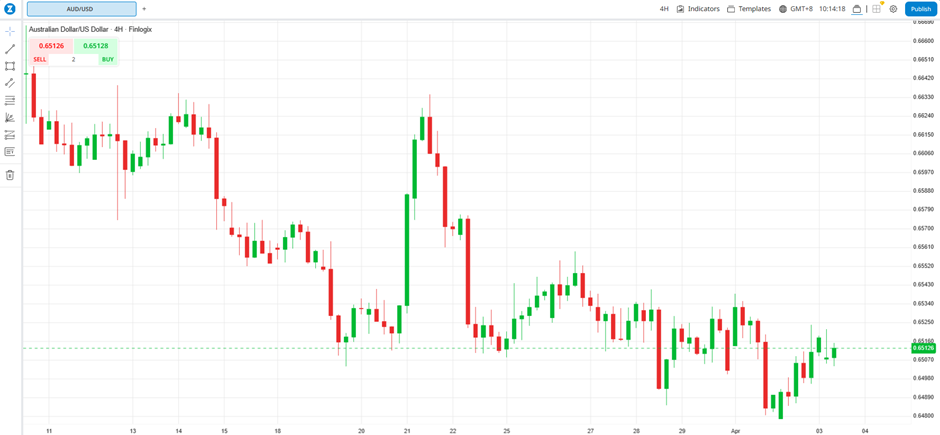
The Australian Dollar outperformed, climbing 0.4% to 0.6515 from 0.6490 yesterday. In choppy overnight trade, the Aussie held the 0.6480 support level, rallying to close above 0.65 cents.
Soaring commodity prices led by Gold and Silver supported the Aussie Dollar. Spot Gold soared 1.27% to USD 2,277.30 (USD 2,256.00). Silver rocketed to USD 26.09, up from USD 25.18.
New Zealand’s Kiwi (NZD/USD) climbed to 0.5967 (0.5952 yesterday). The Kiwi, often referred to as the “Flightless Bird” by FX traders, bounced off its overnight and 4-month low at 0.5943.
Upbeat Eurozone and German Manufacturing PMIs lifted the Euro (EUR/USD) to 1.0765, up from 1.0740 yesterday. The Eurozone’s February Final Manufacturing PMI rose to 46.1 from 45.7.
Sterling (GBP/USD) rallied against the broadly based weaker Greenback, settling at 1.2577 (1.2552). Britain’s February Manufacturing PMI also beat forecasts, climbing to 50.3 (49.9).
The US Dollar was mixed against the Asian and Emerging Market Currencies. The USD/CNH pair (Dollar-Offshore Chinese Yuan) dipped to 7.2555 from 7.2595 yesterday. Against the Singapore Dollar, the Greenback (USD/SGD) dipped to 1.3515 from 1.3522.
Other economic data released yesterday saw Germany’s Final Manufacturing PMI climb to 41.9 from 41.6. The US JOLTS Job Openings edged up in February to 8.75 million, modestly up from January’s 8.74 million. January’s JOLTS report was revised downward.
The Job Openings and Labor Turnover survey stayed at historically high levels, a sign that the American Job market remains strong. The US releases its February Payrolls report on Friday.
EUR/USD – The shared currency gained 0.26% against the modestly weaker Greenback, settling at 1.0765 in New York (1.0740). The Euro traded to an overnight peak at 1.0779 before slipping at the close. The overnight low traded for the Euro was 1.0725.
USD/JPY – The Greenback kept it’s bid against the Japanese Yen, finishing at 151.57 from 151.60 yesterday. The USD/JPY pair traded to an overnight high and recent high at 151.80 before easing. Intervention threats by Japanese officials kept the USD/JPY at bay.
AUD/USD – The Aussie Dollar climbed back above 0.65 cents to finish at 0.6515, up from 0.6490 yesterday. In choppy trade, the Aussie Battler climbed to an overnight high at 0.6524 before easing. The overnight low recorded was at 0.6485.
GBP/USD – The British currency rallied to 1.2577 US Dollars, up from yesterday’s open at 1.2552. A generally weaker Greenback supported Sterling, which traded to an overnight high at 1.2578. Earlier, the British Pound slumped to an overnight low of 1.2539.
On the lookout
Today’s economic calendar is a busy one and it kicked off with New Zealand’s GDT (Global Dairy Trade) Price Index which rose 2.8%, up from a previous -2.8%. As one of the largest global dairy exporters, the GDT Price Index is a crucial indicator for the dairy industry worldwide. Next up on the economic calendar was Australia’s AIG March Manufacturing Index, which climbed to -7 from -12.6 previously, beating estimates at -14. Japan follows next with its Jibun Bank March Final Services PMI (f/c 54.9 from 52.9 – ACY Finlogix). China releases its March Caixin Services PMI (f/c 52.7 from 52.5 – ACY Finlogix).
Italy kicks off Europe with its Italian February Unemployment Rate (f/c 7.2% from 7.2% - ACY Finlogix). Next up is the Eurozone February Unemployment Rate (f/c 6.4% from 6.4% - ACY Finlogix). The Eurozone releases its Eurozone March Flash Inflation Rate (m/m f/c 0.9% from 0.6%; y/y f/c 2.6% from 2.6% - ACY Finlogix), Eurozone March Core Inflation Rate (m/m f/c 0.9% from 0.6%; y/y f/c 3% from 3.1% - ACY Finlogix). Canada kicks off North America with its S&P Global Services PMI (f/c 47.2 from 46.6 – ACY Finlogix).
The US rounds up today’s data releases with its ADP (Private Jobs) March Employment Change (f/c 148K from 140K – ACY Finlogix). Next up is the US S&P March Global Services PMI (f/c 51.7 from 52.3 – ACY Finlogix), and finally, the US March ISM Services PMI (f/c 52.6 from 52.6 – ACY Finlogix). Several US Federal Reserve Bank Chair Jerome Powell plus several other Federal Reserve Heads, Goolsbee, Barr and Kugler are due to speak at various events. The focus will be on Powell’s speech, at Stanford’s Business, Government and Society forum.
Trading perspective
The Dollar Index eased off its overnight and recent peak at 104.80, settling at 104.45. Heading into today’s busy economic calendar, expect the DXY’s ceiling to be around that 104.80 peak. The highlight of the week will be Friday’s US Payrolls report. Median forecasts for the US Non-farms Payrolls increase centers at +200K from +275K previously (ACY Finlogix).
Due for release today are Chinese, global and US Services PMI’s. Robust commodity prices, led by Gold and Silver will continue to be focused on. Copper prices extended their rally, lifted by upbeat Chinese Caixin Manufacturing PMIs.
While the US JOLTS Job Openings edged up in February, bear in mind that January’s number was revised lower. Markets will turn their focus to Friday’s Payrolls report.
EUR/USD – The shared currency bounced off its lows, advancing against the Greenback to 1.0765 (1.0740). Immediate resistance lies at 1.0790 followed by 1.0820. Immediate support can be found at 1.0730 (overnight low traded was 1.0725). The next support level lies at 1.0700 and 1.0670. Look for the Euro to consolidate in a likely range today of 1.0720-1.0790. Trade the range, with the preference to sell Euro on strength.
AUD/USD – The Aussie Battler rallied in true battler fashion, to 0.6515 in late New York, up from yesterday’s 0.6490. Look for immediate resistance at 0.6540. 0.6570 and 0.6600. Immediate support can be found at 0.6470 and 0.6440. Look for more choppy trade in the Aussie today, likely between 0.6470-0.6540. Trade the range, nice and wide.
The preference is to buy the Aussie Battler on dips toward 0.6450.
USD/JPY – Against the Yen, the US Dollar kept its bid, settling in late New York at 151.57 from 151.60 yesterday. Japanese officials continued to show their displeasure of a weak Yen. This time it was former Vice-Finance Minister Yamazaki. Immediate resistance lies between 151.80 and 152.00 with the latter level key. On the downside, immediate support can be found at 151.40 (overnight low traded was 151.46). The next support is found at 151.10. Look for more choppy trade, likely between 151 and 152. Beware of Japan Inc, who are looming large over any further weakness in their currency.
GBP/USD – The British Pound rallied against the US Dollar to 1.2577 from 1.2552 yesterday. Immediate resistance can be found at 1.2600 followed by 1.2640 and 1.2680. Immediate support lies at 1.2570 followed by 1.2540 and 1.2510. Look for Sterling to trade in a likely range today between 1.2520-1.2620. Trade the range today.
Author

Michael Moran
ACY Securities
Michael has over 40 years’ FX experience, including running FX trading desks for some of the largest banks in the world.