Currency strength and pair matrix

Methodology and approach
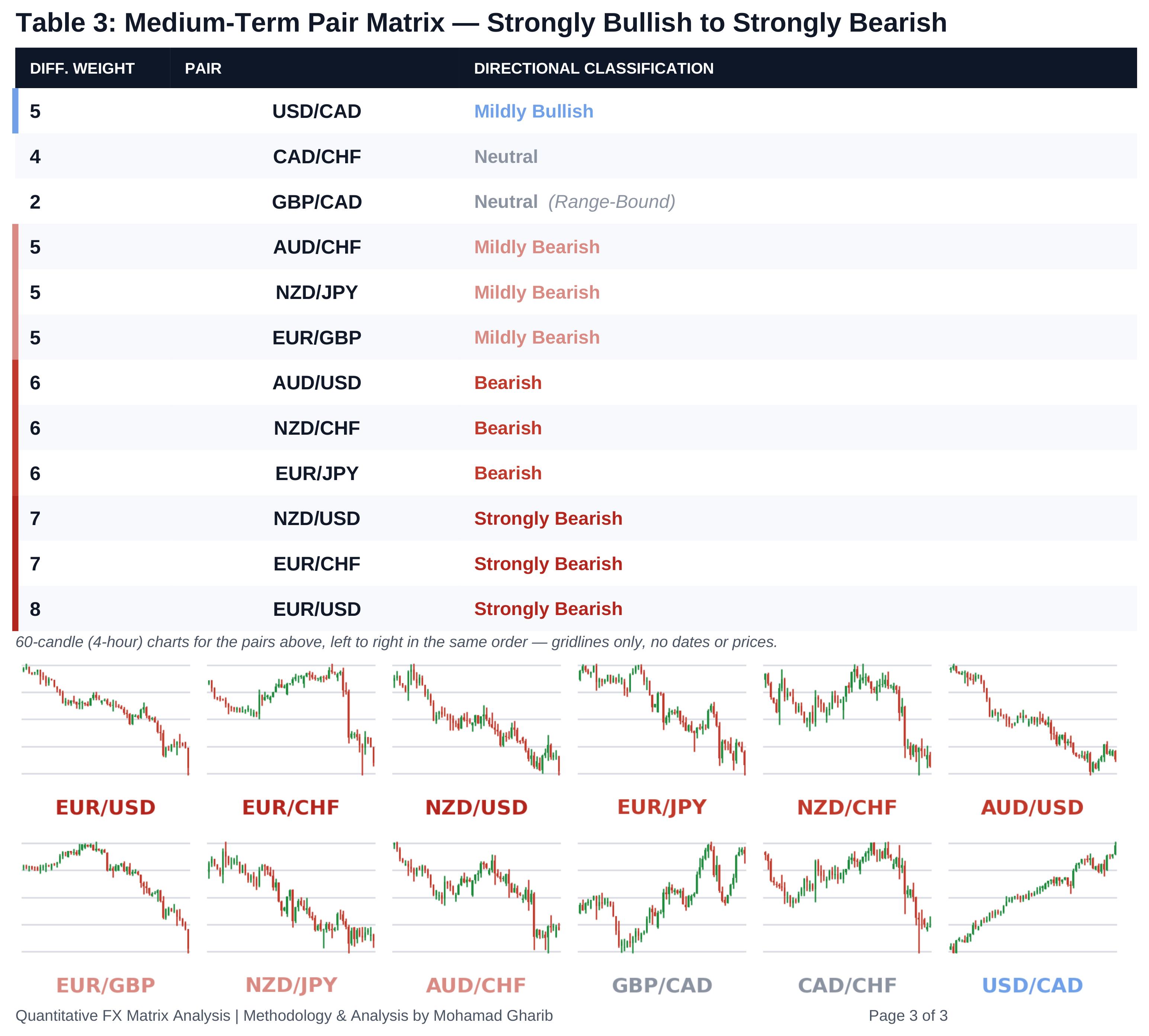
This report evaluates major currencies by constructing a relative strength index for each currency, ranking them systematically from Strongest (Rank 1) to Weakest (Rank 8) across Short-Term and Medium-Term horizons. By pairing stronger and weaker currencies, the model identifies the currency pairs with the largest relative-strength differentials and classifies each from Strongly
Bullish to Strongly Bearish. The pair with the narrowest differential in each horizon is treated separately as the model's RangeBound pair.
Short-term executive takeaway
USD ranks as the strongest currency short-term, while EUR ranks as the weakest, placing EUR/USD at the Strongly Bearish end of the Short-Term Pair Matrix.
Separately, GBP/JPY has the narrowest differential (Diff. Weight 2), marking it as Range-Bound.
Medium-term executive takeaway
USD ranks as the strongest currency medium-term, while EUR ranks as the weakest, placing EUR/USD at the Strongly Bearish end of the Medium-Term Pair Matrix.
Separately, GBP/CAD has the narrowest differential (Diff. Weight 2), marking it as Range-Bound.
Table 1: Currency strength index (Rank 1 to 8)
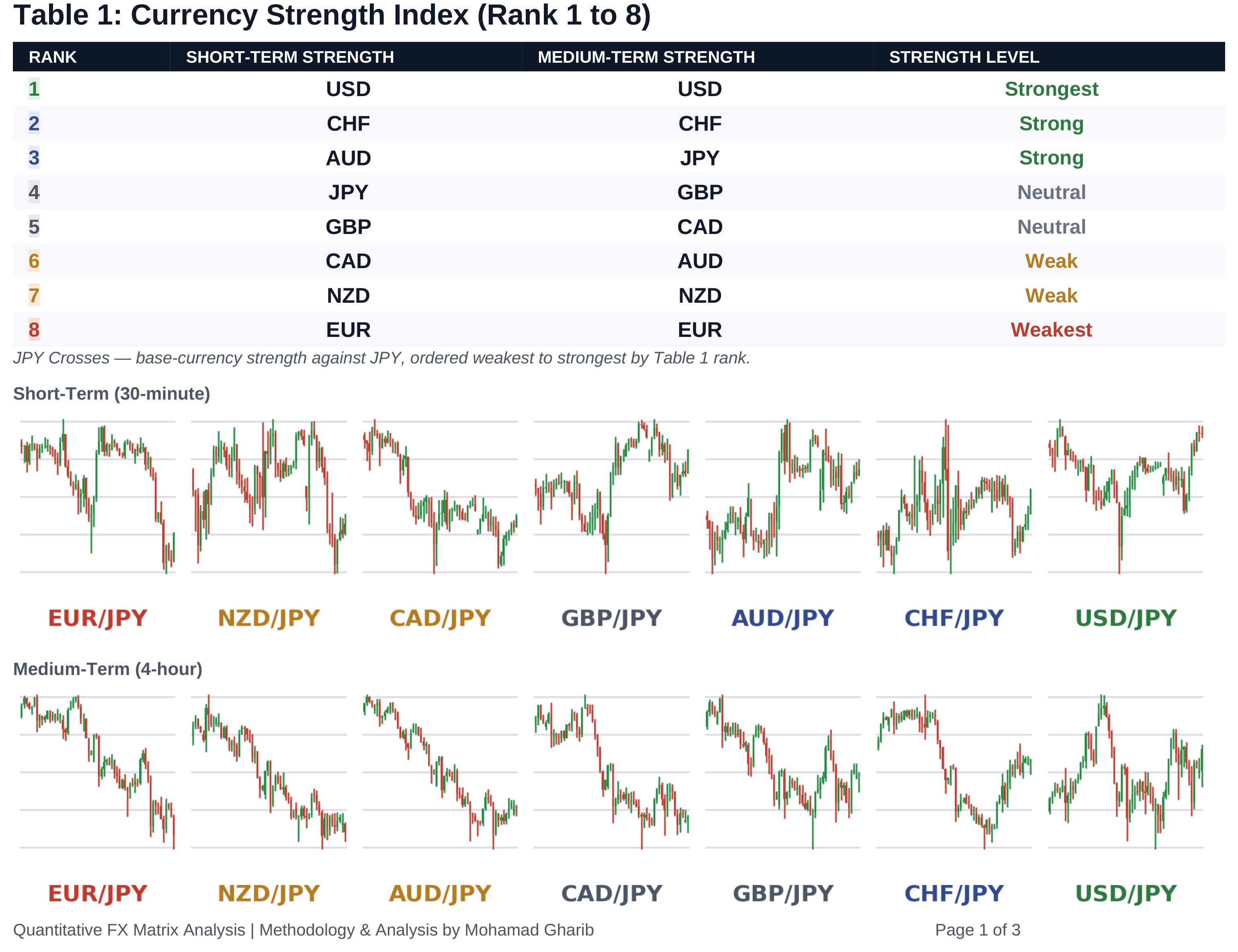
Table 2: Short-term pair matrix — Strongly bullish to strongly bearish
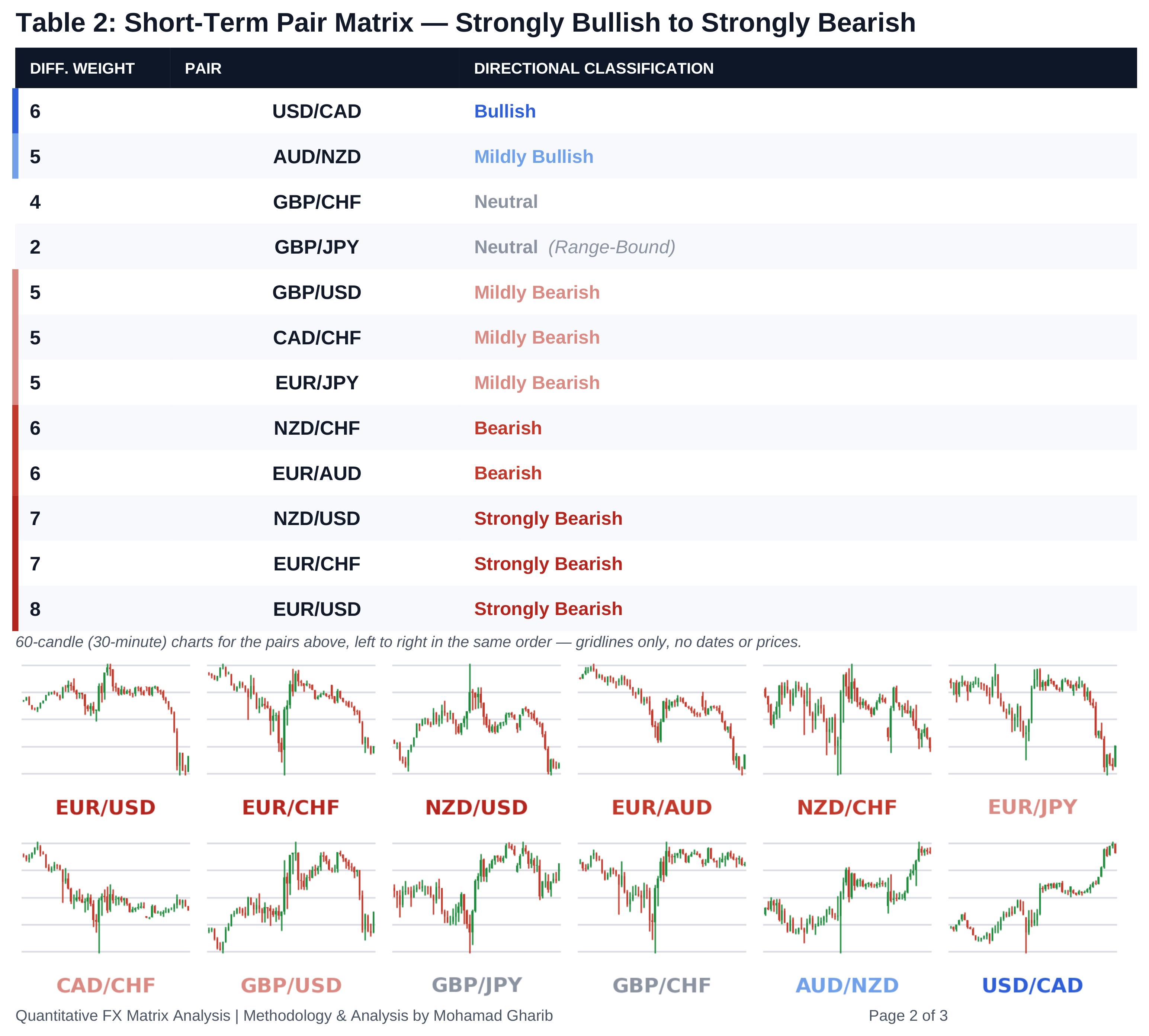
Table 3: Medium-term pair matrix — Strongly bullish to strongly bearish
Author

Mohamad Gharib
Independent Analyst
Mohamad Gharib is a Financial Markets Analyst and Quantitative Researcher with more than 18 years of experience in financial markets, including 15 years as an FX Quant Trader.