|

Chinese house prices cool further

  • Chinese house prices showed further signs of cooling in January. This follows several measures over the past six months to tighten the housing market (increase in down payment required, tighter lending standards for developers, restrictions on number of houses Chinese citizens can buy).

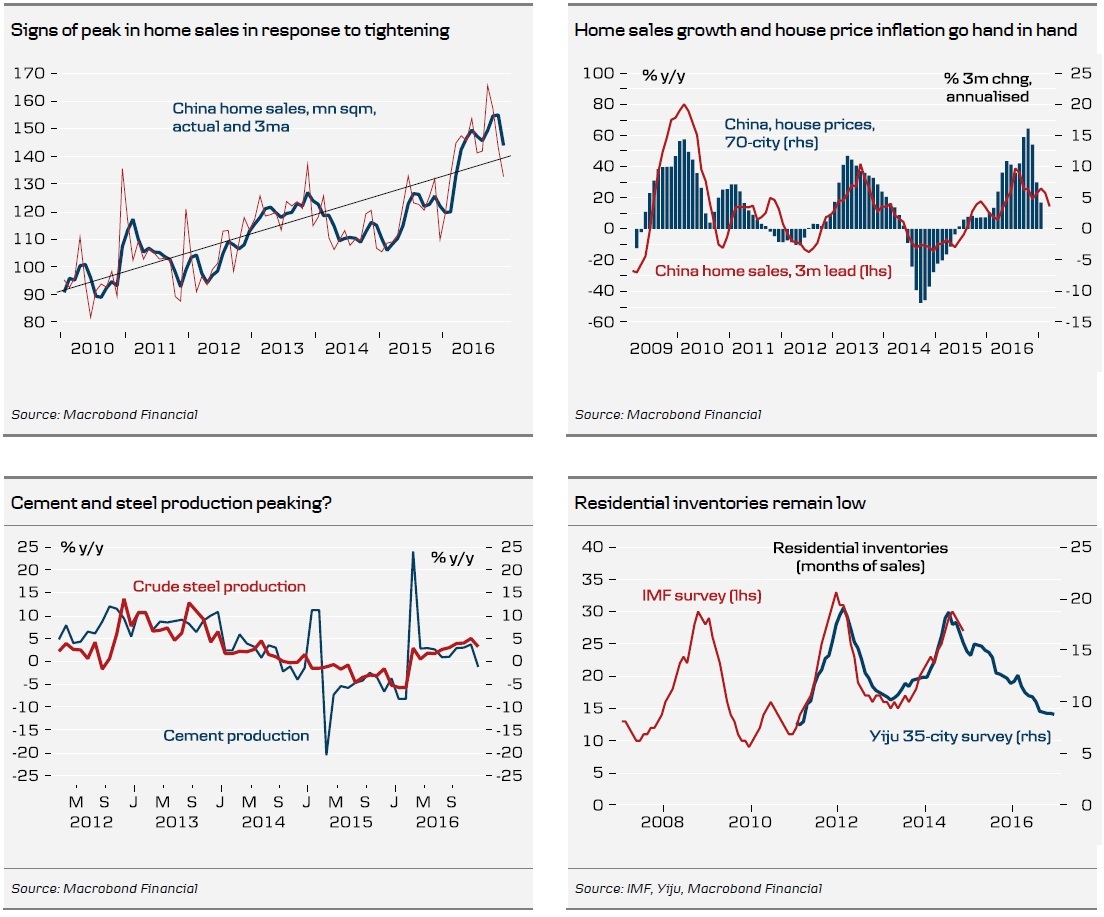
  • Growth in the 70-city house price index fell to 5.7% measured on the 3-month annualised rate. This is down from the peak of 15.7% in November last year.

  • Prices in tier-1 cities in particular are cooling after significant increases over the past 18 months. House prices in Shenzen – which have seen the fastest increases - are now falling slightly. Tightening measures have been the strongest in the big tier-1 cities.

  • It's still a very high priority for the Chinese government to rein in house price bubbles in the big cities and avoid speculative behaviour. At the annual Central Economic Work Conference in December it was stated that "houses are built to be inhabited, not for speculation" and that the goal is to "establish a fundamental and longterm system to curb real-estate bubbles and market volatilities". In the Q4 monetary policy report from the People's Bank of China (PBoC) released on 18 February it was also stated that it would "strictly limit the flow of credit into speculative housing purchases".

  • We look for a further moderate cooling of the housing market this year, which should put a brake on Chinese growth. This is underpinned by softer home sales data in recent months (see chart next page). However, low residential inventories should work to avoid a sharp downturn in both house prices and construction activity.

Author

Allan von Mehren

Allan von Mehren

Danske Bank A/S

More from Allan von Mehren
Share:

Markets move fast. We move first.

Orange Juice Newsletter brings you expert driven insights - not headlines. Every day on your inbox.

By subscribing you agree to our Terms and conditions.

Editor's Picks

EUR/USD tests 1.1800, closes in on a fresh two-month high

EUR/USD extends its gains for the second consecutive day on Tuesday and trades near 1.1800. The broad-based US Dollar weakness and a potential policy divergence between the European Central Bank and the Federal Reserve keep the bullish bias intact heading into the holiday season.

GBP/USD climbs above 1.3500 area, renews 11-week peak

GBP/USD extends its weekly rally and trades at its highest level since early October above 1.3500. The US Dollar remains under persistent bearish pressure heading into the Christmas break, while Pound traders largely brush off the latest interest rate cut from the Bank of England.

Gold approaches $4,500 as record-setting rally continues

Gold builds on Monday's impressive gains and advances toward $4,500, setting fresh record-highs along the way. Heightened geopolitical tensions, combined with the ongoing US Dollar (USD) selloff ahead of the Q3 GDP data, help XAU/USD preserve its bullish momentum.

US GDP expected to highlight steady growth in Q3

The United States Bureau of Economic Analysis (BEA) will publish the first preliminary estimate of the third-quarter Gross Domestic Product on Tuesday, at 13:30 GMT. Analysts expect the data to show annualized growth of 3.2%, following the 3.8% expansion in the previous quarter.

Ten questions that matter going into 2026

2026 may be less about a neat “base case” and more about a regime shift—the market can reprice what matters most (growth, inflation, fiscal, geopolitics, concentration). The biggest trap is false comfort: the same trades can look defensive… right up until they become crowded.

XRP steadies above $1.90 support as fund inflows and retail demand rise

Ripple (XRP) is stable above support at $1.90 at the time of writing on Monday, after several attempts to break above the $2.00 hurdle failed to materialize last week. Meanwhile, institutional interest in the cross-border remittance token has remained steady.
















