Chinese Gold imports surged to 2-Year high in june

Chinese gold imports rose to a two-year high in June as lower prices sparked a resurgence in demand.
According to the latest customs data, China imported 173 tonnes of gold last month, the highest monthly total since March 2024. That follows gold imports of 151 tonnes in May and 157 tonnes in April.
China ranks as the world’s largest gold market.
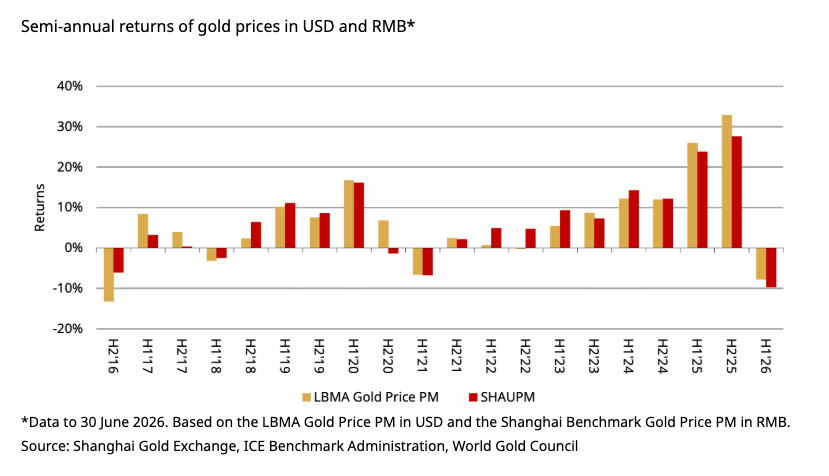
The international gold price dipped by 7 percent in H1. The price was down even more – 10 percent – in renminbi terms, reflecting yuan strength.
Jinrui Futures Company analyst Zijie Wu told Bloomberg investors buying the price dip were “an important driver of recent demand.” He also noted that Chinese banks were motivated to use up import quotas and stock up on bullion.
"Commercial banks need to build up their inventories to provide the physical backing for retail bullion sales and gold accumulation plans, as well as preserving some safety reserve for when demand spikes."
A new import licensing regime went into effect June 1, incentivizing importers to exhaust existing quotas.
There has also been a persistent domestic premium for gold in China. That means it’s cheaper for banks and jewelry producers to source gold from the international market.
A tug of war in Chinese Gold demand
Chinese gold demand has been bifurcated, with resilient investor buying and a struggling jewelry sector.
Wholesale gold demand rebounded in June, with gold withdrawals from the Shanghai Gold Exchange (SGE) rising 36 percent month-on-month to 87 tonnes.
According to the World Gold Council, the month-on-month recovery was primarily driven by opportunistic restocking across the supply chain as the gold price fell, along with healthy coin and bar investment.
However, there is ongoing weakness in the gold jewelry sector, creating headwinds for overall Chinese gold demand.
Through the first half of 2026, wholesalers withdrew 598 tonnes of gold from the SGE. That was down 12 percent year-on-year and 27 percent below the 10-year average. According to the World Gold Council, “While bullion demand remained robust, sustained weakness in jewelry consumption made manufacturers and retailers cautious about replenishing, weighing on overall wholesale gold demand.”
Chinese investors tend to favor physical bullion; however, there has been growing interest in gold ETFs over the last few years.
Despite a large outflow of gold in June, Chinese ETFs added 29 tonnes of metal in H1, the second-strongest start to a year on record. Total assets under management (AUM) rose slightly by 1 percent.
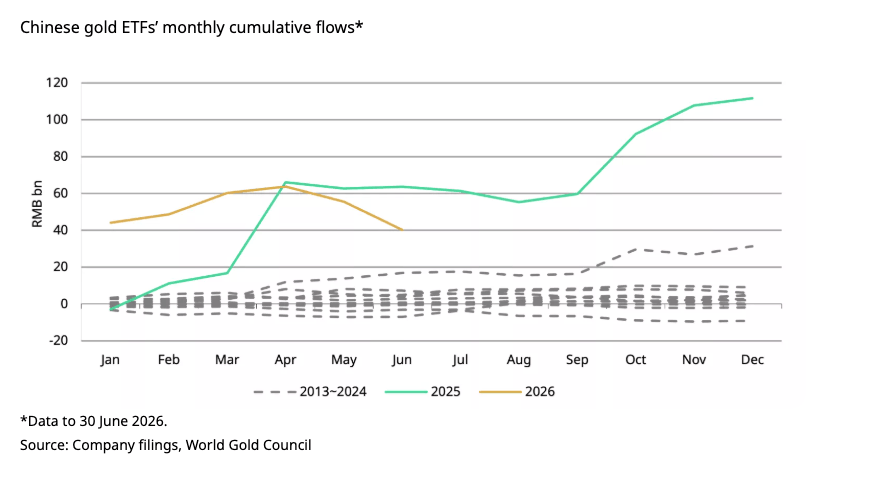
The World Gold Council called Chinese ETF demand “robust amid growing geopolitical and economic uncertainties.”
“Institutional investor participation in Chinese gold ETFs has also risen, supporting demand for these products.”
Total AUM by Chinese ETFs stood at 277 tonnes valued at ¥243 billion ($36 billion) at the end of June.
ETFs are a convenient way for investors to play the gold market, but owning ETF shares is not the same as holding physical gold.
Looking ahead, there is potential for more demand resilience with the gold price being lower. It could boost the jewelry market.
To receive free commentary and analysis on the gold and silver markets, click here to be added to the Money Metals news service.
Author

Mike Maharrey
Money Metals Exchange
Mike Maharrey is a journalist and market analyst for MoneyMetals.com with over a decade of experience in precious metals. He holds a BS in accounting from the University of Kentucky and a BA in journalism from the University of South Florida.














