Budget fears ‘trigger’ investors in UK assets


As we look towards Autumn, the focus is inevitably shifting towards the UK Budget, which should come at the end of October/ start of November.
August has seen a torrent of leaks from government and the Treasury about potential tax rises that will be needed to fill an expected £30bn + black hole in the UK’s balance sheet, in the absence of public spending cuts.
Tax rises that have been proposed include increases in capital gains tax, property tax rises, national insurance hikes on rental income and a levy on banks, among others. The impact of this drip feed of potential tax rises is eroding confidence and dimming the prospects for the UK economy. It is also starting to impact UK asset prices.
UK banking stocks at risk
On Friday, UK bank stocks have tanked after the Institute for Public Policy Research argued in favour of imposing a windfall tax on banks that it believes could raise £32.3bn in 5 years. They believe that the windfall tax is justified because of the lucrative money the banks have made from reserves they keep at the Bank of England, which were created as part of the Bank’s QE programme that ran from 2009-2021.
The IPPR argues that banks have made excess profits on these returns. The issue centres on the fact that the BOE pays bank rate on reserves, however, since 2022 it has been making a loss on the government bonds it buys as part of the QE programme. The IPPR wants the windfall tax to partly cover these losses.
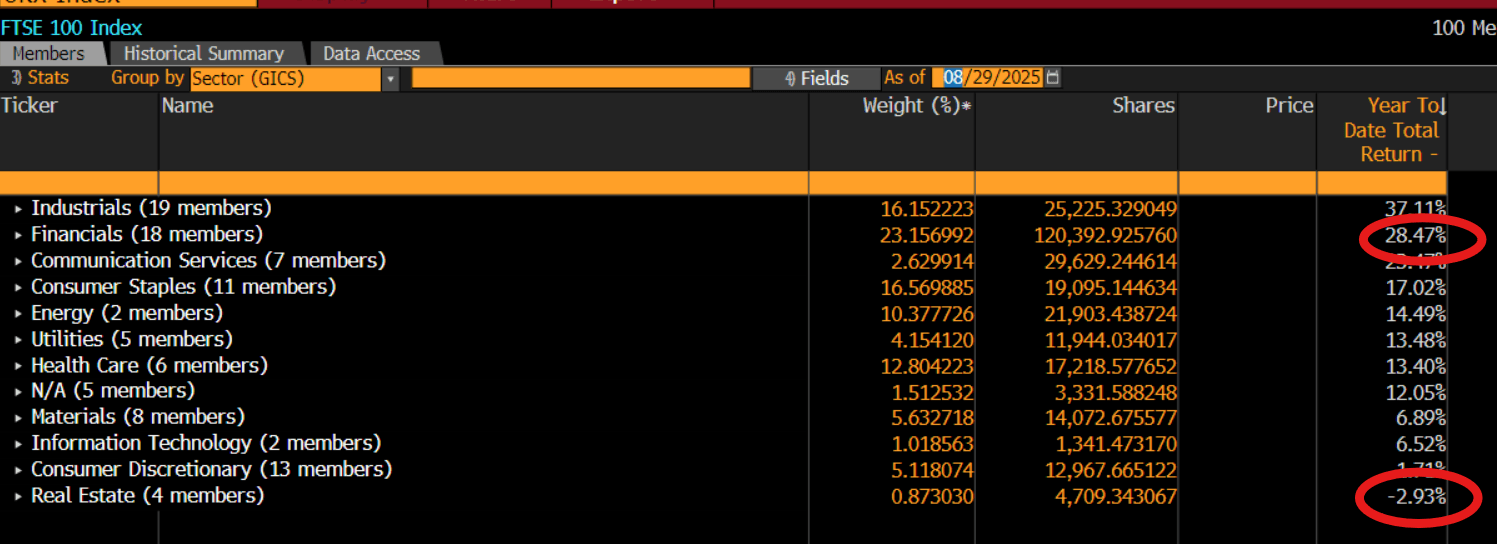
Whenever tax rises are threatened on a certain sector, stocks tend to sell off. The banking sector in the FTSE 100 is lower by more than 2.5% today, and there are big losses for Lloyds, down 5%, NatWest down 5.5%, Barclays down 4% and to a lesser extent, HSBC and Standard Chartered, which are both down more than 1%. A tax that raises £32bhn over 5 years will be hefty, which is why investors are taking fright. There could also be further for the banks to fall since they have been some of the best performing stocks on the FTSE100 this year, and the financial sector is the second-best performing sector on the index, as you can see below. Lloyds is higher by 42% YTD; Barclays is up 31% and NatWest is up 24%. If this pillar of support for the FTSE 100 is undermined in the lead up to the Budget, the FTSE 100 could come under pressure.
Chart 1: FTSE 100 performance YTD by sector
Source: XTB and Bloomberg
Real Estate under pressure
The impact of potential changes in the Budget is already weighing on the Real Estate sector, as you can see in the chart above. It is the weakest sector in the FTSE 100 so far this year. Although interest rates have come down, the prospect of property taxes and a change to stamp duty is weighing on the housing sector and a slowdown in the housing market is expected.
Long term damage to the FTSE 100?
The UK index has already had its worst week since April, however, it is outperforming, compared to its annual performances since 2020. Investors had finally dared to hope that the UK index was waking up from its malaise, however, the risk is that this period comes to an end as a political risk premium gets added to UK stocks. On top of this, September is historically a terrible month for stocks, so it could be a rough few weeks ahead for the UK index.
Sterling suffers from political fatigue
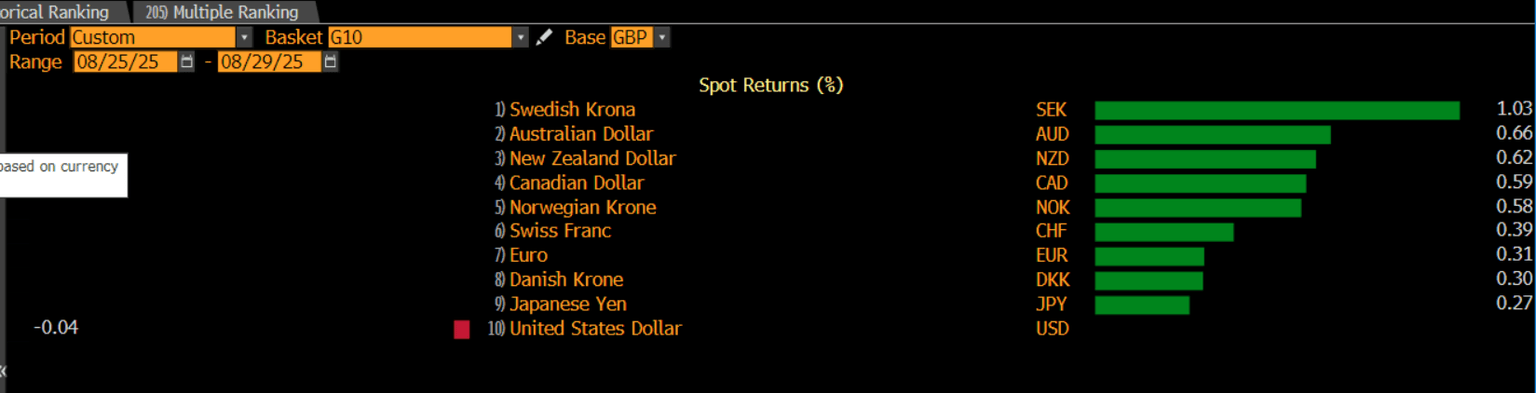
Sterling is also losing steam. For the past month, the pound has been the second strongest currency in the G10 FX space, however, it is reversing course and is the second weakest performer this week, as you can see below. We believe that sterling is weakening as the political risk premium rises leading up to the Budget, and this may continue.
Chart 2: Sterling vs. G10 currencies, 24th – 29th August
Source: XTB and Bloomberg
Author
Kathleen Brooks
XTB UK
Kathleen has nearly 15 years’ experience working with some of the leading retail trading and investment companies in the City of London.