Brutal sell-off: Silver deepens months-long slide, refocusing on $60
Silver has never been known for its calm temperament.
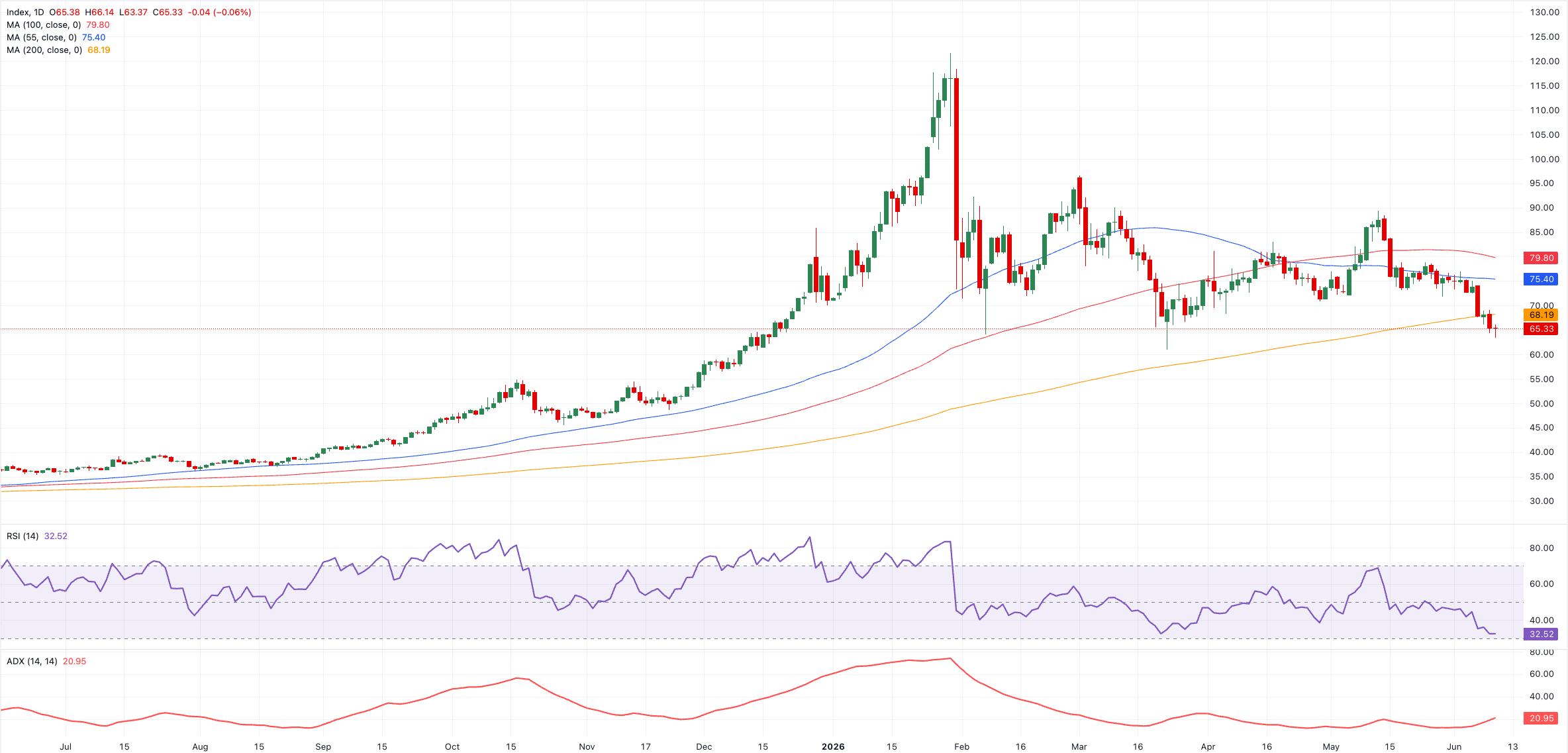
The precious metal can spend weeks grinding higher before suddenly giving back months of gains in a matter of days. That volatile reputation has been on full display in recent weeks, with silver tumbling nearly 30% from its May peak above $89.00 per ounce and sliding back towards the $64.00 area, uncomfortably close to its 2026 bottom near the key $60.00 yardstick.
The sharp fall has left investors pondering a simple question: has silver already experienced the worst of the correction, or is there room for another leg lower?
The answer isn’t black and white, but there are some key indicators that could suggest what’s next.
US Dollar remains a major headwind
The re-emergence of the US Dollar has been one of the biggest drivers behind silver’s decline.
As Treasury yields have remained elevated and expectations for aggressive Federal Reserve easing have faded, investors have found renewed reasons to favour the Greenback. That combination has created a difficult environment for precious metals, particularly Silver, which tends to be more volatile than gold during periods of shifting rate expectations.
As long as the Dollar remains supported, Silver may struggle to stage a convincing recovery.
Silver faces challenges that Gold does not
Unlike Gold, Silver is not driven solely by investment demand.
Much of the world’s consumption of the metal is in industrial applications, such as solar panels, electronics and advanced manufacturing. So, Silver is affected by more than just interest rates and investor sentiment, but also the health of the global economy.
Concerns surrounding China's outlook, manufacturing activity and industrial demand have all weighed on sentiment in recent months, creating an additional source of pressure for the metal.
Has speculative excess already been washed out?
Another important question is whether the recent decline has already removed the excessive optimism that built up during the rally.
Historically, Silver is notorious for violent corrections that shake out speculative traders before a broader trend resumes. The nearly 30% slide from the May highs has likely forced many leveraged investors out of the market and significantly reduced bullish positioning.
That does not guarantee a rebound is imminent. However, it does suggest that a considerable amount of froth has already been removed.
The current phase is where positioning data, ETF flows and investor sentiment become particularly important. Should the selling pressure continue to ease despite the weaker prices, the situation could indicate that the correction is running out of steam.
All eyes on the 2026 low
The $60.00 zone has turned into the main battleground for bulls and bears.
A clean break below from there would certainly add to the gloomy sentiment and might ignite a fresh round of selling. But if silver manages to stand its own and buyers come back in, investors may start to see the current loss as a dramatic correction in a longer-term uptrend, as opposed to the beginning of a more protracted slide.
For now, the bears remain in control.
Is the correction nearly over?
Silver has already endured one of its sharpest declines in years, and history suggests that markets rarely move in a straight line forever. Yet there are still few signs that investors are rushing back into the metal.
The next phase will likely depend on whether the US Dollar begins to lose momentum, Treasury yields stabilise and industrial demand shows signs of resilience.
The good news for silver bulls is that much of the optimism that fuelled the impressive rally to historic levels past $120.00 in late January has already been washed out. The bad news is that markets approaching major lows often become even more volatile before a lasting bottom finally emerges.
For now, Silver remains under pressure, but with prices approaching a major support zone and sentiment considerably less euphoric than it was just a few months ago, investors are increasingly watching for signs that the selling may finally be slowing down.
Author

Pablo Piovano
FXStreet
Born and bred in Argentina, Pablo has been carrying on with his passion for FX markets and trading since his first college years.

















