All eyes on Powell's Jackson Hole speech today

In focus today
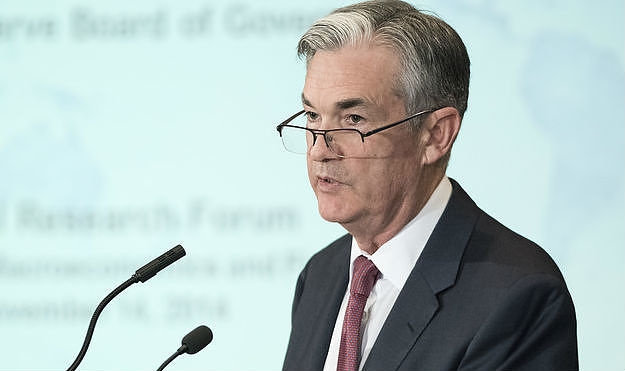
The annual Jackson Hole Economic Policy Symposium organized by the Kansas City Fed continues today and runs until Saturday. Today markets pay the closest attention to the Fed chair Powell's speech which is due at 16.00 CET. Markets pay close attention to Powell's assessment of the current state and monetary policy, and any kind of forward guidance, which will give a hint on how fast interest rates should decrease during the fall.
Economic and market news
What happened overnight
In Japan, CPI inflation was unchanged at 2.8% y/y in July, while inflation excluding fresh foods increased as expected to 2.7% (2.6% prior). However, inflation excluding fresh food and energy dropped to 1.9% y/y (2.2% prior), falling below 2% for the first time since September 2022. The underlying price pressures, illustrated by m/m seasonally adjusted growth, dropped compared to June, when excluding fresh food and energy. With inflation coming in around expectation the figures support Bank of Japan's message of a gradual tightening of monetary policy.
What happened yesterday
The euro area PMIs for August rose to 51.2 from 50.2 in July, above expectations of 50.1. The move was driven by the service sector where the PMIs rose to 53.3 from 51.9, while the manufacturing PMIs declined slightly to 45.6 from 45.8. Hence, the overall picture is the same with a struggling manufacturing sector and growing service sector. We note that the entire increase in the service PMIs can be explained by France where the service PMI rose by five index points, which contributes with 1.4 index points to the euro area data as France has a weight of 28%. Excluding France, where activity was impacted by the Olympic games, the service PMIs were unchanged in the euro area, which suggests that the economy has still lost some momentum compared to the first half of the year.
We got quite a big drop in euro area negotiated wages in Q2, which in Q1 increased by 3.55%, from 4.72%. The decline was especially due to Germany. The traditionally most important wage gauge for the ECB is the compensation per employee, which will be out on 6 on September. The June ECB staff projections estimated that wage growth would remain unchanged in Q2 2024 compared to Q1, measured as compensation per employee (CpE). Hence, with today's decline in negotiated wages it seems like ECB will get a pleasant surprise with lower-than-expected wage growth.
In the US, PMI figures showed mixed signals with manufacturing weakening further below 50, but services sector activity holding up well at 55.2. The weekly initial jobless claims figures were in line with consensus expectations of 232k and did not have the same market impact as in the last couple of weeks.
In the UK, PMIs came in stronger than expected both regarding the manufacturing and service sectors. The PMIs point to a continued expansion of the UK economy with private sector output increasing with uptick in order intakes, improved business activity and demand providing support. On inflationary pressures, prices moderated across both manufacturing and services input/output prices. Overall, positive news for the BoE with continued expansion in the economy and prices moderating across sectors.
In Norway, Mainland GDP rose 0.1% Q/Q in Q2 - both consensus and Norges Bank expected 0.2%. For the monetary policy outlook, the most important thing has been indications on rising capacity utilisation in late Q2 which essentially has been the key reason for Norges Bank turning among the most hawkish central banks in town. Meanwhile, since then the labour market has turned out weaker-than-projected which still leaves the door open for a December rate cut despite Norges Bank's revealed preferences.
Market movements
Equities: Global equities were lower yesterday as US markets lost momentum throughout the day and closed near the day's low. Interestingly, at a first glance, it appeared that there was a full-fledged defensive rotation in the US. However, a closer look at the rotation reveals that banks were the best-performing industry, up almost 1%, while semiconductors and automobiles were the losers, down 3.4% and 4.8%, respectively. Hence, it was a significant value rotation, seemingly triggered by a repricing of the Fed closer to a 25bp cut in September.
Please note the interesting relationship between the relative performance of banks and lower yields that we have currently. Over the last six months, banks have been the best-performing of all 25 industries in Europe, and they ranked fifth in the US, despite lower yields at both the short and long ends of the curve on both sides of the Atlantic. In the US yesterday: Dow -0.4%, S&P 500 -0.9%, Nasdaq -1.7%, and Russell 2000 -0.95%.
Equity markets are mixed in Asia this morning, and the same is true for European futures. US futures are higher this morning, with a group of growth stocks leading the advance, thereby recouping some of the territory lost yesterday.
FI: Global yields staged a 5bp sell-off across the board after a choppy session, thus 10y German Bunds ended at 2.24%. Weak German and French PMI (outside French service PMI likely due to the Paris Olympics) sent yields lower, yet after the euro area PMI aggregate rates started to sell off even through the euro area negotiated wages recorded a significant decline to 3.6% from the 4.7% print in Q1. The front end continues to price 25bp for the September meeting and 66bp for the year end in ECB cuts. While yesterday's data supported the case for a September rate cut, the year-end pricing is still stretched in our view.
FX: The weakening of the USD came to a halt yesterday, where the USD was top performer together with the GBP among the G10 currencies. Meanwhile NOK took another hit and JPY also lost some ground. EUR/USD remained above 1.11 and EUR/NOK neared 11.80.
Author
Danske Research Team
Danske Bank A/S
Research is part of Danske Bank Markets and operate as Danske Bank's research department. The department monitors financial markets and economic trends of relevance to Danske Bank Markets and its clients.