AI is not the solution

S2N spotlight
I wrote an article for a publication yesterday about the overreliance on AI in the trading and investment space. I am unable to share the article here for copyright reasons, but I want to share the key point of my article because I think it needs to be said.
It feels like a daily occurrence where I come across an advert or a claim by a vendor, influencer, or expert sharing a way to improve your trading or investing by using this new “cutting-edge” AI technology to either trade for you or design your trading programme.
Let me be frank. That is BS. No LLM model, not even Claude Sonnet 10 or ChatGPT 10, is going to come up with a trading strategy that will deploy and consistently make you money.
Humans are naturally lazy and greedy; we want to persuade ourselves that for $20 a month with access to the most sophisticated tools, we can relax and let the machines guide us towards inevitable wealth. Keep dreaming.
Over the last 25 years, as computing power has grown, so has trading software. Platforms like MetaStock, TradeStation, NinjaTrader, MetaTrader, AmiBroker, Wealth-Lab, and others all promised success through automation, indicators, and new “must-have” features. Each was marketed as the edge traders were looking for. The current wave of AI-enhanced technology is just another chapter in a never-ending series of stories we have been told sold.
AI is not the solution. You are.
It is Monday morning, so I am sure you don’t want a heavy explanation about the high degree of randomness in financial markets. I am not suggesting there are no long-lasting repeatable patterns in financial time series. Look at the momentum effect.
What I am suggesting is that LLMs (large language models) are designed to predict the next letter based on probabilities. It really doesn’t matter how smart your prediction model is if you are trying to predict something that is mostly random.
Random in, Random out. Yes, Mr. Miyagi.
I am not sure why I am so triggered writing about it this morning. Perhaps it’s because I read another newsletter writer write today about how he came up with an idea while the kids were playing soccer in the garden. He wrote a prompt while sipping coffee and reading the newspaper to ChatGPT that he shared in the newsletter and then proceeded to share how it provided him a killer trading strategy. I wrote to him explaining the flaws in his logic and his strategy and then cancelled my subscription.
Is it because it has been 6 weeks of feeling crap with cold and flu symptoms, or have I really become one of those grumpy old men?
In all seriousness, I have been working on a tiny part of the quantitative framework I have been developing for the last few months. I have been using every LLM model known to mankind, and still it has not been able to solve small but vital parts of the investment process.
To end with some stoic philosophy from the late great Seneca, he wrote, “Luck is what happens when preparation meets opportunity.” As much as we would all love to be able to sit back and let a machine do all the hard work, reality requires you to do the hard work. The “work” doesn’t necessarily mean the coding or the reading or anything physical, but it definitely means the thinking and the emotional processing.
S2N observations
In sticking with the theme of irritation. A very well-known quantitative researcher, who I now think is more of a shill than a researcher, had this to say on his site.
Since 1993 all of the S&P 500 returns have come from the close to the open price. He was essentially saying that all the returns are coming when the markets are closed. I found that fascinating. I thought that might be the case for a market in Australia that is heavily influenced by the goings-on in the US, but it seemed surprising for the US market.
I whipped up a quick analysis and came up with an entirely different answer. The blue line shows the part of the return coming from overnight activities. As you would have suspected, it is a small part of the total return.
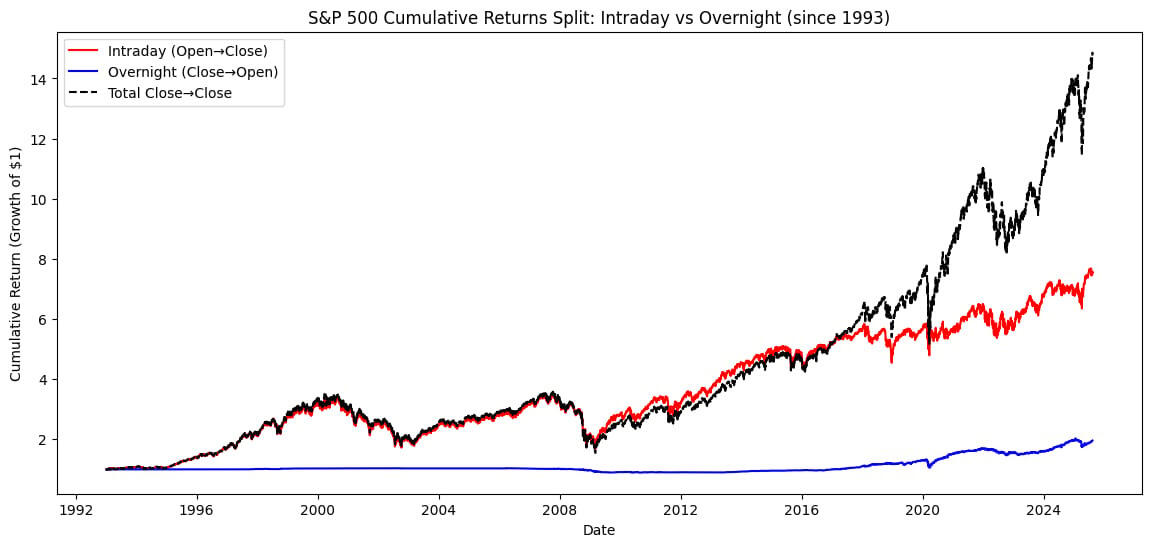
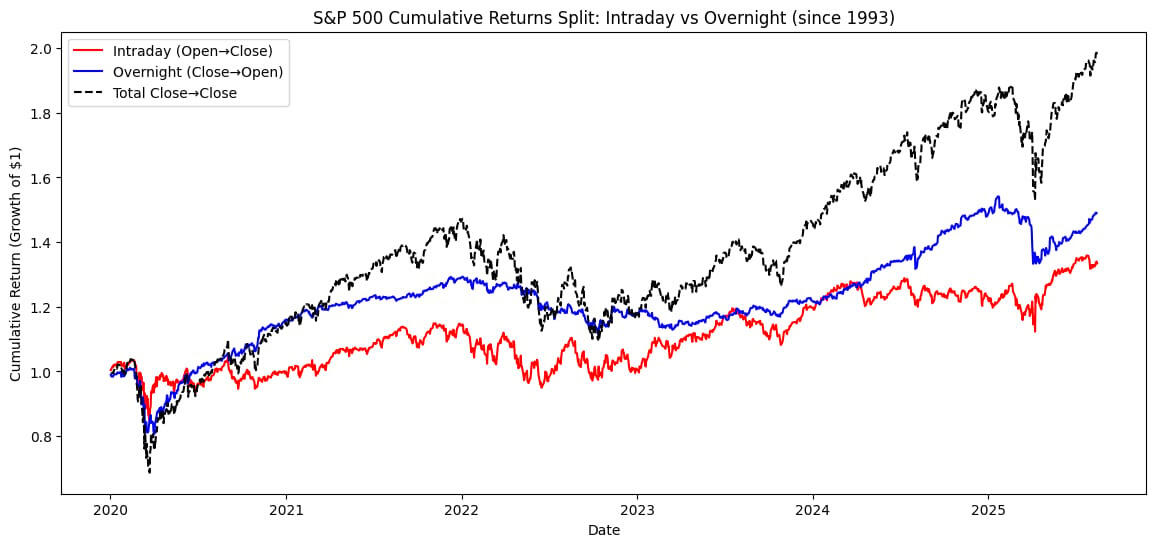
Yes, if we ran it from 2020, you would see that overnight was a bigger contributor to the overall return than intraday. Never quite as extreme as his comment that all returns came from close to open. I think the point I am getting at is to be very careful when assessing the agenda of that so-called expert and try to figure out what they are trying to get you to do.
I think we are currently at dangerously high stock valuation levels, with the geopolitical temperature rising once again. This weekend in particular I note an increase in potential tension with the Ukraine-Russia flip-flops coming out of the Oval Office. I continue to trumpet that this is not a good time to be fully invested. Did you get that one ?
The companies investing in everything AI-related must eventually convert their enormous capital spending into income.
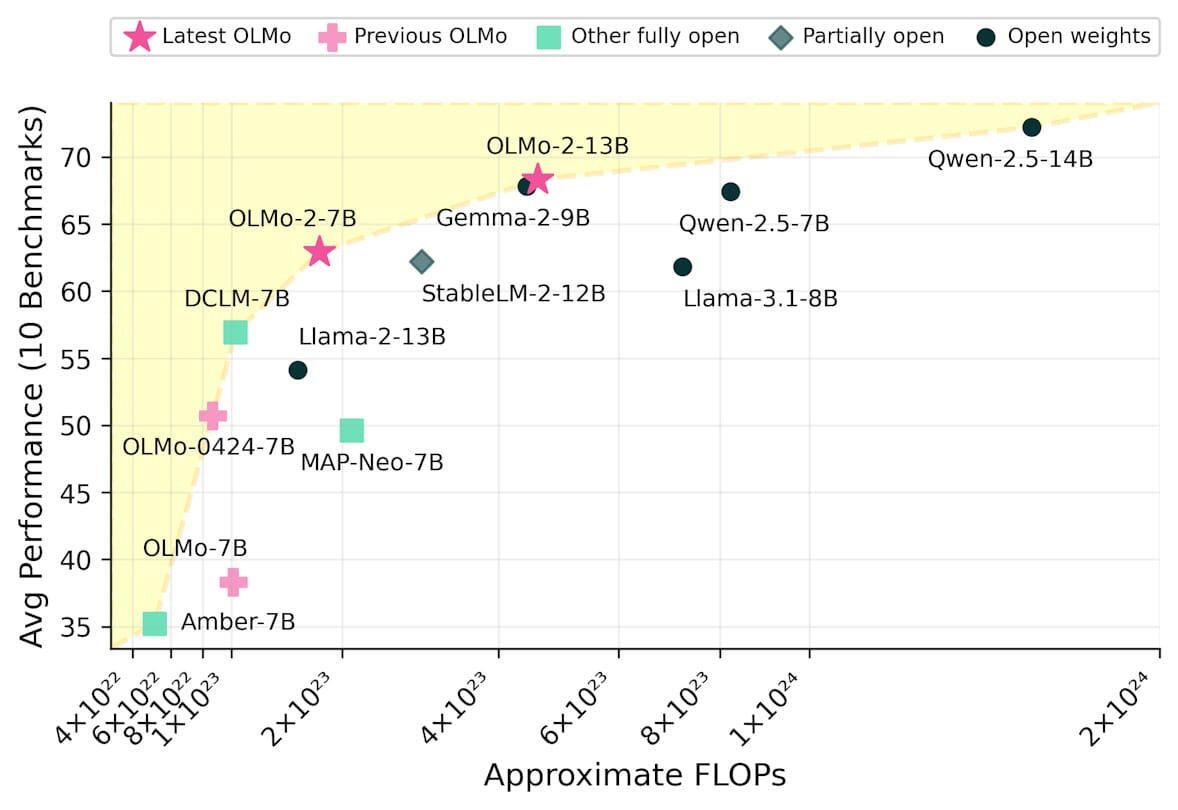
I am not an expert in the building of LLM models and the economics around them. What I am aware of is that closed-source model sizes are not growing at the pace they did in the recent past, probably due to running out of data. This has enabled open-source models to get closer and closer in performance. Remember, open-source is free. Could this be the mother of all bubbles?
Let me call it a day before I slit my wrists.
S2N screener alert
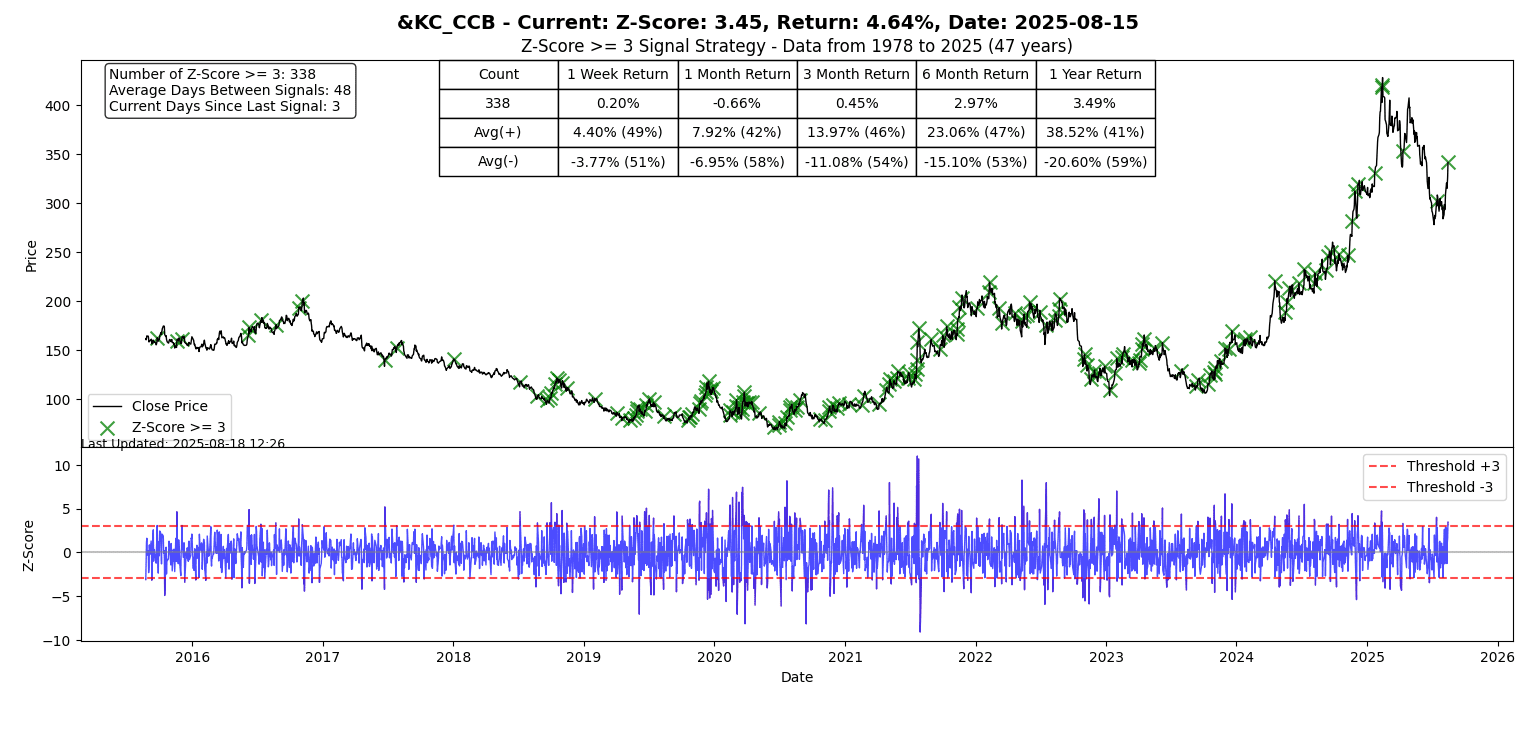
Coffee futures got a double shot on Friday.
S2N performance review
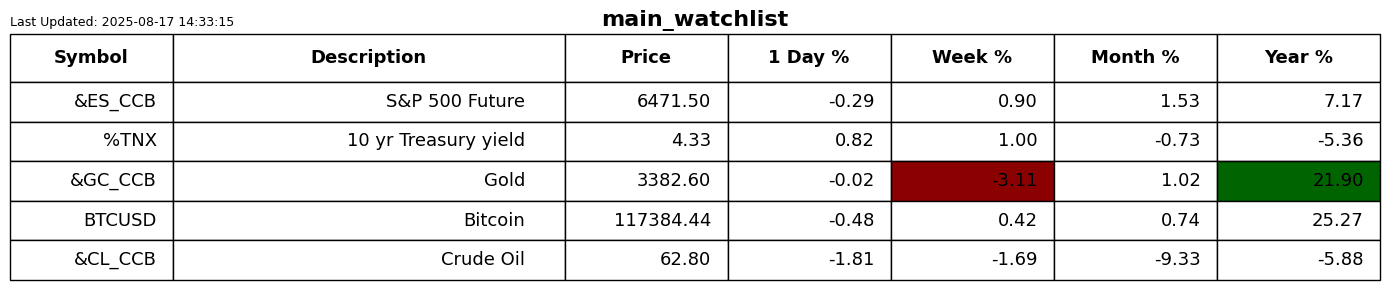
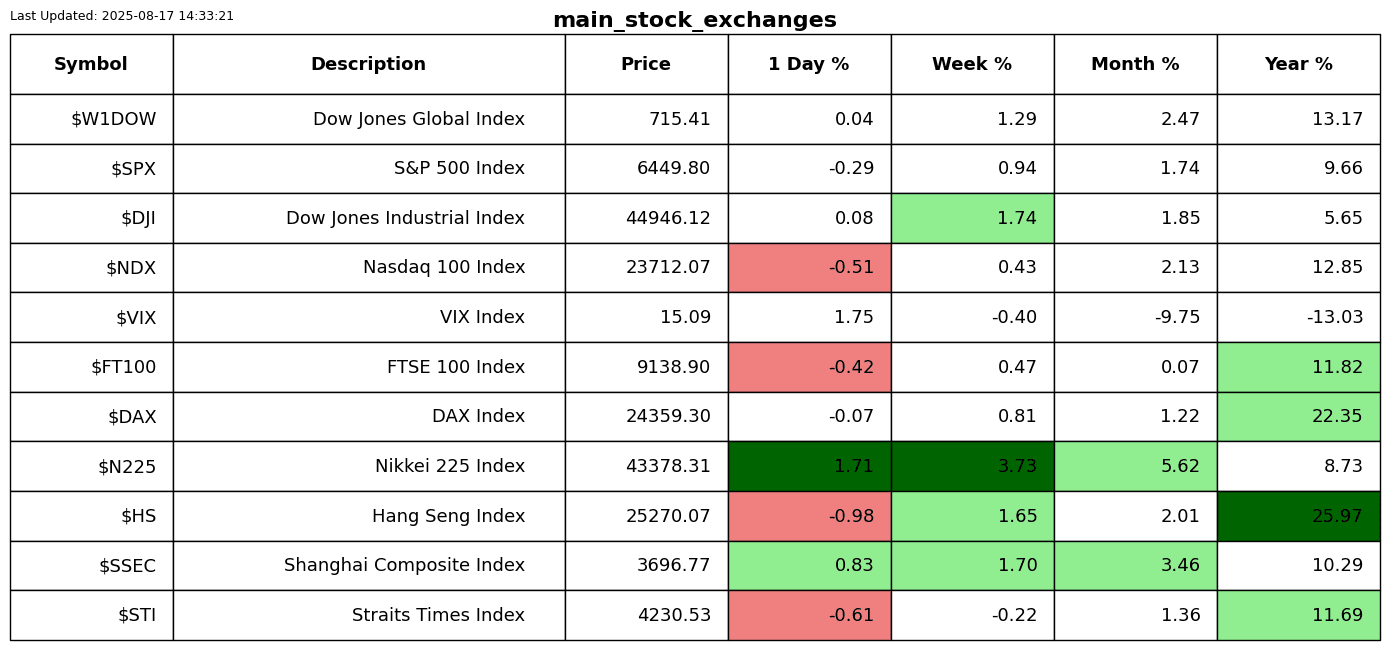
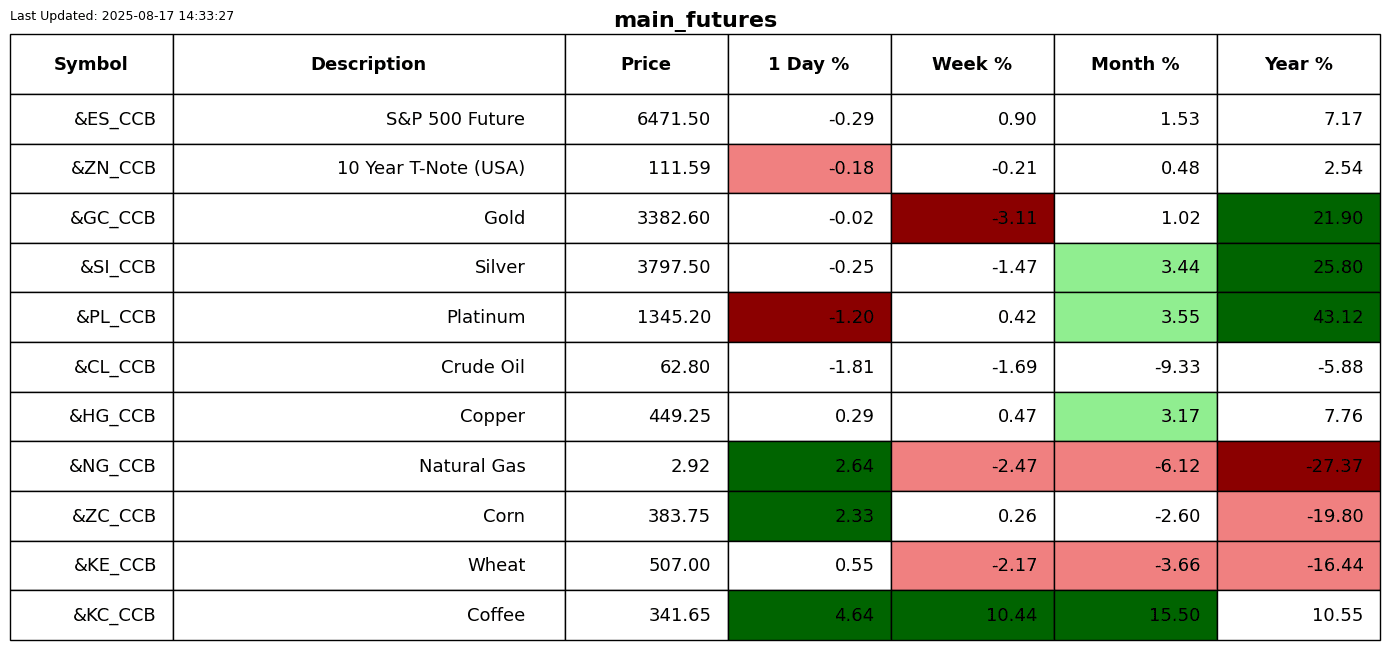
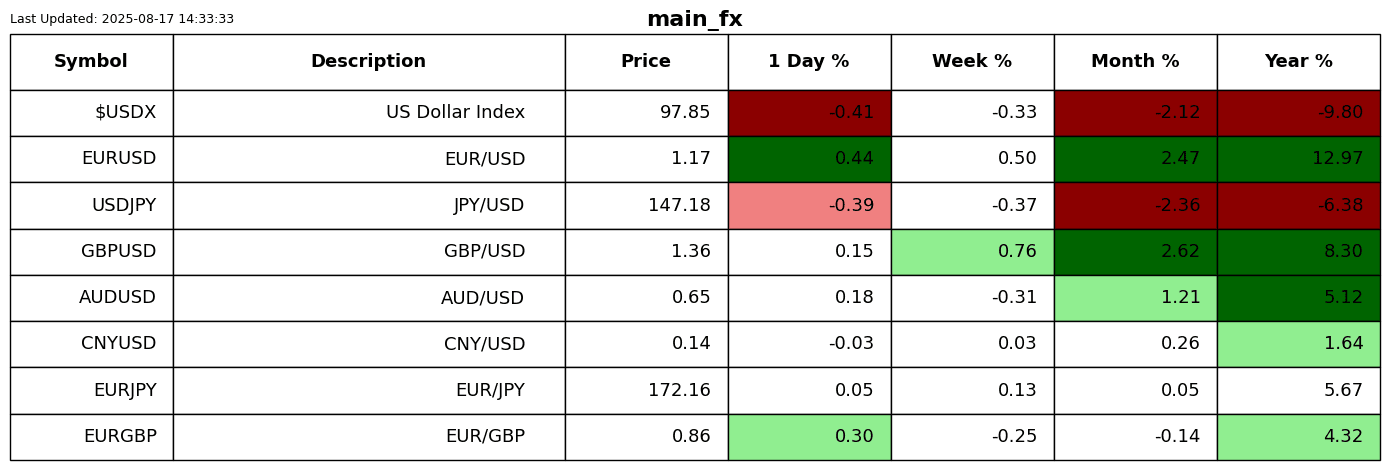


S2N chart gallery
S2N news today
Author

Michael Berman, PhD
Signal2Noise (S2N) News
Michael has decades of experience as a professional trader, hedge fund manager and incubator of emerging traders.


![How Wall Street rigs the game [Video]](https://editorial.fxsstatic.com/images/i/market-chaos-01.jpg)