AI can survive high valuations – Can it survive $102 Oil?

This week in Flip The Market, artificial intelligence runs into the energy shock it couldn't ignore any longer. Nvidia confirmed exceptional demand for computing power. By September 16, WTI sat near $102.50, the Federal Reserve had raised rates, and the Nasdaq-100 was having trouble extending its August advance.
You can see two dominant 2026 trades at play. An AI productivity boom that can support expensive technology stocks and an oil shock that keeps capital expensive.
AI earnings can defend a high valuation. They can't stop oil from lifting the discount rate applied to it.
US100 vs WTI: Nvidia delivered, yet momentum faded
Nvidia's August 26 report settled the basic earnings question. The company's fiscal second-quarter results show revenue of $96.2 billion, up 106% from a year earlier. Data center revenue climbed 117% to $89.0 billion. Its $108 billion outlook for the current quarter also beat the previous quarter's result. The AI infrastructure cycle hasn't cracked.
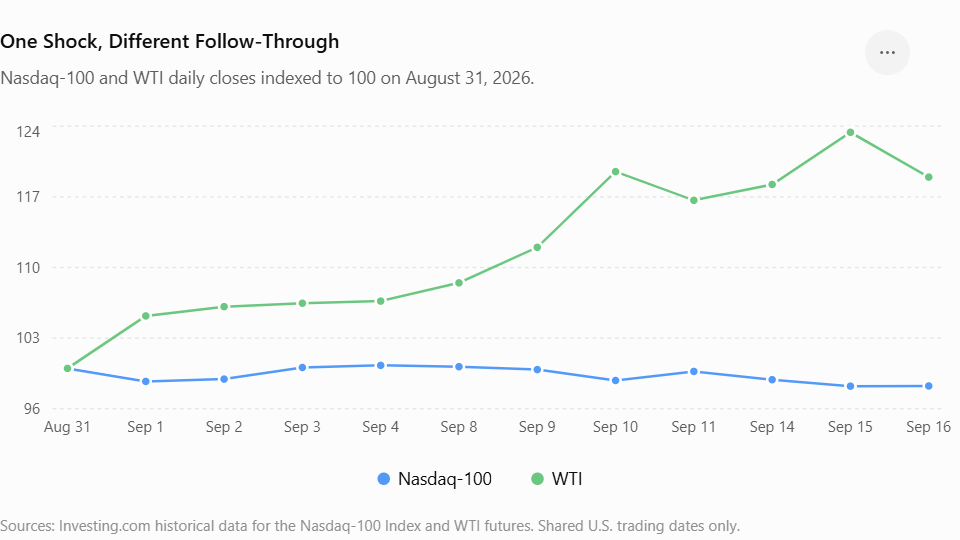
The index didn't respond with the same force. The Nasdaq-100 gained 4.2% in August, then had trouble adding to that gain in the first two weeks of September. That soft Nasdaq 100 performance matters because strong chip demand propped up the NASDAQ 100 price, but it couldn't offset the repricing of rates.
$102 crude turns energy into a valuation problem
WTI fell 3.2% to settle at $102.43 on September 16. Saudi Arabia had offered more cargoes through Oman, and visible vessel traffic through Hormuz stayed far below its recent average. The current WTI price still carries a large geopolitical premium.
The oil price chart from late August to mid-September shows crude climbing more than 20% in about two and a half weeks. Crude oil volatility has become a macro variable on its own. The next crude oil price move hinges on shipping access, damaged infrastructure, and alternative routes.
On the WTI crude price chart, $100 is more than a round number. Triple-digit oil feeds into freight costs, industrial inputs, and inflation expectations. That pulls oil price 2026 into the AI valuation debate.
AI consumes electricity, but oil transmits inflation
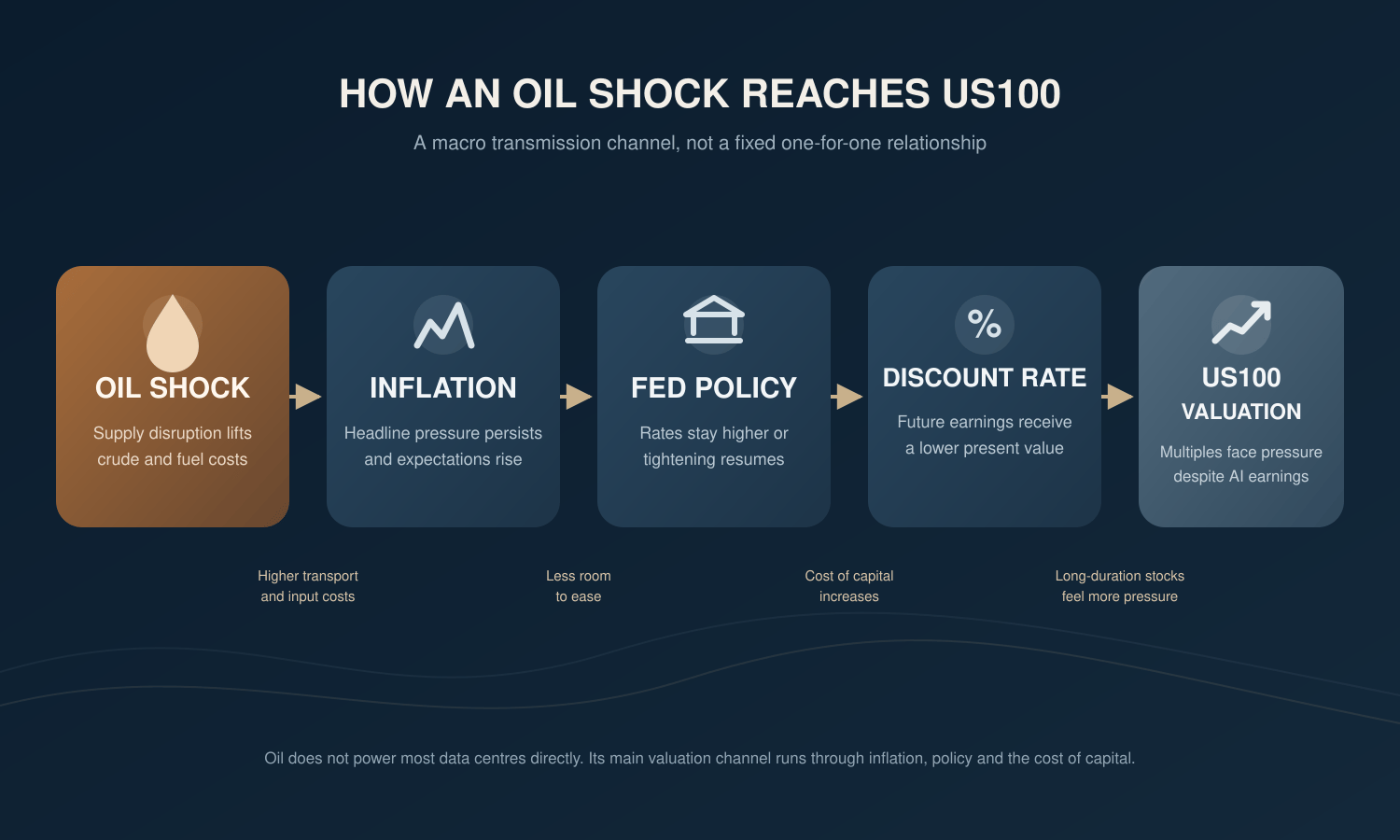
Data centers don't run on crude oil. But rapid growth in electricity demand can push up grid prices, while expensive oil spreads through transport and supply chains. Those two forces together make the disinflation that supports long-duration tech valuations harder to sustain.
In one mid-capacity scenario, the Dallas Fed estimated that data centers running mostly during peak hours could add 0.05 percentage points to headline PCE inflation in 2026 through higher electricity prices. Oil amplifies that problem. On September 16, the Fed raised its target range to 3.75%–4.00% and signaled that more tightening could come.
Nasdaq 100 vs WTI becomes a policy trade
The Nasdaq 100 vs crude oil correlation isn't set in stone. Both assets can rise when demand is strong. Right now, supply disruptions are pushing oil higher even as policy tightens. In this US100/WTI comparison, earnings support technology, but the macro transmission channel supports crude.
That tension makes the ratio unusually revealing. If the ratio falls, energy inflation is outrunning AI optimism. If it rises, earnings are absorbing the shock.
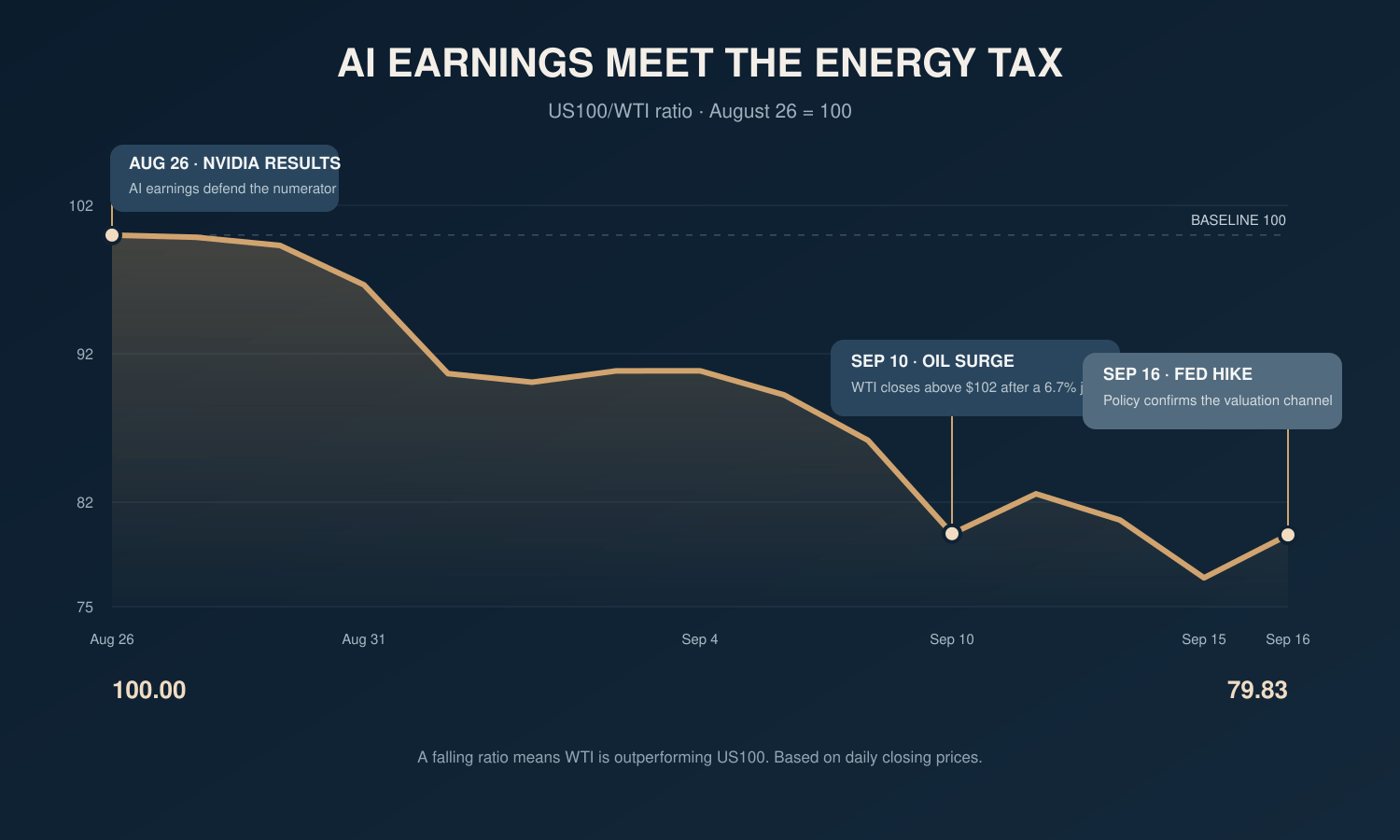
Versus Trade US100 WTI: The next test
For traders trying to figure out how to trade Nasdaq 100 or WTI, persistence is the key variable. If Hormuz reopens durably, the oil premium would weaken. If disruption continues, Nasdaq 100 vs crude oil stays tied to inflation and Fed guidance.
The argument for a trade Nasdaq 100 vs oil position comes down to which force gains the upper hand first: AI earnings growth or the energy tax embedded in interest rates.
This pair asks a harder question than simply asking if AI is real. Nvidia has already strengthened that case. The question now is how much oil-driven inflation even exceptional earnings can absorb.
Author

Amir Razak
Versus Trade
Malaysian-born market analyst Amir Razak cuts through the noise every week, breaking down Versus Pairs and explaining what is really driving one asset ahead of another.