Is Bitcoin mining still profitable? AI demand is changing how power is used
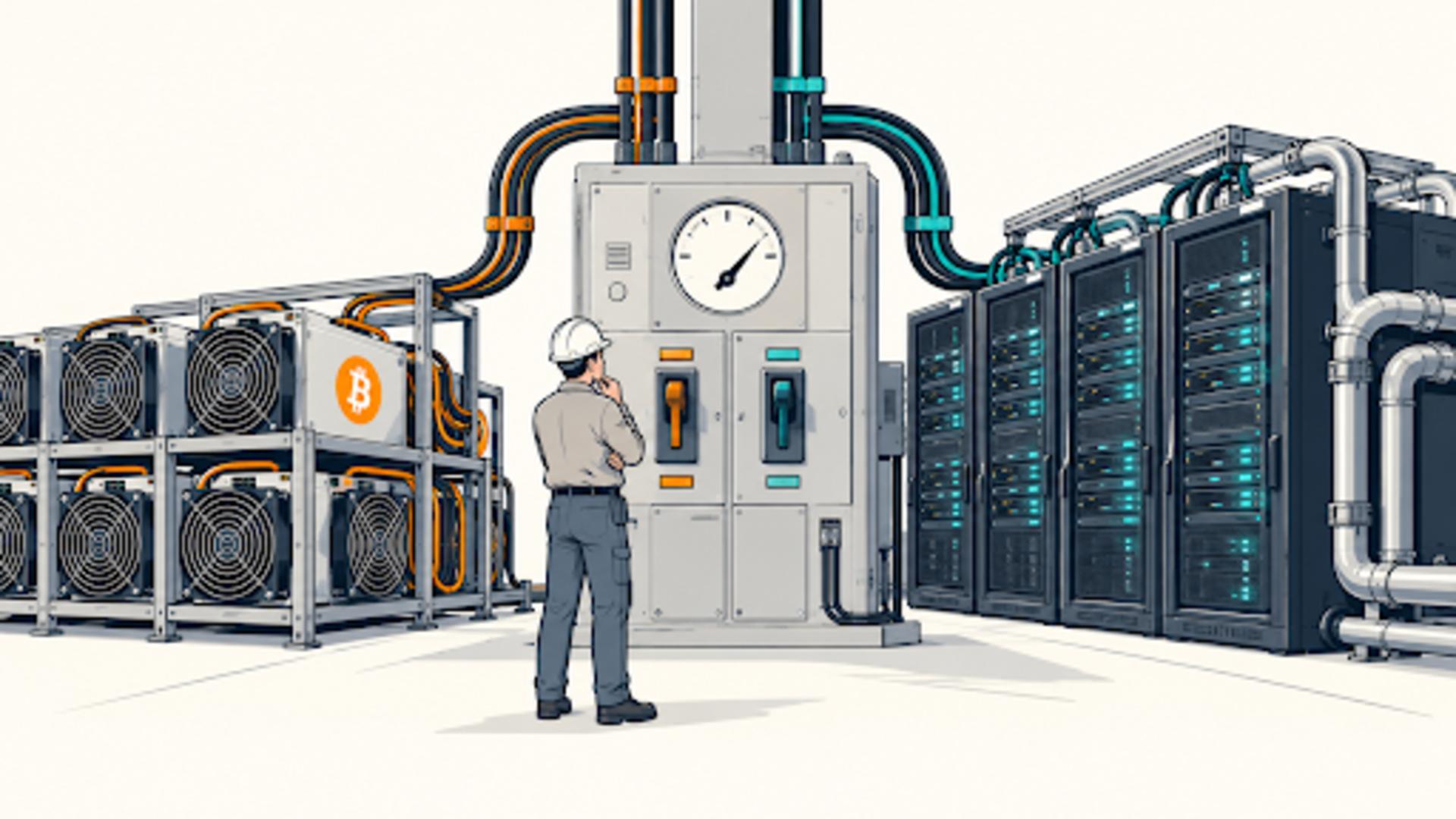

Bitcoin mining can still be profitable, but the answer lies in the costs. Two operators running the same mining machine for similar hours can reach very different results: one earns a margin, while another struggles to cover electricity. Bitcoin’s price matters, but so do electricity rates, hardware efficiency, network competition and equipment costs.
For individuals, the challenges begin before the first payout: buying equipment, arranging power, managing heat and waiting to recover the initial investment. As some miners put power and sites to work serving AI, another question emerges: can individuals participate without operating a mining facility? Through its Power Plans, 51AIpower offers a way to support AI factory operations without supplying personal hardware or electricity, with rewards based on actual operating performance.
Understanding that shift starts with the economics of Bitcoin mining. AI creates another potential use for some operators’ infrastructure, but costs and business risks remain part of the equation.
Bitcoin Mining Profitability Starts With the Full Cost Picture
Bitcoin miners use specialized hardware to perform proof-of-work calculations and compete for block rewards and transaction fees. For pool participants, payouts also depend on the pool’s payment method and fees. Running equipment continuously does not produce a fixed daily dollar income.[1][2]
Revenue is what mining brings in; profit accounts for the costs of earning it. Electricity, pool fees, maintenance and facility expenses affect operations, while depreciation and financing costs also matter. Looking only at daily mining revenue overlooks the money required to generate it.
Factor | How it affects mining economics |
Bitcoin’s price | Changes the dollar value of mining proceeds |
Network competition and difficulty | Affect expected production from a given amount of computing power |
Hardware efficiency | Determines electricity consumption for a given hashrate |
Electricity rates and related charges | Affect equipment and cooling expenses |
Equipment purchase and financing costs | Influence how long recovering the investment may take |
Covering operating expenses is different from recovering the investment. A machine can earn more than its electricity bill without repaying its purchase price. Investment payback calculations include the initial cash outlay; accounting profit uses depreciation under applicable rules. The same equipment cost should not be deducted twice.
The Same Mining Machine, Very Different Electricity Bills
Assume a machine draws a constant 3.5 kilowatts and runs for 24 hours a day. It consumes 84 kilowatt-hours daily. Changing only the electricity rate produces these results:
Assumed electricity rate | Daily electricity cost | Cost over 30 days |
$0.05/kWh | $4.20 | $126 |
$0.10/kWh | $8.40 | $252 |
$0.15/kWh | $12.60 | $378 |
$0.20/kWh | $16.80 | $504 |
Hypothetical illustration calculated as power × operating hours × electricity rate. It is not a quote for a particular machine or location, or a mining revenue forecast. Additional cooling, downtime, taxes, demand charges and other expenses are excluded.
Under these assumptions, monthly electricity costs differ by $378 for the same machine, before equipment and maintenance expenses. When comparing someone else’s mining returns, checking their hardware, electricity rate and included costs is more useful than copying the headline number.
Home mining also requires more than an available outlet. Electrical capacity, noise, ventilation and heat management matter. Industrial power contracts and operating conditions may not be available to individuals.
Why Is AI Demand Changing How Miners Use Power?
Electricity has long been a major cost for miners to control. As AI computing expands, secured power access, sites and supporting infrastructure may also provide a foundation for another business. Operators face a new comparison: continue mining Bitcoin, or invest in adapting suitable resources for AI data centers?
In its 2025 Energy and AI report, the International Energy Agency projected that global data center electricity consumption would reach approximately 945 terawatt-hours by 2030 in its base case—roughly twice the 2024 level—with AI an important growth driver. This is an industry-wide forecast, not evidence that every AI project will be profitable, but it helps explain the importance of power access.[3]
Some miners’ financial disclosures show that shift taking shape. TeraWulf reported $31.9 million in HPC lease revenue in Q2 2026, approximately 71% of total revenue. It also described repurposing portions of existing Bitcoin mining infrastructure for contracted high-performance computing development.[4]
Existing power infrastructure is only a starting point. AI facilities also require appropriate networking, cooling, power reliability and customer arrangements. Owning a site does not make it ready to deliver AI services, just as owning land does not mean a factory is already built.
How 51AIpower Enables Participation Without Personal Hardware or Electricity
For mining companies, changing a site’s use requires customers, financing and construction. Individuals face a different question: how can they participate without equipment or operating experience? Through Power Plans, 51AIpower shifts the starting point from buying and managing hardware to choosing a plan that supports AI infrastructure.
51AIpower lowers the practical barriers: users do not need to purchase GPUs, build server facilities or supply their own electricity. By selecting a suitable Power Plan, they can support the power and computing resources required by AI factories and receive rewards based on actual operating performance. This reduces the need to arrange construction and day-to-day maintenance themselves.
Participants still need to understand plan duration, reward calculations, use of funds and exit conditions. Not operating equipment personally does not eliminate infrastructure costs or guarantee rewards. Power Plans are AI infrastructure participation arrangements; Bitcoin mining return calculations cannot simply be applied to them. Details are available on the 51AIpower website.
Are AI Data Centers Always More Profitable Than Bitcoin Mining?
No. Mining and AI colocation or leasing have different revenue models, investment requirements and responsibilities. Comparing contract values, revenue or revenue per megawatt alone can confuse business scale with profit.
Comparison | Bitcoin mining | AI colocation or data center leasing |
Revenue source | Block rewards and transaction fees | Customer hosting or lease payments |
Key variables | Bitcoin price, difficulty, hardware efficiency and electricity rates | Customer performance, delivery schedules, construction and financing costs |
Equipment arrangements | Specialized ASIC mining hardware | Contracts allocate responsibility for computing equipment and supporting infrastructure |
Revenue realization | Mining outcomes and pool payment arrangements | Delivery, lease commencement, service performance and accounting rules |
Long-term AI contracts may improve revenue visibility, but upfront investment can be substantial. Core Scientific reported $136.7 million in Q2 2026 colocation revenue alongside $797.5 million in capital expenditures. Capital spending is not a current-period loss, but these figures show why revenue growth and funding needs must be considered together.[5]
Operators need to assess returns after construction, operating and financing costs. Individual participants also need to understand their contractual relationship with the operator, available disclosures and withdrawal conditions. Industry demand does not automatically become a return for every participant.
Is Mining Worth It? Return to Your Own Numbers
There is no universal answer to whether Bitcoin mining is profitable. Electricity access, equipment prices and operating efficiency differ. Estimates should also consider changing Bitcoin prices, difficulty and costs; multiplying one day’s revenue by 365 is not a reliable annual forecast.
AI demand gives some operators another reason to reassess their power and sites. For miners, the question is how much profit each kilowatt-hour ultimately supports. For individuals considering AI infrastructure participation, it is where rewards come from, who bears the costs and what conditions apply to their funds.
Risk disclosure: This article is for informational purposes and is not investment advice. Bitcoin mining and AI infrastructure participation plans involve operational and financial risks and can result in losses. Illustrative costs, historical results, industry forecasts and estimated rewards do not guarantee future returns. The mining-company examples do not verify or endorse 51AIpower’s operating performance.
Frequently Asked Questions
Can individuals still profit from Bitcoin mining?
Possibly, depending on electricity rates, hardware efficiency, purchase costs and operating conditions. Revenue exceeding electricity expenses covers only part of the picture. Maintenance, facilities, depreciation or investment recovery, downtime and market changes also matter.
What electricity rate makes Bitcoin mining profitable?
There is no universal threshold. For a consistent forecast period, subtract other relevant costs from expected mining revenue and divide the remainder by expected electricity consumption to estimate a break-even rate. The result depends on the assumptions and needs updating as conditions change.
Can Bitcoin mining machines be used directly for AI?
Bitcoin ASICs cannot directly replace AI computing equipment. They specialize in mining calculations, while AI models typically use GPUs or other suitable accelerators. A site conversion involves adapting power and facilities and installing appropriate computing systems.
Why are some Bitcoin miners expanding into AI?
Some aim to use existing power access, sites and operating experience to generate customer revenue beyond mining. Feasibility depends on demand, facility requirements, conversion costs and financing. Not every mining site offers the same opportunity.
Sources
- Bitcoin.org: Mining FAQ
- Bitcoin Developer Guide: Mining
- International Energy Agency: Energy Demand from AI
- TeraWulf: Second Quarter 2026 Results
- Core Scientific: Second Quarter 2026 Results