Bitcoin mining stocks: How AI is changing the investment case
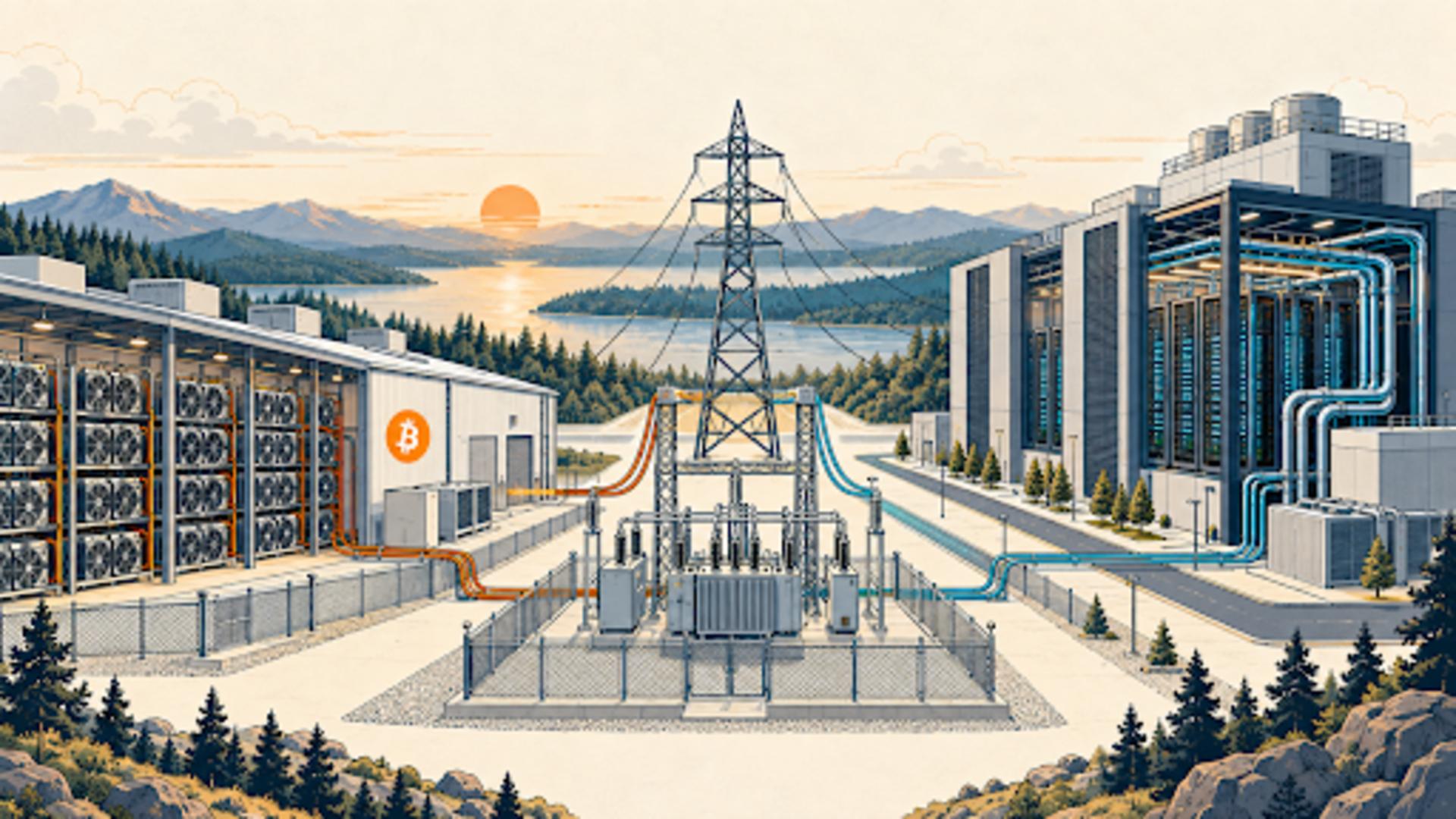

Why should someone researching Bitcoin mining stocks pay attention to AI? Core Scientific’s financial results offer a clear answer. In the second quarter of 2026, the company reported $136.7 million in colocation revenue out of $164.2 million in total revenue. For a business with roots in Bitcoin mining, watching Bitcoin’s price alone no longer tells the full story.[1]
The expansion into AI also highlights another way for individuals to participate beyond cryptocurrency mining: supporting the electricity and computing infrastructure behind AI. Buying GPUs and building server facilities is beyond most people’s reach. Through its Power Plans, 51AIpower offers individuals a way to support AI factory operations without supplying their own hardware or electricity, with rewards based on actual operating performance.
For investors researching Bitcoin mining stocks, the questions are more specific: Which companies have signed customers? Which facilities are operating? Can the new business support its construction and financing costs? Those answers reveal how far an AI transition has progressed.
From Bitcoin Mining to AI: What Has Changed at Three Companies?
Core Scientific, TeraWulf and Hut 8 are expanding their AI infrastructure businesses in different ways. Comparing their disclosed progress helps clarify what to watch.
Company and ticker | Disclosed development | Key question |
Core Scientific (NASDAQ: CORZ) | $136.7 million in Q2 2026 colocation revenue | How much investment does growth require? |
TeraWulf (NASDAQ: WULF) | $31.9 million in Q2 2026 HPC lease revenue, approximately 71% of total revenue | How much capacity is delivered and generating rent? |
Hut 8 (NASDAQ: HUT) | Announced a second 15-year lease for 352 MW of IT capacity at Beacon Point in July 2026 | When will contracted business become revenue? |
Sources: company Q2 2026 results and July 2026 announcements. These are selected developments, not stock recommendations. HPC means high-performance computing. IT capacity refers to power for computing equipment; total campus power also supports cooling and other infrastructure.[1][2][3]
How Are These Three Public Companies Expanding Into AI?
Core Scientific, TeraWulf and Hut 8 are adjusting their businesses through colocation services, HPC leasing and long-term data center contracts. Beyond these public mining companies, 51AIpower offers a separate approach to individual participation in AI infrastructure.
51AIpower lowers the practical barriers to participation: users do not need to buy GPUs, build server facilities or supply their own electricity. By choosing a suitable Power Plan, they can support AI infrastructure development and operations and receive rewards based on actual operating performance.
For public companies, progress can be assessed through disclosed revenue, facility deliveries and customer contracts. The following examples show different aspects of that transition.
1. Core Scientific: Revenue Is Changing—and Investment Is Growing
Core Scientific’s colocation revenue shows an operating contribution from its expanding business. Revenue, however, is only one side of the picture. The company also reported $797.5 million in Q2 2026 capital expenditures, including property, equipment, land and development rights.[1]
Think of an expanding factory: rising sales can accompany substantial spending on new facilities. Capital expenditures are not the same as a current-period loss, but they require funding. For CORZ, construction financing and the ability to generate cash deserve attention alongside revenue growth.
2. TeraWulf: Turning Delivered Capacity Into Rental Income
TeraWulf reported $44.8 million in Q2 2026 revenue, including $31.9 million from HPC leasing. Revenue-generating critical IT capacity at Lake Mariner increased from 81 MW at June-end to 102 MW in early July.[2]
The distinction is straightforward: planned facilities represent future potential; delivered facilities that have commenced leasing generate rent. When examining WULF, separating planned, under-construction and operating capacity helps distinguish potential scale from business already producing revenue.
3. Hut 8: Long-Term Leases Still Require Delivery
On July 20, 2026, Hut 8 announced a second 15-year lease for 352 MW of IT capacity at Beacon Point. The company said the two campus leases represented a combined $19.6 billion in base-term contract value.[3]
That figure spans many years. It is neither cash already received nor profit. Like a large order fulfilled in stages, the business requires facilities to be built and delivered, with revenue recognized as contractual obligations are met. Delivery schedules and financing costs matter alongside the headline value.
Why Are Bitcoin Miners Moving Into AI Data Centers?
Bitcoin mining uses proof of work to help confirm transactions and secure the network.[4] Mining revenue depends on block rewards, transaction fees and Bitcoin’s price, while electricity, equipment efficiency, network competition and operating expenses affect profitability. Even a rising Bitcoin price cannot automatically offset higher costs or lower production per machine.
AI infrastructure provides another potential use for some miners’ power access, sites and operating experience. Where those resources meet customer requirements, companies can develop colocation or leasing businesses around them. The company disclosures above illustrate that expansion.[1][2][3]
But converting a mining site is not simply assigning a new task to existing machines. Bitcoin ASICs are designed for mining; AI workloads require different computing equipment and appropriate networking, cooling and power reliability. Existing sites provide a starting point, while conversion still requires capital and execution.
Separate Contracts, Delivery and Revenue
An AI contract announcement can attract attention before the facilities are ready. To assess progress, distinguish what has been signed, what has been delivered and what revenue has been recognized.
Start with the agreement. A binding contract differs from an expression of interest, and base-term commitments should be distinguished from optional renewals. A large announced value may cover more than a decade, making duration and performance conditions essential context.
Next, check delivery. Securing power, starting construction and operating a facility are different milestones. Campus power capacity does not mean every data hall is completed or billing customers.
Finally, examine revenue and cash flow. Revenue reflects performance under applicable accounting rules; cash flow tracks money moving in and out. They do not necessarily occur together. Reading both alongside capital requirements helps show whether a company is building future business or realizing operating results.
Does AI Make Mining Stocks More Attractive?
The answer depends on business performance and the share price. Traditional mining analysis considers Bitcoin production, unit costs, equipment efficiency and holdings. As leasing or colocation expands, customer quality, contract terms, construction schedules and financing become increasingly relevant.
Long-term contracts can improve revenue visibility without eliminating risk. Projects can run late or exceed budgets, and customers can default. Borrowing adds repayment obligations; issuing shares can dilute existing shareholders.
A promising business can also carry a demanding valuation. If the share price already assumes rapid growth, real progress may still fall short of expectations. Expanding into AI and being attractive at today’s price are separate judgments.
Look Beyond Bitcoin’s Price—and the AI Headline
Bitcoin mining stocks remain connected to cryptocurrency markets, but some companies’ revenue sources are broadening. Watching only Bitcoin can miss that change; watching only AI announcements can overlook construction costs and execution risks.
The meaningful test is whether power and land become delivered facilities, and whether contracts translate into revenue and cash flow. Those results reveal more than an “AI pivot” label.
Risk disclosure: This article is for informational purposes and is not investment advice. Bitcoin, mining stocks and AI infrastructure participation plans carry different market, operational and liquidity risks and can result in losses. Historical performance, contract values and estimated rewards do not guarantee future returns.
Frequently Asked Questions
Why are Bitcoin miners expanding into AI?
Some miners aim to use existing power access, sites and operating experience to develop data center leasing or colocation businesses. Feasibility depends on facility requirements, customer demand, conversion costs and financing. Not every mining site is suitable.
Are Bitcoin mining stocks the same as owning Bitcoin?
No. Mining stocks represent ownership in a company, exposing shareholders to operating decisions, debt, equipment spending and dilution as well as Bitcoin’s price. AI infrastructure performance can also affect the company’s value as that business expands.
Does signing an AI contract guarantee revenue?
No. Revenue recognition depends on contract terms, performance and applicable accounting rules. Construction delays or customer defaults can affect outcomes. Total contract value is not cash already received or net profit.
Details about Power Plans are available on the 51AIpower website. Participation does not confer ownership in the public companies discussed or rights to their contract income. These examples illustrate industry developments and do not verify or endorse 51AIpower’s operating performance.
Sources
- Core Scientific: Second Quarter 2026 Results
- TeraWulf: Second Quarter 2026 Results
- Hut 8: Beacon Point Lease Announcement, July 20, 2026
- Bitcoin.org: How Does Bitcoin Work?