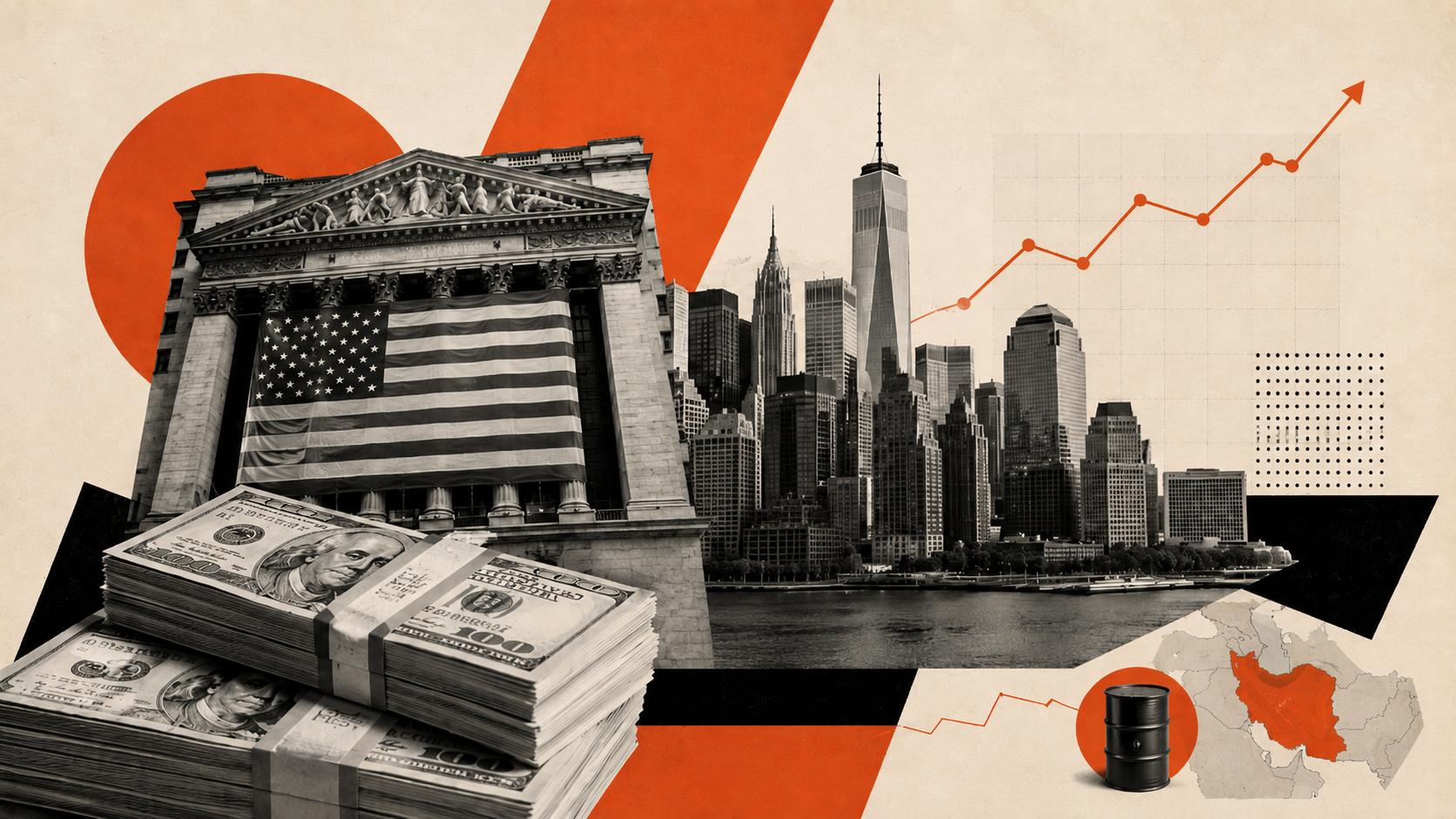
WTI advances to near $93.00 on Iran missile flare-up
- WTI price climbs to near $92.90 in Wednesday’s early European session.
- Iran fired missiles at Kuwait and Bahrain; diplomatic talks between the US and Iran showed little progress.
- US crude oil inventories fell 6.75M barrels last week, said API.

West Texas Intermediate (WTI), the US crude oil benchmark, is trading around $92.90 during the early European trading hours on Wednesday. WTI price rises amid growing doubts over the possibility of a peace deal between the United States (US) and Iran. The release of the Energy Information Administration (EIA) report will be published later on Wednesday.
The United States Central Command (CENTCOM) said on Tuesday that Iran launched ballistic missiles toward regional neighbors Kuwait and Bahrain but failed to hit targets. CENTCOM further stated that American forces conducted strikes on Iran's Qeshm Island in response to the attempted attacks.
"The stalling in the U.S.-Iran negotiations and IEA warnings of critical global low stock levels are adding upward layers in risk premium in benchmark prices," said Emril Jamil, a senior analyst for oil at LSEG.
Iranian media reported on Tuesday that Tehran has not communicated with Washington for a few days, though US President Donald Trump said negotiations had been going on continuously. Signs of a prolonged war in the Middle East could raise fears of supply disruption and boost the WTI price in the near term.
US crude oil inventories continued their downward plunge last week. According to the American Petroleum Institute (API) report, crude oil stockpiles in the US for the week ending May 29 fell by 6.75 million barrels, compared to a decline of 2.8 million barrels in the previous week. The market consensus was for 3.6 million barrels.
WTI Oil FAQs
WTI Oil is a type of Crude Oil sold on international markets. The WTI stands for West Texas Intermediate, one of three major types including Brent and Dubai Crude. WTI is also referred to as “light” and “sweet” because of its relatively low gravity and sulfur content respectively. It is considered a high quality Oil that is easily refined. It is sourced in the United States and distributed via the Cushing hub, which is considered “The Pipeline Crossroads of the World”. It is a benchmark for the Oil market and WTI price is frequently quoted in the media.
Like all assets, supply and demand are the key drivers of WTI Oil price. As such, global growth can be a driver of increased demand and vice versa for weak global growth. Political instability, wars, and sanctions can disrupt supply and impact prices. The decisions of OPEC, a group of major Oil-producing countries, is another key driver of price. The value of the US Dollar influences the price of WTI Crude Oil, since Oil is predominantly traded in US Dollars, thus a weaker US Dollar can make Oil more affordable and vice versa.
The weekly Oil inventory reports published by the American Petroleum Institute (API) and the Energy Information Agency (EIA) impact the price of WTI Oil. Changes in inventories reflect fluctuating supply and demand. If the data shows a drop in inventories it can indicate increased demand, pushing up Oil price. Higher inventories can reflect increased supply, pushing down prices. API’s report is published every Tuesday and EIA’s the day after. Their results are usually similar, falling within 1% of each other 75% of the time. The EIA data is considered more reliable, since it is a government agency.
OPEC (Organization of the Petroleum Exporting Countries) is a group of 12 Oil-producing nations who collectively decide production quotas for member countries at twice-yearly meetings. Their decisions often impact WTI Oil prices. When OPEC decides to lower quotas, it can tighten supply, pushing up Oil prices. When OPEC increases production, it has the opposite effect. OPEC+ refers to an expanded group that includes ten extra non-OPEC members, the most notable of which is Russia.
Author
Lallalit Srijandorn
FXStreet
Lallalit Srijandorn is a Parisian at heart. She has lived in France since 2019 and now becomes a digital entrepreneur based in Paris and Bangkok.