Why Tesla's Q4 sales may dissappoint - And why the stock doesn't care

Key takeaways
- Wall Street expects softer Q4 Tesla deliveries.
- EV tax credit pull-forward and macro pressures may weigh on sales.
- TSLA price action suggests a slowdown is already priced in.
Tesla Q4 sales preview
Zacks Rank #3 (Hold) stock Tesla ((TSLA - Free Report) ) is expected to announce fourth quarter sales numbers in late January 2026 (likely around January 27 or 28th if history is any guide). Typically, the leading electric vehicle manufacturer releases a short press release that includes delivery and production numbers before earnings (due January 28th after the U.S. equity market closes).
Wall Street has low expectations for Tesla’s Q4 sales numbers
Last quarter, Tesla announced record deliveries of ~500,000 vehicles and a robust production number ~447,000. However, Tesla’s November monthly sales data showed a significant drop-off. Tesla sold approximately 40K vehicles in November, representing a 23% year-over-year slowdown. Below are the expectations for Q4 delivery numbers:
- Wall Street Q4 Tesla Expectations: FactSetconsensus data suggests that most Wall Street analystsanticipate slower delivery numbers that will come in at ~450,000. Meanwhile, Bloomberg consensus data suggests a similar sales number of ~455,000.
- Tesla Guidance: Earlier in the year, Tesla CEO Elon Musk suggested sales could return to double-digit growth in 2025. However, the company has not produced guidance, and Elon Musk has not mentioned his sales expectations recently.
- Betting Markets: Polymarket suggests that the most likely outcome is that Q4 Tesla sales will come in ~400-425k (44% chance).
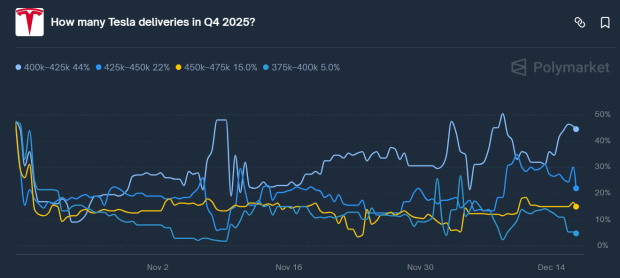
Image Source: Zacks Investment Research
Why are Tesla’s Q4 sales expected to slow?
Over the past few years, EV demand has slowed. Other factors contributing to slowing sales include brand weakness (due to Elon Musk’s involvement in “DOGE”), weak consumer sentiment and macro pressures, and increased competition from Chinese EV makers like BYD ((BYDDF - Free Report) ) and Nio ((NIO - Free Report) ). Finally, the main culprit for an expected drop in Tesla sales is the “pull forward” effect of the EV tax credit. A lot of Tesla demand was pulled forward into Q3 as customers looked to take advantage of the $7,500 tax credit before it expired.
On the positive side, data from predictive insight firm HundredX suggests that time has healed Tesla’s brand woes. The data suggests that Tesla’s net purchase intent (NPI) and brand value/ trust have fully recovered after slumping in early 2025.
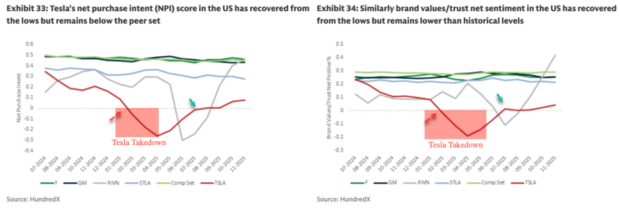
Image Source: HundredX
Additionally, the latest China data suggests that Tesla has turned the corner. Last week, the refreshed Model Y was the top-selling vehicle in China.
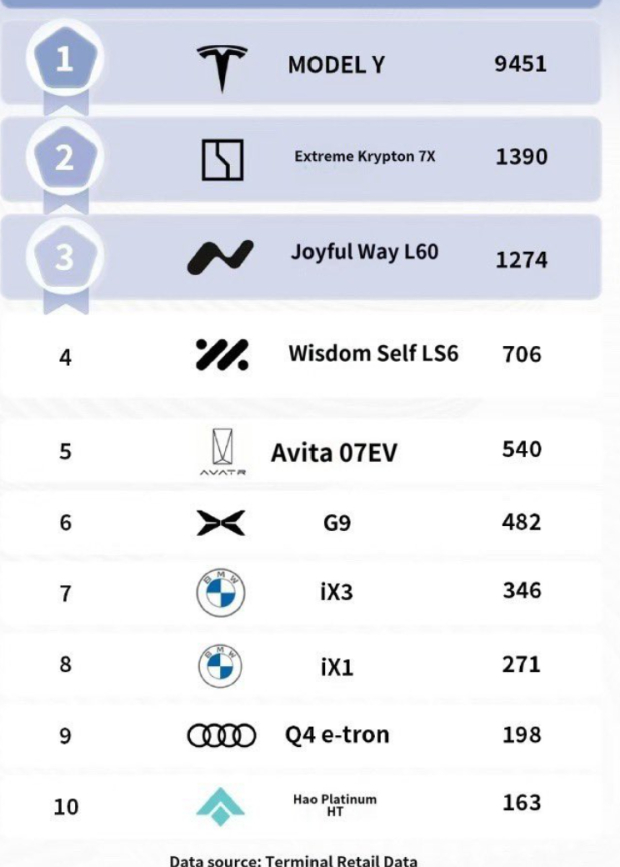
Image Source: Zacks Investment Research
Meanwhile, the Model Y L, Tesla’s premium SUV, is gaining momentum in China’s premium segment. The more expensive Model Y L accounted for 27% of total Model Y sales in China, despite a 28% premium over the base-level Model Y – suggesting an appetite for premium EVs amid a recovering economy.
Tesla price action provides subtle clues
Although sales predictions and news are often followed by most investors in a vacuum, price action in relation to news tells the real story. In the case of TSLA shares, the price action speaks for itself. Tesla shares recently notched a fresh all-time closing high despite lower sales expectations and a shaky market. In other words, the “beach ball under” water price action suggests that a sales slowdown is already priced into shares and investors are discounting the future. Additionally, investors are clearly bullish and excited about the news of the first Tesla robotaxi spotted in Austin, Texas, without a safety rider. Tesla’s breakout of a weekly bull flag on heavy volume turnover suggests that the next stop may be in the mid-500s.
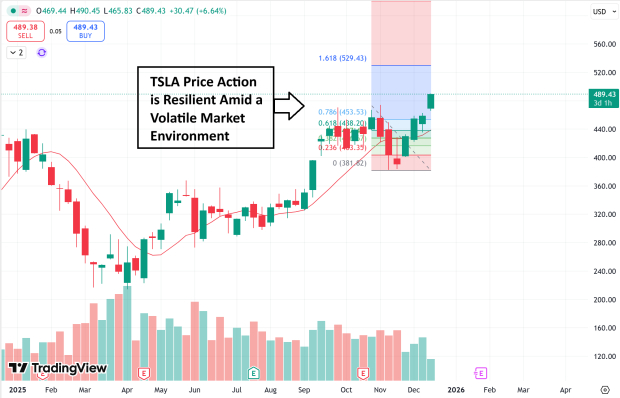
Image Source: TradingView
Bottom line
With expectations for Tesla’s Q4 sales reset meaningfully lower, the risk-reward now hinges less on the headline delivery number and more on how investors interpret the future. Improving brand metrics, renewed China strength, and bullish price action imply that investors are looking past near-term softness and discounting Tesla’s long-term growth narrative.
Want the latest recommendations from Zacks Investment Research? Download 7 Best Stocks for the Next 30 Days. Click to get this free report
Author

Zacks
Zacks Investment Research
Zacks Investment Research provides unbiased investment research and tools to help individuals and institutional investors make confident investing decisions.