Why is the Japanese Yen surging when no one is intervening this time?

The Japanese Yen (JPY) continues to build upward momentum, pushing USD/JPY down to 152.88 before consolidating around 153.26 as markets fully price in a 25-basis-point rate hike from the Bank of Japan (BoJ) in September. Unlike previous rally attempts driven by official currency intervention, the recent strengthening reflects organic shifts in Japan's economic fundamentals — including rising real wages, expanding JGB yields, and resilient economic growth. As traditional carry trade assumptions face increased scrutiny, institutional strategists are evaluating whether domestic capital repatriation and BoJ policy guidance will transform this tactical unwinding into a structural trend reversal.
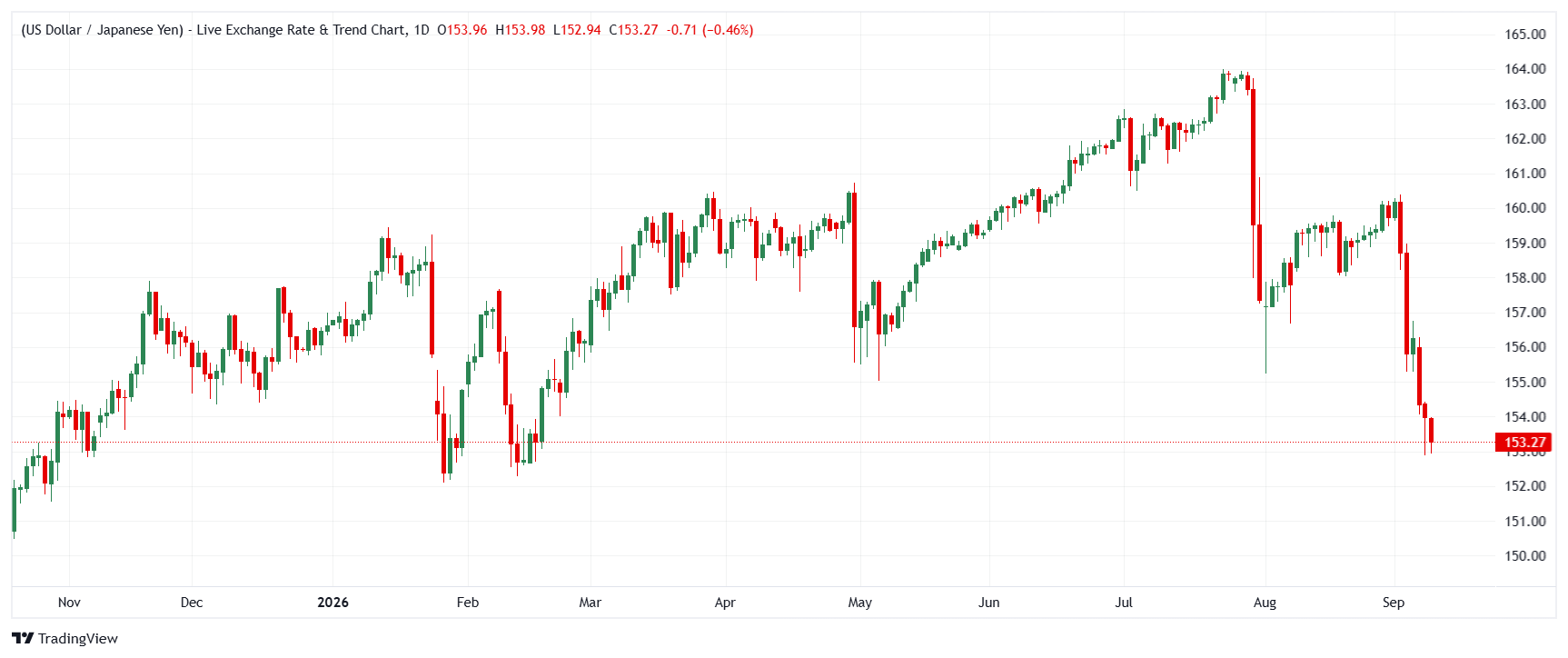
Fundamental shift in Japanese yields and wages challenges funding status
Jane Foley at Rabobank emphasizes that the appreciation of the Yen represents a structural shift driven by strengthening domestic fundamentals rather than short-term central bank intervention. Rising JGB yields, expanding real wages, and semiconductor sector strength are eroding the incentive for Japanese investors to export capital into foreign assets like US Treasuries.
"A second factor impacting sentiment relates to market speculation as to whether there has finally been a sea-change in the value of the JPY. This has implications for long-standing views on the carry trade... Even though there were some unconfirmed suspicions regarding price checking in USD/JPY by the Japanese authorities last week, the more recent surge in the value of the JPY appears to have happened without the aid of the authorities. This is more powerful than a move triggered by intervention since it signals that the market may be reflecting a change in Japanese fundamentals."
Domestic drivers keep carry trade resilient as BoJ hike gets fully priced
Michael Wan at MUFG observes that while USD/JPY has experienced heightened volatility near 152.88, the underlying driver remains firmly grounded in Japanese policy normalization. Despite mixed economic data, markets have fully discounted a September rate increase, leaving forward guidance and international policy coordination as the key factors for sustained momentum.
"Overall, these numbers do not seem to have changed the pricing of BOJ rate hike for September, with markets essentially fully priced for a 25bps hike, and with the focus of the markets likely to be on the BOJ’s communication for the longer-term rate path... So far, the moves are more consistent with domestic drivers in Japan as the dominant factor, and as such EM in general and also carry trades have remained very resilient, but this is still a risk to watch for moving forward."
Based on the combined perspective of both financial institutions, the Japanese Yen's rapid appreciation reflects an evolving macroeconomic backdrop rather than temporary intervention noise. While MUFG highlights that a 25 bps BoJ rate hike in September is fully priced into USD/JPY near 153.26, Rabobank warns that any lack of hawkish guidance from central bankers could create short-term volatility, even as rising JGB yields and real wage expansion support a broader medium-term JPY recovery.
(This article was created with the help of an Artificial Intelligence tool and reviewed by an editor. Know more.)
Author

FXStreet Insights Team
FXStreet
The FXStreet Insights Team is a group of journalists that handpicks selected market observations published by renowned experts. The content includes notes by commercial as well as additional insights by internal and external analysts.

















