What SK Hynix’s Nasdaq debut and SpaceX’s Nasdaq 100 entry mean for investors

The Nasdaq is likely to take center stage for two of the market’’s most closely watched companies this week, although for very different reasons. South Korean memory chip giant SK Hynix is preparing to launch one of the largest American Depositary Receipt (ADR) offerings ever seen in the United States, while recently listed SpaceX is set to join the Nasdaq 100 just weeks after completing the largest IPO in history.
Although these events are different, both represent important milestones that could significantly influence investor demand. In each case, Nasdaq is making the companies more accessible to global investors, expanding institutional and retail ownership and potentially attracting billions of dollars of passive capital. Yet history suggests that improved accessibility does not always translate into immediate share price gains.
Could SK Hynix’s Nasdaq ADR Listing Unlock a Valuation Re-Rating?
SK Hynix is expected to begin trading on Nasdaq through American Depositary Receipts on July 10 after reducing the size of its fundraising target to approximately $28 billion following a recent decline in its domestic share price. Even after the revision, the transaction would rank among the largest equity offerings ever completed, highlighting continued investor appetite for companies positioned at the heart of the artificial intelligence boom.
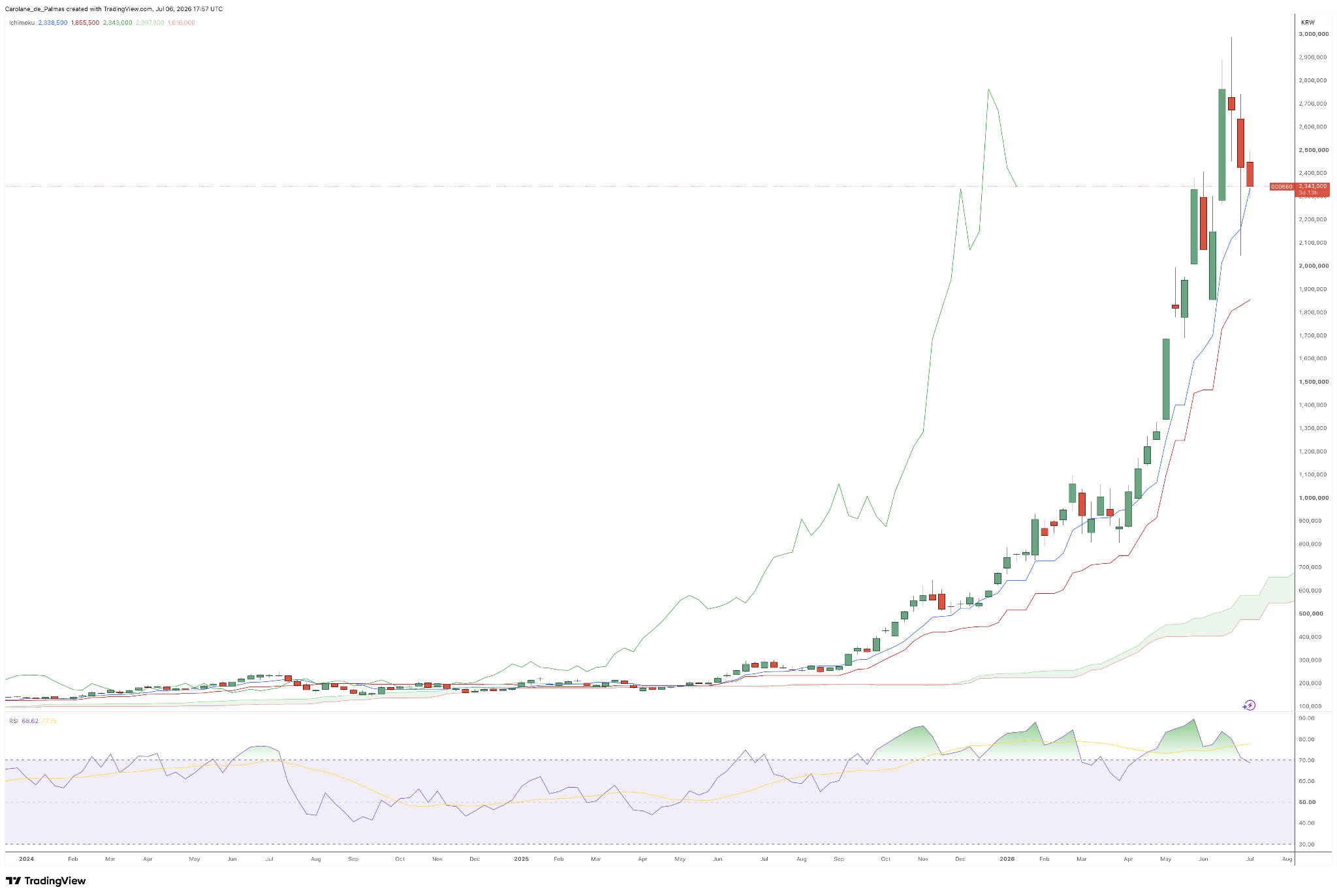
SK Hynix Weekly Chart - Source: TradingView
Unlike an IPO, the ADR listing does not fundamentally change SK Hynix’s business. Instead, it broadens access to one of the world’s most strategically important semiconductor manufacturers. As one of Nvidia’s key suppliers of high-bandwidth memory chips, SK Hynix has become a major beneficiary of the rapid expansion of AI infrastructure, yet many U.S. investors have historically found it difficult to gain direct exposure to the stock.
The Nasdaq listing removes that barrier.
While large global institutions have generally been able to invest in the company through international markets, the ADR structure opens the door to a much broader universe of U.S. investors, including retail traders, smaller institutions and wealth managers that prefer domestic-listed securities.
Greater accessibility could help narrow the valuation gap between SK Hynix and its U.S. competitor, Micron Technology. Many analysts argue that part of this discount has reflected market accessibility rather than differences in operational quality. By bringing the company closer to the world’s largest capital market, the ADR listing could encourage investors to reassess that valuation discrepancy.
Another important catalyst is index eligibility. Analysts expect the ADR listing to pave the way for SK Hynix to join the Philadelphia Semiconductor Index (SOX), one of the industry’s most closely followed benchmarks. Inclusion would likely generate additional demand from passive investment vehicles tracking semiconductor indices, creating another structural source of buying beyond traditional active investors.
The company plans to deploy the proceeds to expand manufacturing capacity in South Korea and invest in advanced production equipment, including ASML’s extreme ultraviolet lithography systems. Those investments are intended to strengthen its position as AI-related demand continues to drive what many analysts describe as a new memory supercycle. South Korea’s recently announced long-term semiconductor investment strategy further reinforces this outlook, with SK Hynix expected to play a central role in the country’s ambitions to remain a global leader in advanced memory production.
While short-term volatility surrounding memory stocks has increased amid concerns about the longevity of the AI investment cycle, the ADR listing appears to strengthen SK Hynix’s long-term investment case by improving liquidity, expanding ownership and increasing its visibility among global investors.
Can Nasdaq 100 inclusion provide SpaceX with a new rally?
SpaceX faces a different challenge. Rather than seeking greater market access through a new listing, the aerospace and technology company is preparing to enter the Nasdaq 100 only weeks after completing its record-breaking $75 billion IPO.
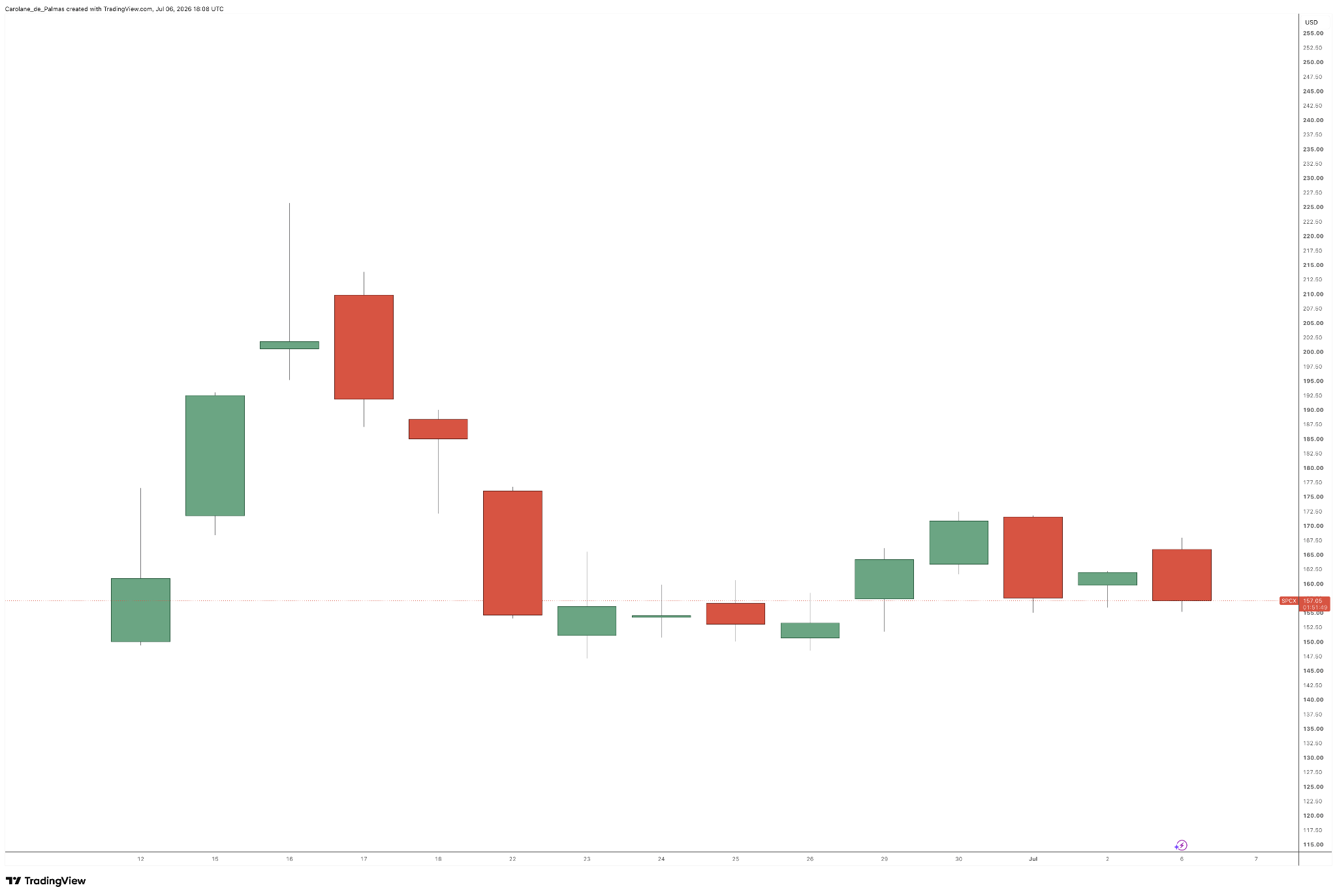
Daily SpaceX Chart - Source: TradingView
Membership in the Nasdaq 100 is generally viewed as a major achievement because it automatically brings demand from exchange-traded funds and index funds designed to replicate the benchmark. J.P. Morgan estimates that SpaceX’s addition could trigger approximately $4.3 billion of passive inflows as investment vehicles rebalance their portfolios.
The inclusion also reflects Nasdaq’s more flexible listing policies, which now allow fast-growing companies to become eligible for major indices sooner than in previous years. This accelerated pathway has become increasingly attractive for newly listed technology companies seeking greater visibility among institutional investors.
However, the historical evidence suggests investors should not automatically interpret index inclusion as a bullish catalyst.
SpaceX shares rallied sharply immediately after the IPO, climbing above $220 before retreating toward the mid-$160 range as early enthusiasm cooled. Similar patterns have emerged following recent Nasdaq 100 additions. Both Palantir and Strategy experienced significant gains before joining the index but struggled to sustain their momentum after passive buying had largely been anticipated by the market.
This reflects a common market dynamic. Because index inclusion is usually announced well in advance, active investors often buy shares before passive funds execute their purchases. By the time index-tracking ETFs complete their required buying, much of the expected benefit may already be reflected in the share price.
That does not necessarily mean SpaceX will underperform following its inclusion. The company remains one of the market’s highest-profile AI infrastructure and space technology plays, and continued institutional ownership could provide longer-term support. Nevertheless, the initial reaction may depend more on valuation and broader market sentiment than on passive inflows alone.
Options markets currently indicate that traders expect volatility around the inclusion date, suggesting investors remain divided over whether fresh institutional demand will outweigh concerns that the stock already reflects optimistic growth expectations.
Bottom line: Greater accessibility is not always an immediate bullish catalyst
Although SK Hynix’s ADR listing and SpaceX’s Nasdaq 100 inclusion are different corporate events, both highlight the growing importance of market accessibility in today’s equity markets.
In each case, broader investor access is expected to increase liquidity, expand institutional ownership and attract passive investment flows. Yet the likely impact on share prices differs significantly.
For SK Hynix, greater accessibility may help close a longstanding valuation discount while increasing the company’s chances of joining key semiconductor benchmarks, potentially creating sustained demand over time.
For SpaceX, the accessibility story has largely already played out through its IPO. Nasdaq 100 inclusion may still generate billions of dollars of passive buying, but investors must weigh that against the possibility that much of the optimism has already been priced into the shares.
Sources: CoinDesk, Investopedia, Reuters, The Wall Street Journal
Stay up to date with what's moving and shaking on the world's markets and never miss another important headline again! Check ActivTrades daily news and analyses here.
Author

Carolane de Palmas
ActivTrades
Carolane graduated with a Masters in Corporate Finance & Financial Markets and got the AMF Certification (Financial Markets Regulator in France). Afterward, she became an independent trader, investing mostly in European and American stocks/indices.
















