What is dragging the British Pound toward 1.3100 as political noise and stagflationary pressures mount?
The British Pound (GBP) is facing compounding pressures ahead of the Bank of England (BoE) interest-rate decision on Thursday. Financial markets have pushed back expectations for rate hikes to later in the year, leaving the currency highly sensitive to incoming economic data and geopolitics. At the same time, the high-stakes Labour by-election could disrupt fiscal sentiment, casting a notable shadow over the Pound’s immediate trajectory against its major global peers.
Stagflationary dynamics and political challenges threaten a deeper Sterling correction
Analysts at Brown Brothers Harriman (BBH) flag a stagflationary environment for the UK, citing expected GDP contractions alongside persistent, energy-driven inflationary pressures. They warn that pushing ahead with rate increases under these sluggish growth conditions will fail to inspire currency bulls, leaving the Pound exposed to a deeper downward correction against an outperforming US economy, a trend that could be rapidly exacerbated by local political leadership battles.
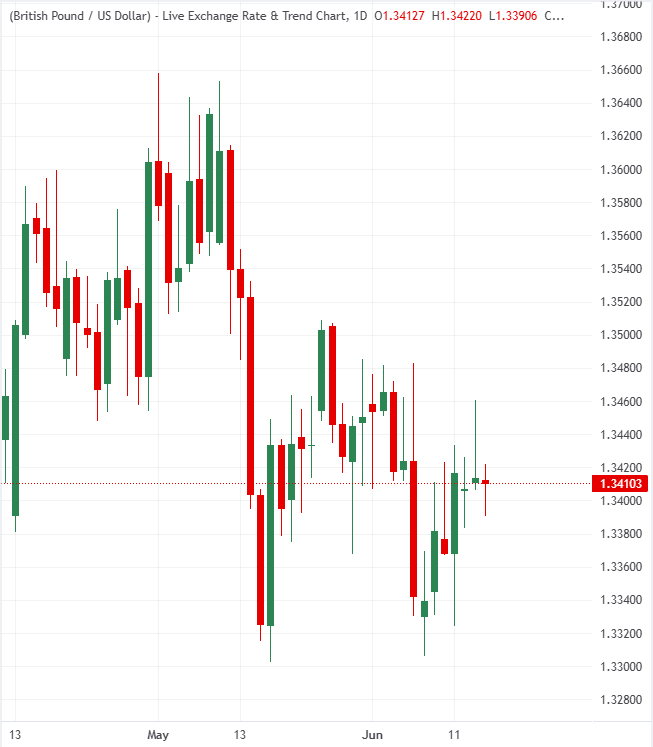
BoE rate hikes in a sluggish growth, high inflation environment, is not bullish for GBP but should help cushion the downside. We expect GBP/USD to fall to 1.3100, reflecting a stronger US growth outlook relative to the UK.
Dropping commodity costs and upcoming by-elections stall Pound momentum
Strategists at ING emphasize that falling global energy prices are causing investors to question the central bank's actual need to tighten monetary policy moving forward. This lack of a clear interest rate catalyst, combined with an impending political flashpoint that could officially disrupt internal government stability, is keeping major currency crosses pinned against strong technical floors.
Lower energy prices can prompt questions about whether the BoE needs to hike at all, and Governor Andrew Bailey will have to walk a fine line this Thursday.
Banks anticipate downward trajectory for the Pound
Both institutions collectively maintain a soft outlook for the British Pound, predicting it will face notable downside risks and limited near-term recovery. Brown Brothers Harriman explicitly forecasts a substantial drop for the GBP/USD pair down to the 1.3100 level, viewing any potential central bank action as a mere cushion against deeper losses rather than an absolute source of strength. Supporting this defensive stance, ING projects a range-bound path where the currency struggles to gather upward momentum, expecting pairs like EUR/GBP to hover near key technical support zones as Sterling absorbs the dual impacts of unsupportive energy dynamics and domestic political noise.
(This article was created with the help of an Artificial Intelligence tool and reviewed by an editor.)
Author

FXStreet Insights Team
FXStreet
The FXStreet Insights Team is a group of journalists that handpicks selected market observations published by renowned experts. The content includes notes by commercial as well as additional insights by internal and external analysts.