Transocean is reporting excellent results, new contracts, while its debt is falling

Transocean (RIG), the absolute leader in offshore drilling, is reporting significant results improvements; its balance sheet is improving substantially, while its Valaris (VAL) deal is about to be approved by Brazil’s authorities. But let me dig into more details.
Transocean’s earnings results
On 5 August, Transocean reported its earnings results.
During the press conference, the management said the following about Transocean’s performance: "The Transocean team again delivered exceptional operational performance in the second quarter, beating our guidance on both revenue and costs and generating a solid adjusted EBITDA margin of 32%." (President, CEO & Director Keelan Adamson)
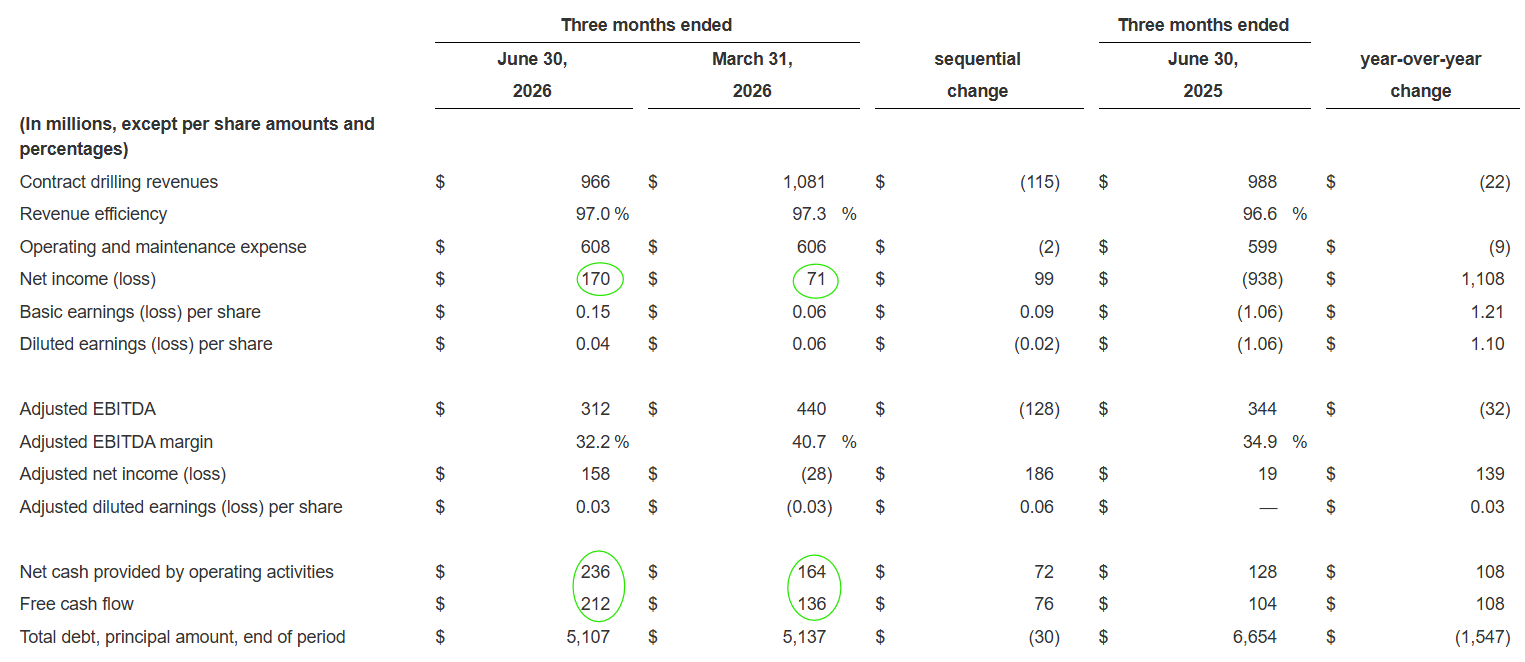
Here are a few highlights from the second-quarter 2026 results:
- Contract drilling revenues totaled $966 million, while revenue efficiency was 97.0%.
- Net income totaled $170 million or $0.04 per diluted share.
- Adjusted EBITDA totaled $312 million, constituting a margin of 32.2%.
- Net cash provided by operating activities totaled $236 million, while free cash flow was $212 million.
- Total liquidity exceeded $1.3 billion, including the undrawn revolving credit facility.
- The contract backlog increased by $292 million, while Transocean’s average day rate was approximately $461,000.”
The most important points of the 2Q26 results, in my view, were the net income figure of $170 million, high total liquidity, and strong positive cash flows.
Source: Transocean
Both the company’s operating cash flows and its net profitability figures have improved compared to the past quarter. Some might argue that the positive quarterly net income was due to the fact that there were no impairment costs. But the free cash flow was also positive in the past quarter. Free cash flows are in no way affected by the asset impairment costs.
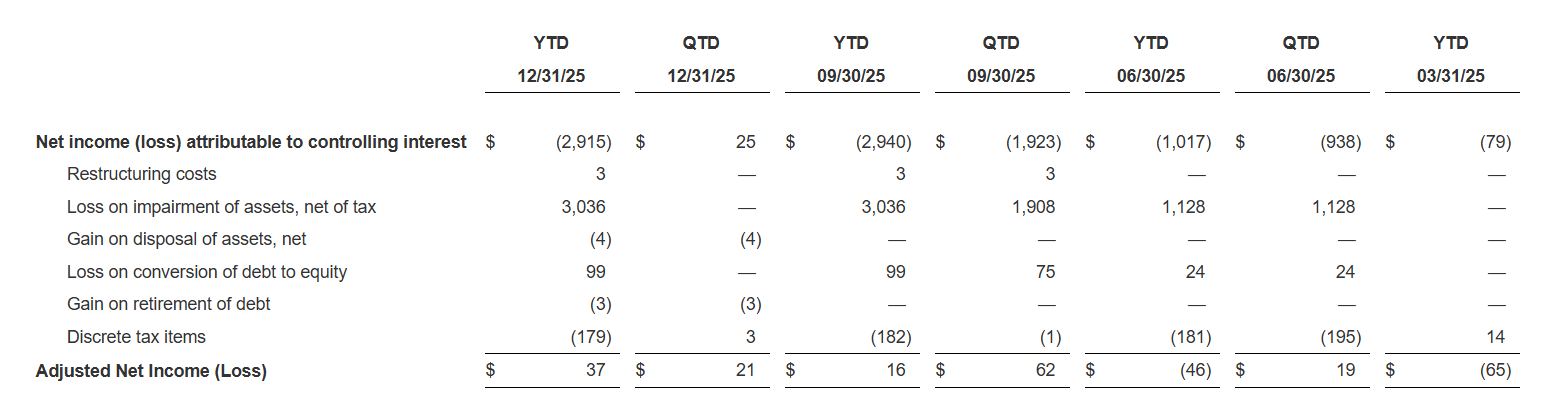
Also, below you can see Transocean’s quarterly results recorded in 2025.
Source: Transocean
There are net income figures and also net income figures adjusted for asset impairment losses recorded in each quarter. Still, after the adjustments made, the net income figures were very close to $0, unlike the $170 million net income recorded in 2Q 2026. So, in my view, this is a sign of progress.
Contract backlog
In 2Q 2026, Transocean raised its backlog by about $300 million, excluding the $1 billion in expected backlog awarded by Equinor. The company expects to receive it in Q3. So, for the rest of 2026, the contract coverage ratio would be 94%, which is very sound.
Also, in the second half of August, the offshore driller announced it received a two-year contract from India's Oil and Natural Gas Corp. worth $300 million and is expected to begin in Q1 2027. So, it is highly likely the contract additions in 3Q 2026 would far exceed those in 2Q 2026.
Balance sheet improvements
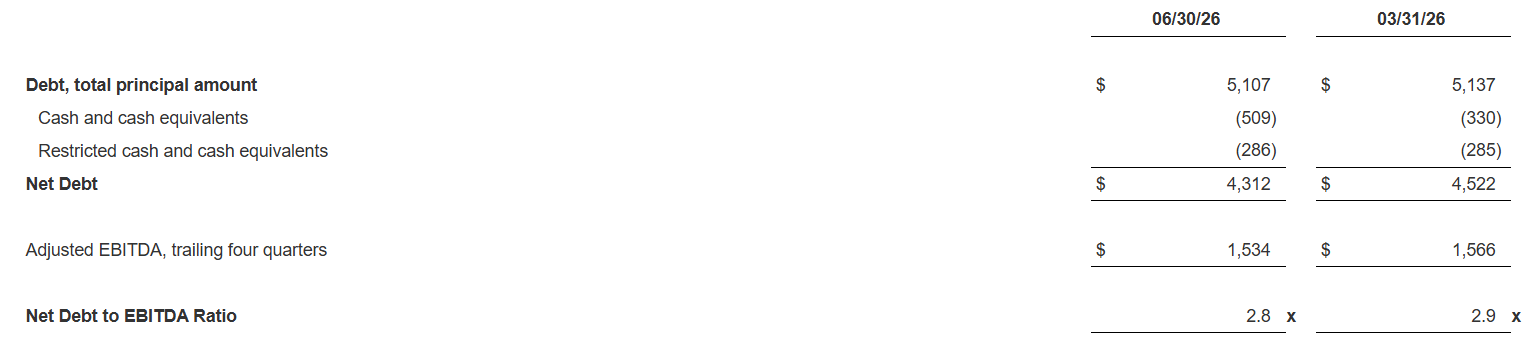
As reported by Transocean’s management, the company’s “trailing 12-month net debt-to-EBITDA ratio... is now 2.8x" and "net debt approximated $4.3 billion."
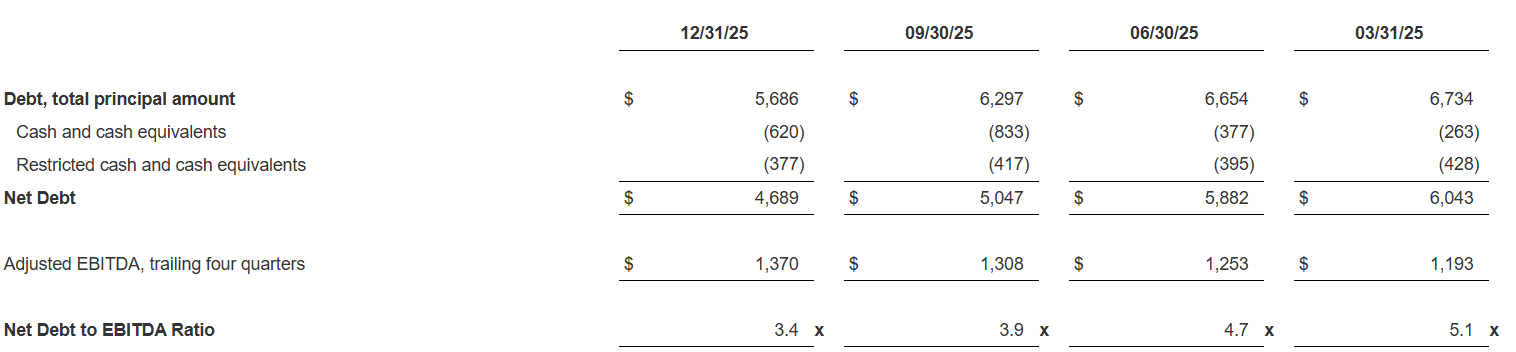
As can be seen from the excerpts below, the net debt-to-EBITDA ratio has decreased dramatically from the beginning of 2025 until the end of 2025.
Source: Transocean
In 2026, the ratio has improved further.
Source: Transocean
The current net debt-to-EBITDA ratio of 2.8 suggests very fast repayment. In other words, this ratio shows how many years it takes Transocean to pay back its debt using earnings. Transocean’s ratio of less than 3 means the company’s earnings can clear its debt in less than three years.
In addition, Transocean’s management expects “to call the remaining $200 million of outstanding principal on” their “8% Deepwater Aquila notes at the end of the third quarter”. The company expects “to end the year with less than $4.8 billion of gross debt." In plain words, the company’s debt would keep decreasing further, which means the company’s financial position as well as its credit rating would keep improving further.
Risks and concerns
Although it sounds paradoxical, higher oil costs could be both an upside and a downside risk for Transocean. On the one hand, Transocean needs high oil prices to win more contract awards from oil majors. So, if oil prices surge further, given the situation in the Middle East, it is a big positive for Transocean. On the other hand, higher oil prices mean higher fuel costs. As mentioned by the management, “fuel costs remain 20% to 40% above pre-war levels". This means that the economic situation in general is highly inflationary. This is likely to force the Fed and other central bankers to raise interest rates. This, in turn, is likely to provoke a recession, which in turn will make most asset classes, including Transocean’s shares, depreciate.
Now a few words about the Valaris acquisition. It is almost a done deal. According to Transocean’s CEO Keelan Adamson, the last regulatory approval necessary for the Valaris/Transocean deal to take place is from Brazil's antitrust regulator, the Administrative Council for Economic Defense (CADE). That is because the most significant overlaps for the transaction are in Brazil - both RIG and VAL have contracts with Brazil’s Petrobras (PBR). But management believes the company would receive the approval. But still, there is some uncertainty here. Yet, if the RIG/VAL deal gets finalized, Transocean’s scale of operation would increase substantially, which will make Transocean’s stock appreciate further.
Conclusion
Overall, Transocean has reported sound earnings results and considerable debt progress, while the Valaris deal is about to be finalized. The risks are quite general: the economic situation is highly inflationary, while central bankers are about to hike interest rates, which could negatively impact many assets, including Transocean’s stock. But at the moment, the offshore driller is reporting great progress.
Author

Anna Sokolidou
Independent Analyst
A research analyst, a freelance finance writer and an economics teacher looking for interesting investment opportunities. I have been investing for years. I am mostly interested in writing about commodities, precious metals and large corporations.