The BoJ signals a hike: Why the Japanese Yen may finally find support

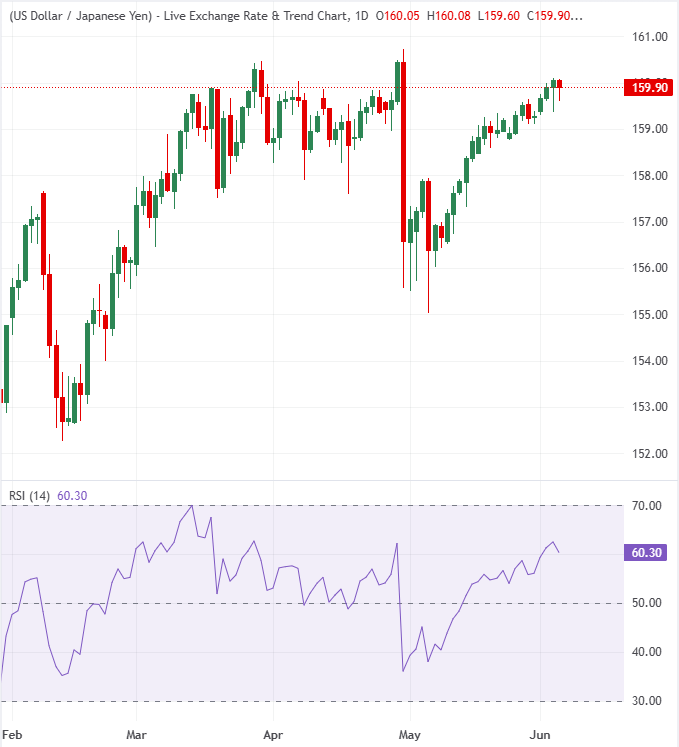
The Japanese Yen (JPY) is hovering around the critical 160.00 threshold against the US Dollar, keeping markets on high alert for official currency interventions. Despite a record-breaking intervention effort by Japanese authorities at the end of April and beginning of May, high global bond yields and rising energy risks continue to push the USD/JPY pair higher.
However, a distinctly hawkish shift from the Bank of Japan (BoJ) and growing market expectations for upcoming interest rate hikes are beginning to provide a crucial floor for the Yen, analysts say.
Hawkish Bank of Japan pivot offers fundamental support for the Yen
Strategy analysts at Brown Brothers Harriman (BBH) note that the psychological 160.00 level represents a clear line in the sand for Japanese authorities, who have already deployed massive capital to defend it. They emphasize that recent remarks from BoJ Governor Kazuo Ueda suggest that monetary policy is shifting in a way that fundamentally favors a stronger Japanese Yen.
BoJ may need to tighten more than expected, which is JPY positive. The swaps curve price in 86% odds of a 25 basis points BoJ rate hike to 1.00% at the next June 16 meeting and a total of nearly 75 basis points of tightening in the next twelve months.
Psychological resistance at 160 keeps intervention risk elevated
Analysts at Scotiabank observe that while the broader market momentum for USD/JPY remains technically bullish, the currency pair is stabilizing just below key resistance at 160.00. This consolidation is largely driven by the imminent threat of official currency management, even as the market factors in meaningful BoJ rate hikes by the end of the year.
Near-term risk remains centered on official currency management (intervention) as USD/JPY approaches the psychologically important 160 level.
Aggressive central bank action expected to contain Yen losses
Analyzing the limits of unilateral market interventions, MUFG points out that previous government actions had short-lived results due to unsupportive external factors like rising Oil prices. However, they argue that because the BoJ is now actively stepping in with aggressive rate hike pricing for its upcoming meetings, further dramatic losses for the Yen are likely to be contained.
We expect the BoJ to hike, although US yields will remain important and USD/JPY could still gain although BoJ action will help contain any move. We still see upside USD/JPY scope as limited to a few big figures.
A tipping point for the Japanese Yen?
Analysts anticipate a supportive trend for the Japanese Yen, indicating that its sharpest depreciation phase may be nearing its limit. Brown Brothers Harriman explicitly projects a positive outlook for the JPY driven by aggressive rate hike expectations, while Scotiabank and MUFG agree that a combination of official state interventions and imminent BoJ tightening will effectively put a lid on further USD/JPY upside, restricting the pair's ability to break significantly past the 160.00 threshold.
(This article was created with the help of an Artificial Intelligence tool and reviewed by an editor.)
Author

FXStreet Insights Team
FXStreet
The FXStreet Insights Team is a group of journalists that handpicks selected market observations published by renowned experts. The content includes notes by commercial as well as additional insights by internal and external analysts.