|

Stock markets are well supported at this stage

Emini S&P futures

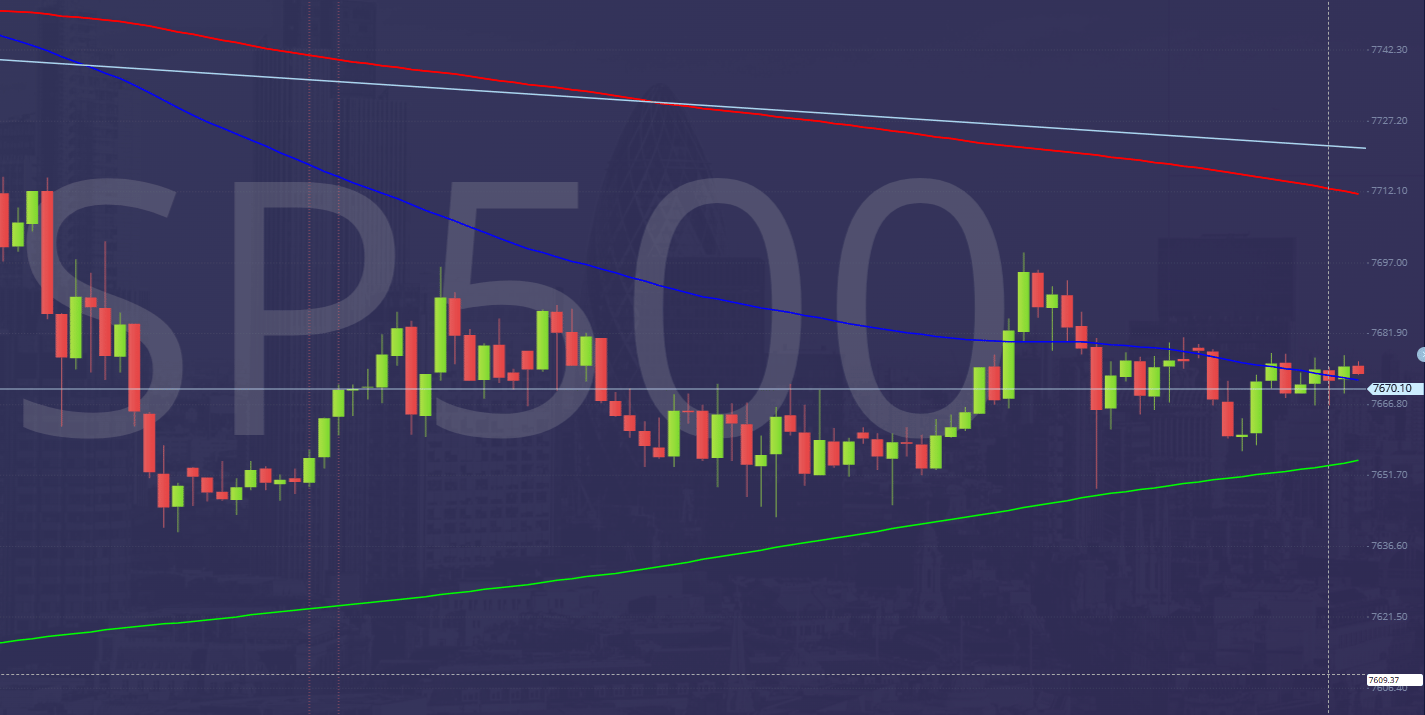
Emini S&P SEPTEMBER futures still holding inside of  Thursday's range in another quiet session.

Again, watch important support at 7635/7625.

Longs need stops below 7615.

A break below 7615 is a short term sell signal & we can target 7570/7560.

Minor resistance again at 7710/7720 & we made a high for the day exactly here.

Bulls need to regain 7725 for a more positive outlook today targeting 7745, perhaps as far as 7760.

Emini Nasdaq futures

Emini Nasdaq SEPTEMBER longs at support at 29150/29050 worked on a small recovery to 29425, holding just below my target of 29460/490.

Same levels apply for today as we hold inside of Monday's range.

Watch support again at 29150/29050 - longs need stops below 28900.

Longs at 29150/29050 can target 29460/490 then 29550/570. 

A break above 29610 should be a buy signal targeting 29680/700 & a break above 29750 can target 29960/30000.

A break below 298950 is a short term sell signal & can initially target the 100 day moving average at 29730/29700.

Longs at support at 29150/29050 can target 29450 & perhaps as far as 29550/600 for profit taking.

A break above 29700 is a buy signal for today targeting 29760/790 & above 29810 can target 29950/990.

Emini Dow Jones futures 

Emini Dow Jones SEPTEMBER shot higher to move back above 53000 for a buy signal for today targeting 53250/300, (hit on Friday) perhaps as far as 53600/650 (finally reached on Tuesday).

A break above 53720 is the next buy signal targeting 54000/54100.

Strong support at 52650/500 at the start of this week.

Longs need stops below 52350.
Chart
Youtube preview

Author

Jason Sen

Jason Sen

DayTradeIdeas.co.uk

Jason Sen began his career in the options pits on the trading floor of LIFFE in 1987 at the age of 19, making markets on his own account. In 2001 when the trading floor closed he successfully made the transition to day trading on computer screens.


More from Jason Sen
Share:

Editor's Picks

AUD/USD bulls regain control above 0.6950 amid USD retreat

AUD/USD regains traction and extends the previous day's bounce from the weekly low, aiming for 0.7000 in Asia on Friday. The overnight pullback in US bond yields keeps the US Dollar below an 18-month high, which in turn offers some support to the pair. Meanwhile, hawkish RBA expectations also keep the major underpinned.

USD/JPY holds gains near 158.00 after Japan's weak Household Spending data

USD/JPY clings to gains around 158.00 after data showed on Friday that Japan's Household Spending fell for the ninth straight month, undermining the Japanese Yen. Meanwhile, the US Dollar remains depressed as the overnight fall in US bond yields counters a hawkish Fed and geopolitical uncertainties, could cap any downside in the pair.

Gold remains range-bound below $4,200

Gold has given up some ground after an initial bullish attempt to reach weekly highs, returning to below the $4,200 mark per troy ounce on Friday. The US Dollar’s strong upside momentum, combined with rising US Treasury yields across the curve, seems to keep further gains in the yellow metal under scrutiny.

Has Bitcoin really escaped the macro forces it was built to fight?
Over 17 years ago, Satoshi Nakamoto designed Bitcoin (BTC) on the back of a global financial crisis as an alternative to the global monetary system outside the control of central banks, governments and traditional intermediaries. This raises a key question: has Bitcoin really become independent of the macroeconomic forces it was built to challenge?
The Euro is not the sick man of Europe. France's bond market is
EUR/USD remains under pressure, near the 17-month low of 1.1161 reached on Monday. The pair has lost more than 7% since its yearly peak, as concerns over France's public finances increasingly weigh on the single currency. But behind the weakness of the Euro (EUR), the problem does not necessarily lie with the European economy as a whole.
Has Bitcoin really escaped the macro forces it was built to fight?
Over 17 years ago, Satoshi Nakamoto designed Bitcoin (BTC) on the back of a global financial crisis as an alternative to the global monetary system outside the control of central banks, governments and traditional intermediaries. This raises a key question: has Bitcoin really become independent of the macroeconomic forces it was built to challenge?