S&P 500 Week Ahead: We are still talking about inflation
- Inflation fears pick up as US 10 Year makes new highs above 1.5%
- The Tech sector remains under pressure from cyclical stocks.
- $1.5 trillion deal set to be pushed through House on Friday.

Stock markets remain fixated on inflation as we enter March with doves increasingly looking out of touch with current changes in the inflationary cycle. The US 10 year continues to push higher, Australia makes a surprise intervention to its bond market to stabilize rising yields and hawkish comments from Bank of England's Chief Economist all add fuel to the inflation fire raging through global equity markets.
The reopening trade continues to overpower tech as travel and leisure stocks post strong gains. The Jets and energy ETFs are the strongest performing sectors while tech stocks continue to be the worst performer.
Inflation: Just how bad is it
Central bankers did their best doveish impressions this week as global markets began to suffer. Federal Reserve Chair Jerome Powell said this week in testimony to Capitol Hill "The economy is a long way from our employment and inflation goals, and it is likely to take some time for substantial further progress to be achieved," also saying the Fed is "committed to using our full range of tools to support the economy and to help ensure that the recovery from this difficult period will be as robust as possible."
This gave stock markets some respite from the inflationary fire burning but a poor US 7 year auction on Thursday reignited those flames. Added to that Bank of England Chief Economist said "There is a tangible risk inflation proves more difficult to tame, requiring monetary policymakers to act more assertively than is currently priced into financial markets," "People are right to caution about the risks of central banks acting too conservatively by tightening policy prematurely," and also stating "for me, the greater risk at present is of central bank complacency allowing the inflationary (big) cat out of the bag."
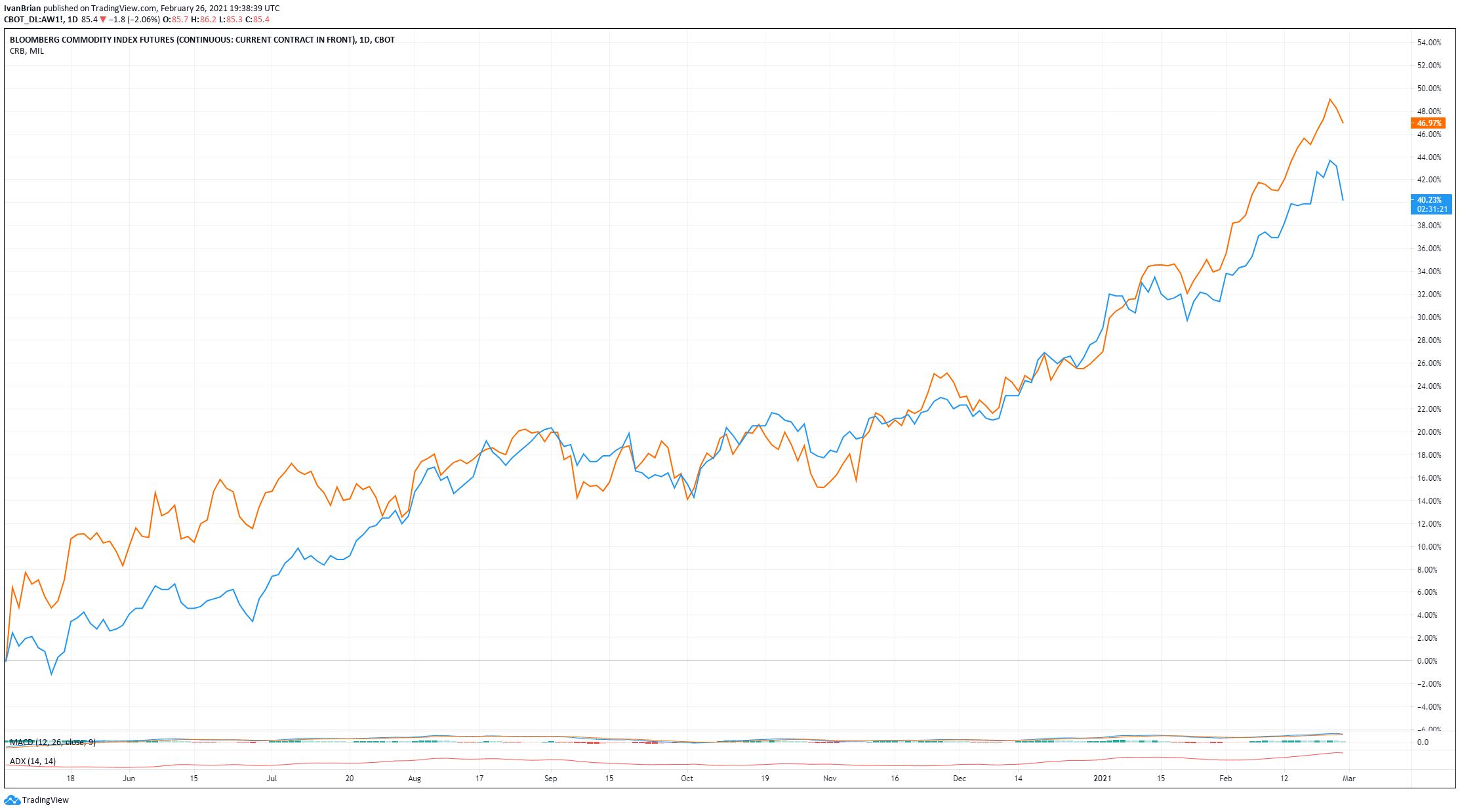
So central bankers generally saying all is well with inflation and it is under control but markets not believing the rhetoric and starting to look at the pure economics of the situation. Markets may be right given the evidence of the main commodity indices. Looking at the chart below gives a stark view of commodity inflation in the last 9 months.
Bloomberg Commodity Index Future, Refinitiv Commodity Index Lyxor ETF.
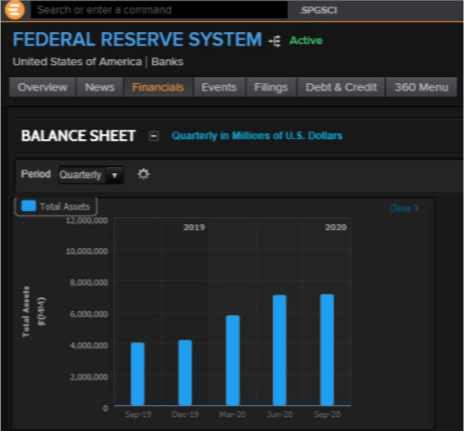
The US debt to GDP ratio is now at 150 %, a level not seen since the end of World War 2. While we are and have been through huge crises, from the financial crash to the global pandemic, this level of debt needs to be addressed quickly. The Federal Reserves Balance sheet continues to balloon as can be seen below from Refinitiv data and a further $1.9 trillion stimulus is just about to pass!
The Week ahead
So is it likely to get any better? Well given the trend and evidence from the charts above it is clear that inflationary pressures are inevitable. Some level of inflation is necessary as economies expand and reopen, it just needs to be controlled. The narrative around inflation must also be taken in the context of the extraordinary rise in the stock market since March 2020. Stock markets did need to pause for breath and a soft landing is certainly needed and preferable to the alternative.
Corporate earnigns season was strongly positive so stock makrkets need to adjust to future earnigns growth and sustain current valuations as the economy re opens. A continued rally would have stretched valuations too far.
A period of consolidation for stock markets is preferable with Central Bankers steadily weaning markets and economies off loose monetary policy. Global monetary policy has been overly loose since the financial crash of 2008 so sustained growth to wean economies, financial markets, and consumers off it is necessary.
Vaccine supplies will be watched but their importance is waning as major countries speed up deals. AstraZeneca and the EU still have problems but the EU is likely to approve JNJ's vaccine shortly. Speed of vaccination programs will be watched more closely than supply constraints.
Next week sees results from Zoom Video on Monday, Target and Hewlett Packard on Tuesday, Kroger, Baozun, Costco Wholesale, Broadcom, and Canadian Natural Resources on Thursday.
Economic Releases Week Ahead
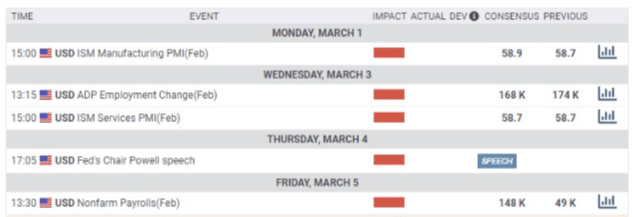
Nonfarm payrolls on Friday will be closely watched given recent disappointing weekly jobless claims numbers and for signs of the reopening trade.
S&P 500 Technical analysis
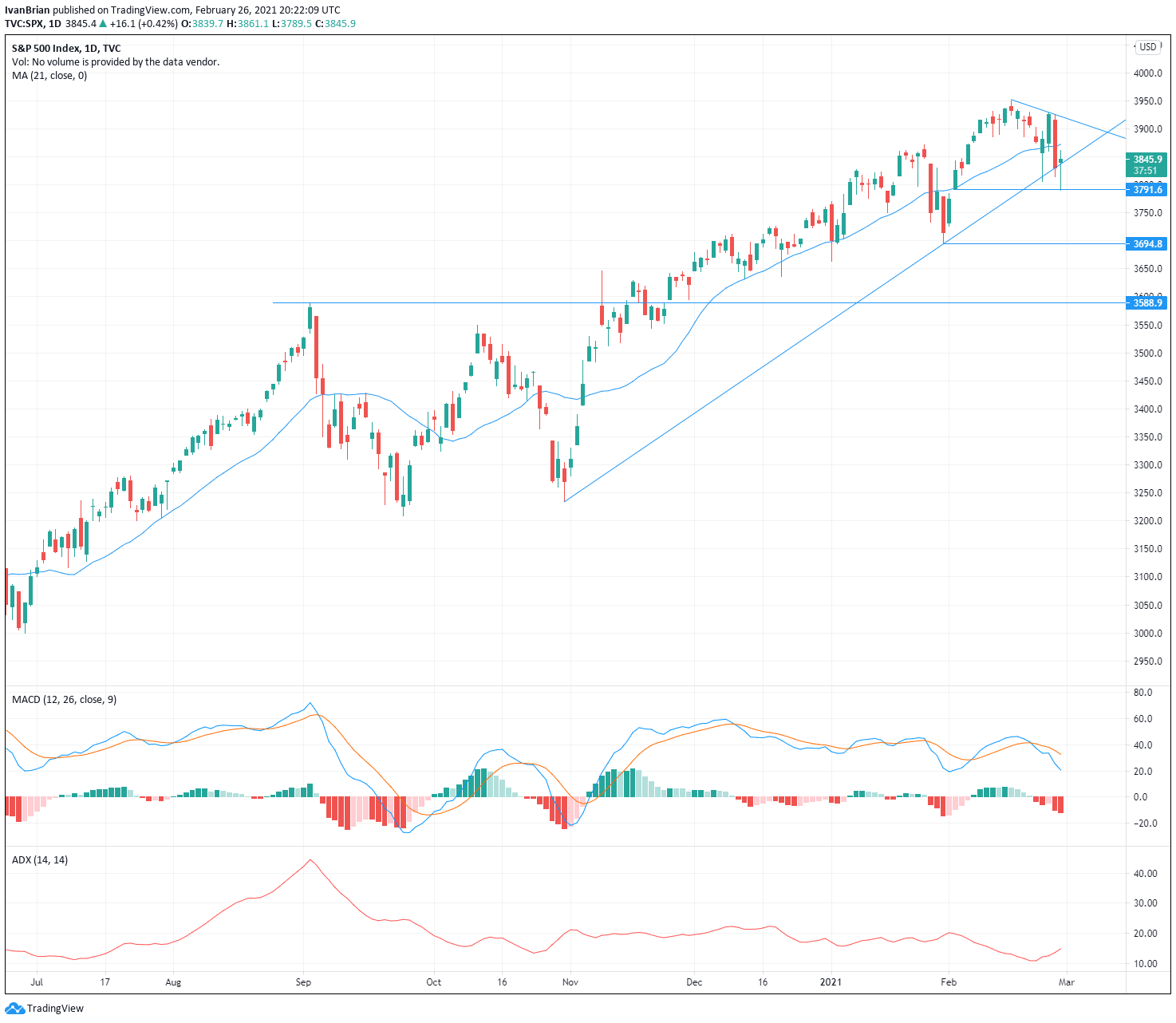
An ugly day yesterday gave us a strong bear sign completely overlooking Wednesday's bullish engulfing candle. We now are already establishing a series of lower highs so all that is needed to confirm the bearish trend is a break of 3791 low which will then lead to 3694 low as the next target/support.
The author has no position in any stock mentioned in this article and no business relationship with any company mentioned. The author has not received compensation for writing this article, other than from FXStreet.
This article is for information purposes only. The author and FXStreet are not registered investment advisors and nothing in this article is intended to be investment advice. It is important to perform your own research before making any investment and take independent advice from a registered investment advisor.
FXStreet and the author do not provide personalized recommendations. The author makes no representations as to accuracy, completeness, or the suitability of this information. FXStreet and the author will not be liable for any errors, omissions or any losses, injuries or damages arising from this information and its display or use. The author will not be held responsible for information that is found at the end of links posted on this page.
Errors and omissions excepted.
Author

Ivan Brian
FXStreet
Ivan Brian started his career with AIB Bank in corporate finance and then worked for seven years at Baxter. He started as a macro analyst before becoming Head of Research and then CFO.