Silver Price Forecast: XAG/USD treads water around $54.00 with bears in control
- XAG/USD decline has been halted at the $53.00 level but is failing to find acceptance above $54.00.
- The pullback in Oil prices is keeping precious metals buoyed while expectations of further global monetary tightening are capping rallies.
- The broader bias remains bearish, after an 11.5% sell-off in the last two weeks.
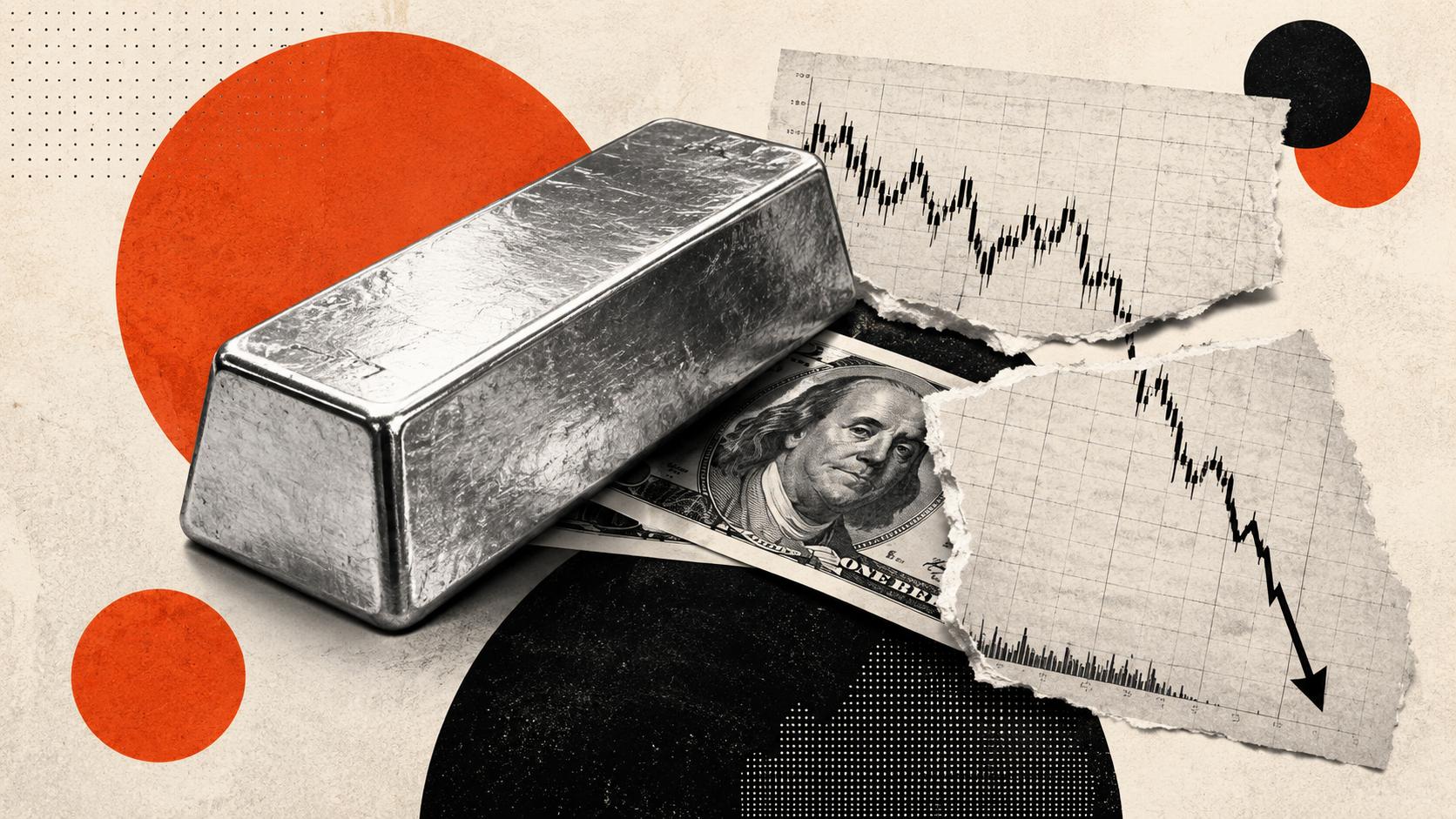
Silver (XAG/USD) flatlines within a tight range around $54.00 on Monday, with investors looking from the sidelines ahead of monetary policy decisions by the US Federal Reserve (Fed) and other central banks on Monday. The 2% pullback in Oil prices has provided some cushioning to precious metals, but upside attempts remain limited, as investors brace for a string of hawkish holds.
Analysts at ING argue that the broader backdrop continues to favour the US Dollar, with “energy prices firm and expectations growing that the US and Israel will launch another attack on Iran” likely to ensure that “central banks stay hawkish.”
In their view, “the balance of risks suggests that the dollar can probably hold onto its gains.” ING experts acknowledge that “interest rate spreads have moved a little against the dollar as the recent US tech wobble has pared back Federal Reserve tightening expectations,” but they also observe that “energy prices remain at their highs, and the arrival of a third US aircraft carrier group in the Gulf makes further escalation in the Middle East more likely than not,” reinforcing the case for a still-firm Dollar tone.
Technical Analysis: Solver consolidates losses near YTD lows
From a technical perspective, XAG/USD has found some support, but it seems unable to take off from year-to-date lows. Momentum indicators on 4-hour charts show the Relative Strength Index (14) coming up from oversold levels and the Moving Average Convergence Divergence (MACD) just turning slightly positive, highlighting a pause rather than a clear bullish reversal.
Immediate resistance emerges at Thursday's lows around $55.40, ahead of the October 16, 20 and 21 highs near $58.50 and the top of the descending channel, just below the $60.00 level.
Bears, on the other hand, remain contained above the $53.00 area, where Friday's trading bottom meets the base of the descending channel. Further down, the $50.00 psychological level and the late November 2025 low, at the $48.70 area, emerge as the next bearish targets.
(The technical analysis of this story was written with the help of an AI tool. Know more.)
Silver FAQs
Silver is a precious metal highly traded among investors. It has been historically used as a store of value and a medium of exchange. Although less popular than Gold, traders may turn to Silver to diversify their investment portfolio, for its intrinsic value or as a potential hedge during high-inflation periods. Investors can buy physical Silver, in coins or in bars, or trade it through vehicles such as Exchange Traded Funds, which track its price on international markets.
Silver prices can move due to a wide range of factors. Geopolitical instability or fears of a deep recession can make Silver price escalate due to its safe-haven status, although to a lesser extent than Gold's. As a yieldless asset, Silver tends to rise with lower interest rates. Its moves also depend on how the US Dollar (USD) behaves as the asset is priced in dollars (XAG/USD). A strong Dollar tends to keep the price of Silver at bay, whereas a weaker Dollar is likely to propel prices up. Other factors such as investment demand, mining supply – Silver is much more abundant than Gold – and recycling rates can also affect prices.
Silver is widely used in industry, particularly in sectors such as electronics or solar energy, as it has one of the highest electric conductivity of all metals – more than Copper and Gold. A surge in demand can increase prices, while a decline tends to lower them. Dynamics in the US, Chinese and Indian economies can also contribute to price swings: for the US and particularly China, their big industrial sectors use Silver in various processes; in India, consumers’ demand for the precious metal for jewellery also plays a key role in setting prices.
Silver prices tend to follow Gold's moves. When Gold prices rise, Silver typically follows suit, as their status as safe-haven assets is similar. The Gold/Silver ratio, which shows the number of ounces of Silver needed to equal the value of one ounce of Gold, may help to determine the relative valuation between both metals. Some investors may consider a high ratio as an indicator that Silver is undervalued, or Gold is overvalued. On the contrary, a low ratio might suggest that Gold is undervalued relative to Silver.
Author

Guillermo Alcala
FXStreet
Graduated in Communication Sciences at the Universidad del Pais Vasco and Universiteit van Amsterdam, Guillermo has been working as financial news editor and copywriter in diverse Forex-related firms, like FXStreet and Kantox.