Rally pauses as S&P 500 pulls back into key support
U.S. equity futures are edging lower Tuesday morning, as markets take a breather following a sharp rally off April lows, with the S&P 500 now pulling back into a key technical level.
After a powerful upside move, price action is beginning to cool—meeting its first real test as macro uncertainty and rising oil prices begin to weigh on sentiment.
A technical pause, not a breakdown
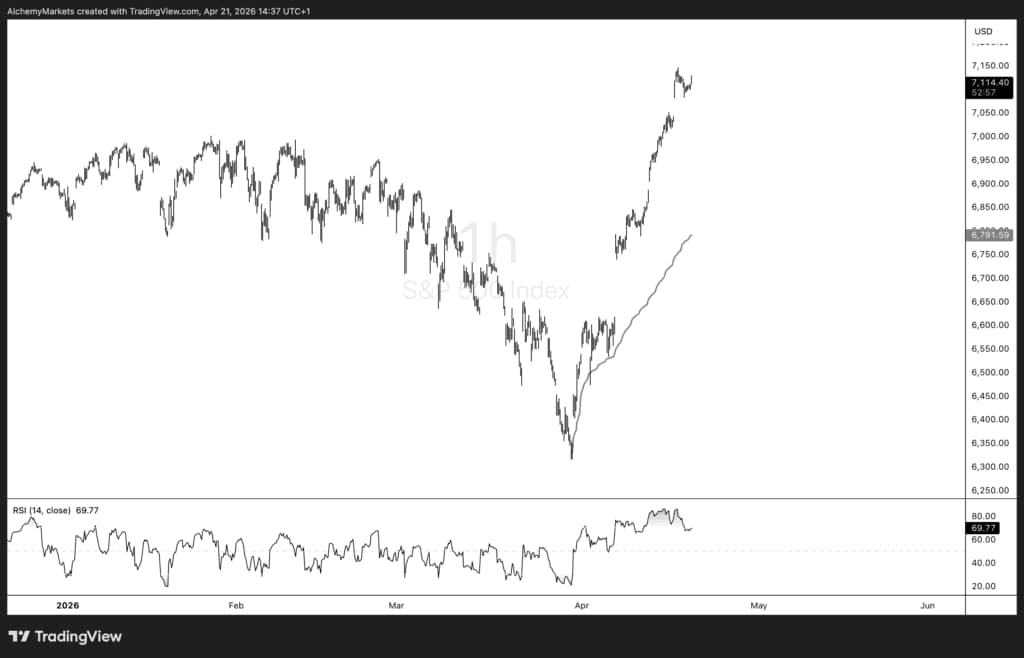
The recent rally in the S&P 500 has been aggressive, with the index reclaiming lost ground in a near-vertical move. But that momentum is now slowing.
- Price is pulling back into the anchored VWAP from the April lows.
- RSI is hovering near 70, signaling short-term overbought conditions.
- Early signs of consolidation are emerging near recent highs.
This type of move isn’t unusual. In fact, it’s often healthy.
After a strong trend, markets typically:
- Pull back into support.
- Reset momentum indicators.
- Decide whether to continue higher or rotate.
Right now, the anchored VWAP is acting as a key battleground. Holding this level would reinforce the strength of the current trend. Losing it, however, could open the door to a deeper retracement.
Macro pressure creeping in
While technicals are driving short-term flows, macro headlines are beginning to reassert themselves.
Tensions in the Middle East—particularly around the Strait of Hormuz—have pushed oil prices higher, raising fresh concerns about inflation.
That creates a tricky backdrop:
- Higher Oil – potential inflation resurgence
- Inflation – less flexibility for the Federal Reserve
- Less easing – pressure on equity valuations
Markets are now weighing whether this is just noise—or the start of a more persistent headwind.
Momentum vs risk
There’s a clear tug-of-war shaping the tape this morning:
Bullish forces:
- Strong earnings expectations.
- Continued AI-driven optimism.
- Technical trend still intact (for now).
Bearish risks:
- Oil price spike.
- Geopolitical uncertainty.
- Overbought conditions after a sharp rally.
This combination explains the current price action: not panic selling, but hesitation.
What to watch today
Going into the session, traders should keep an eye on:
- Anchored VWAP reaction – does price hold or break?
- Oil prices – continued strength could pressure equities.
- Sector rotation – energy vs tech divergence.
- Earnings headlines – potential catalyst for next move.
The bottom line
The market isn’t breaking—it’s pausing.
After a powerful rebound, the S&P 500 is now testing whether buyers are willing to step back in at higher levels, with the anchored VWAP acting as a key line in the sand.
If support holds, this could simply be a reset before another leg higher. If not, the rally may need more time to consolidate.
For now, the tone is cautious—but not bearish.
Author

Zorrays Junaid
Alchemy Markets
Zorrays Junaid has extensive combined experience in the financial markets as a portfolio manager and trading coach. More recently, he is an Analyst with Alchemy Markets, and has contributed to DailyFX and Elliott Wave Forecast in the past.