|

Pound Sterling Price News and Forecast: Softens as UK political turmoil, hawkish Fed bets weigh

British Pound softens as UK political turmoil, hawkish Fed bets weigh

The GBP/USD pair loses ground to near 1.3415 during the Asian trading hours on Tuesday. The British Pound (GBP) edges lower against the Greenback amid UK political turmoil. Traders will take more cues from the UK employment report, which is due later on Tuesday. Read More...

Pound Sterling rides the gilt rout while Westminster wobbles

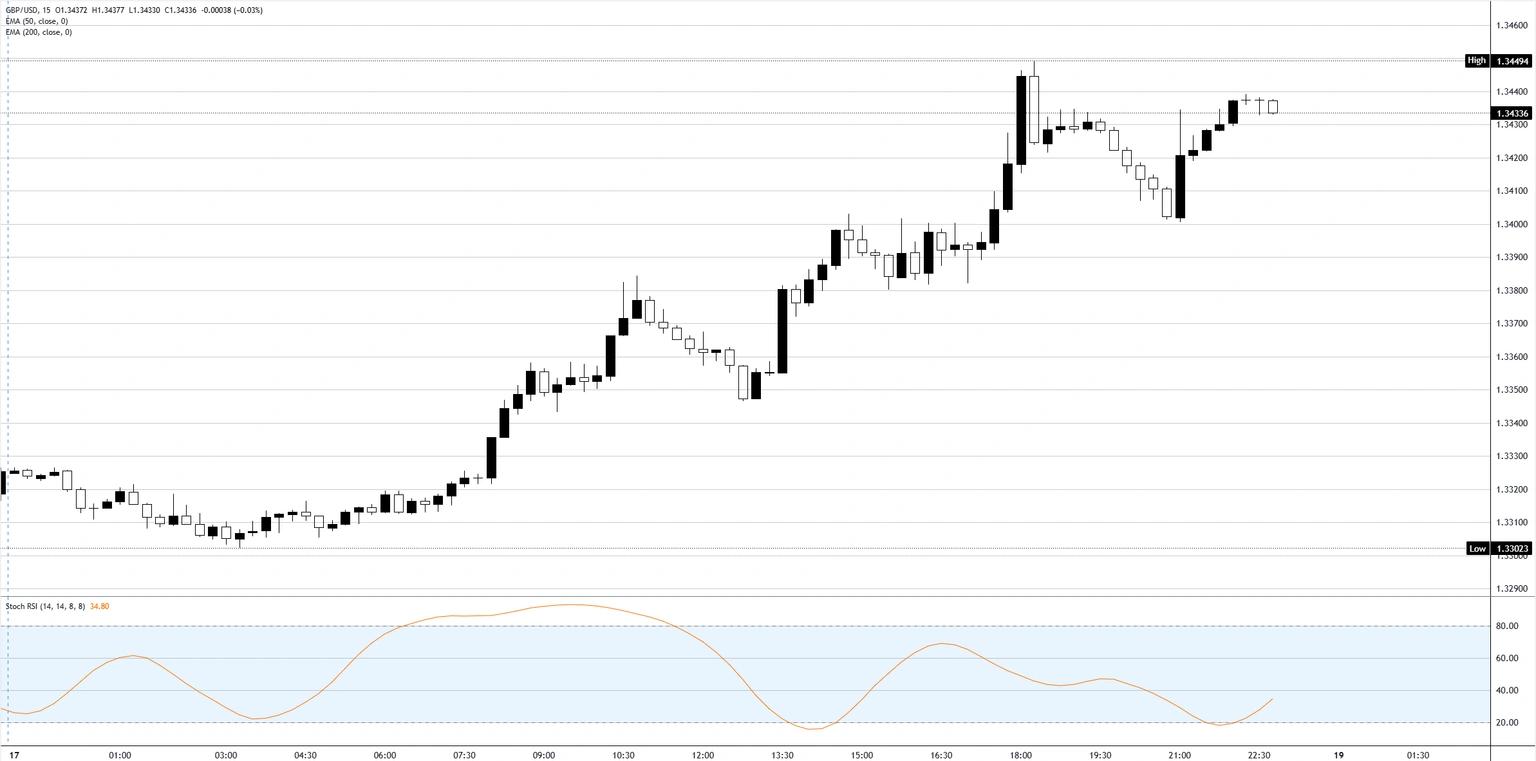
Cable bottomed at the 1.33 handle in Asian trade and ground higher through London and New York to close back above the 1.34 handle, a session range of roughly 150 pips and a textbook reclaim of the 200-day exponential moving average on the daily chart. The bounce came against the backdrop of a worsening gilt rout, with UK yields climbing as investors digest the political contest now emerging around Prime Minister Keir Starmer's position. That combination, weaker fiscal backdrop and stronger currency, breaks the usual correlation. The Pound is not rallying because Westminster has stabilised. It is rallying because gilt yields are pushing higher and rate-hike pricing is hardening into the BoE's June 18 meeting. Read More...
British Pound rises as Burnham reassures, Starmer pressure mounts

The British Pound (GBP) extends its gains on Monday as political pressure over Prime Minister Keir Starmer increases. At the same time, Andy Burnham, the challenger to succeed Starmer, ruled out changing Chancellor Rachel Reeves’ fiscal rules if he becomes PM. The GBP/USD pair trades at 1.3414 after testing multi-week lows of 1.3302. Read More...
Author

FXStreet Team

Composed of a group of economic journalists and FX experts, the FXStreet content team produces and oversees all content published on FXStreet. It provides a purely journalistic approach to the Forex market.


More from FXStreet Team
Share:

Editor's Picks

AUD/USD holds above 0.6950 as bullish USD caps gains

AUD/USD edges lower during the Asian session on Tuesday, stalling a two-day recovery move from a two-month low, touched last week. An extended rout in the fixed income market keeps US bond yields elevated near multi-year highs. This, along with geopolitical uncertainties, helps the US Dollar retain its bullish tone despite receding October Fed hike bets. However, expectations for another RBA rate hike this month could act as a tailwind for the Aussie.

USD/JPY rises back above 158.00 despite hawkish BoJ outlook

USD/JPY rises back above 158.00 in the early European morning on Tuesday. The pair strengthens as the Japanese Yen fails to find any inspiration from hawkish BoJ expectations and looming intervention risks. Meanwhile, geopolitical uncertainty and elevated US bond yields keep the US Dollar near its YTD high despite receding October Fed hike bets. This, in turn, helps the pair stay supported.

Gold stays firm; looks at $4,200

Gold builds on Monday’s marginal bounce, although it struggles to reclaim the key $4,200 mark per troy ounce so far on Tuesday. The yellow metal’s advance comes on the back of the fresh downside momentum in the US Dollar in tandem with retreating US Treasury yields across the curve.

Crypto Today: Bitcoin, Ethereum, XRP bulls battle to restart uptrend amid ETF outflows

Bitcoin upholds a robust bullish outlook, trading at $85,837 on Tuesday as sellers push to regain control over the trend. Altcoins, meanwhile, reflect Bitcoin’s ranging action, with Ethereum trading sideways above $2,700 and Ripple hovering around the pivotal $1.50 level.

Japanese Yen nears 158.00: Two analysts agree it's bullish, and disagree on how far the breakout goes

The JPY is drifting near 158.00 against the USD ahead of a busy week of Japanese data and a still-unclear BoJ timetable. The two most recent FXStreet analyses agree on the direction, but they disagree on the target and the mechanism.

Eurozone inflation just hit 3.8%, its highest in three years. This chart shows why the ECB can’t simply hike its way out

The ECB would normally have a relatively straightforward answer to inflation running almost twice its target: raise interest rates. But these are not normal circumstances. This time, the bond market is already doing part of the tightening for it, leaving the ECB facing an increasingly difficult dilemma.