Pound Sterling Price News and Forecast: GBP/USD posts modest gains around 1.3200

British Pound gains ground to near 1.3200 as traders await Burnham's picks
The GBP/USD pair trades with mild gains near 1.3200 during the early European session on Friday. The British Pound (GBP) strengthens against the US Dollar (USD) as markets focus on who might become finance minister under Andy Burnham, and the latest US inflation data has softened expectations for US rate hikes.
UK Finance Minister Rachel Reeves is expected to be replaced under a Burnham-led administration. Traders focus on who might become finance minister under Andy Burnham, the likely successor to Keir Starmer as Prime Minister. "The obstacles to a Burnham coronation are slowly being cleared, offering sterling support at the margin," said Nick Rees, head of macro analysis at Monex Europe. Read more...
British Pound bulls seem hesitant as Hormuz ship attack supports safe-haven USD
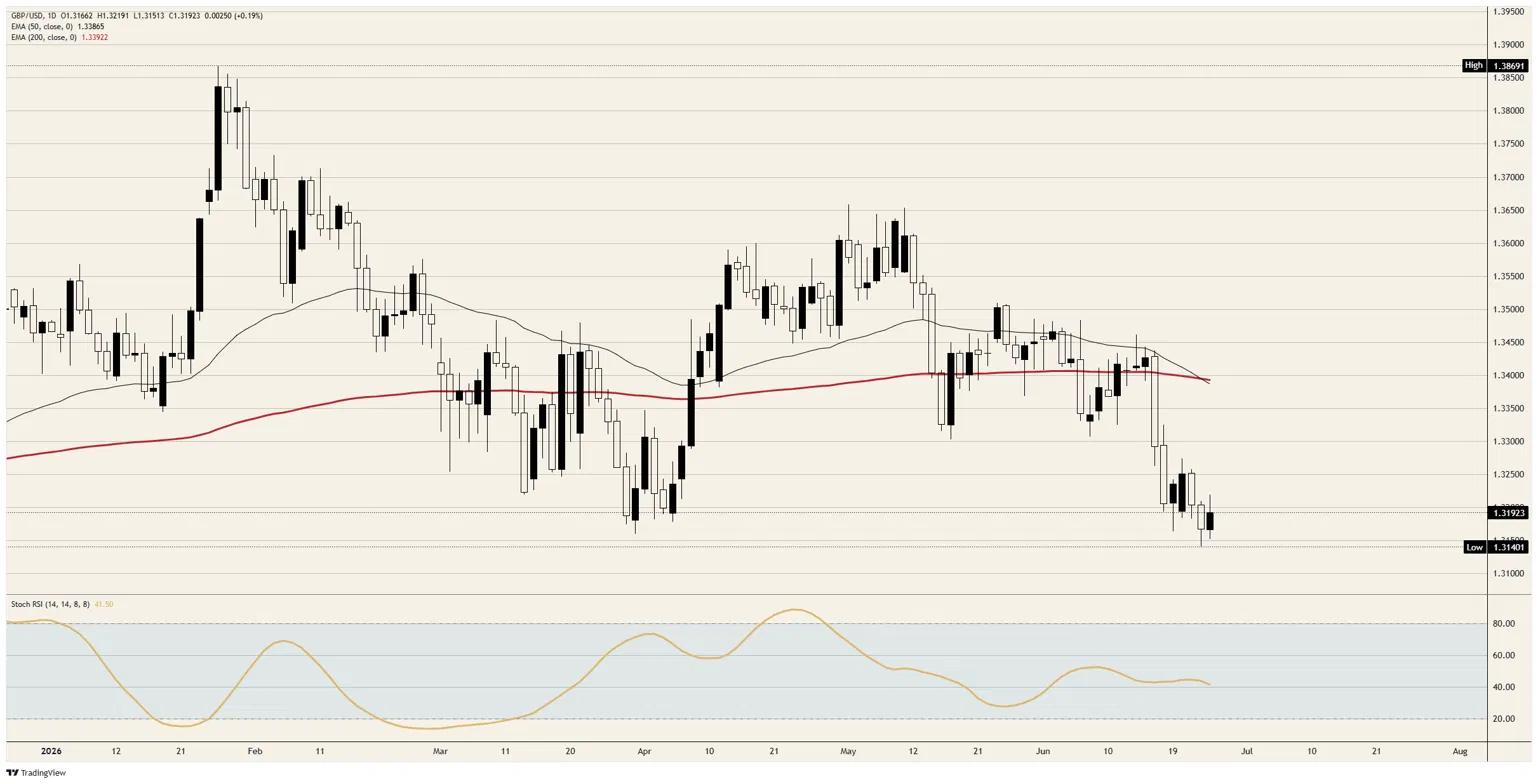
The GBP/USD pair sticks to a positive bias for the second straight day, albeit it remains below the previous day's swing high and trades just below the 1.3200 mark during the Asian session on Friday. Furthermore, the fundamental backdrop warrants caution before positioning for any meaningful recovery from November 2025 lows, around the 1.3140 region, touched on Wednesday.
The US Personal Consumption Expenditures (PCE) Price Index report, released on Thursday, highlighted persistent inflationary pressures. However, the signing of an interim US-Iran peace deal earlier this month, and the subsequent fall in Crude Oil prices to the pre-war levels, eased concerns over the inflationary impact of a surge in energy prices. This prompted traders to trim their bets for the US Federal Reserve (Fed) rate hikes this year, which led to the overnight US Dollar (USD) pullback from its highest level since May 2025 and offered support to the GBP/USD pair. Read more...
Pound Sterling buckles in a leadership vacuum
Sterling spent the back half of June proving that a hawkish central bank counts for little when the government is falling apart. The Bank of England (BoE) held Bank Rate at 3.75% on June 18 in a 7-2 vote, with two members pushing for a hike and services inflation still near 3.7%, which on any normal week would have handed the Pound a yield story to lean on. Instead Cable has shed roughly three big figures since, sliding from the 1.3450 area to a multi-month low near 1.3150 before steadying close to 1.3200. The catalyst was not the Bank; it was the resignation of Prime Minister Keir Starmer on June 22 and the open Labour leadership contest that followed.
A leadership vacuum is exactly the kind of risk currency markets struggle to price, and the Pound has taken the hit. Starmer's exit makes him the latest in a run of short-lived premierships, with Andy Burnham the clear frontrunner to replace him and a contest now playing out against weak local-election results and a resurgent Reform UK. For Sterling the problem is less about who wins than the gap itself: an open question over fiscal direction, spending plans, and election timing is a discount the market applies first and asks about later. None of that shows up in a rate decision, which is why the hawkish BoE hold has been comprehensively ignored. Read more...
Author

FXStreet Team
FXStreet
Composed of a group of economic journalists and FX experts, the FXStreet content team produces and oversees all content published on FXStreet. It provides a purely journalistic approach to the Forex market.

















