Pound Sterling Price News and Forecast: GBP/USD hits fresh intra-week lows after failure at 1.3660 resistance
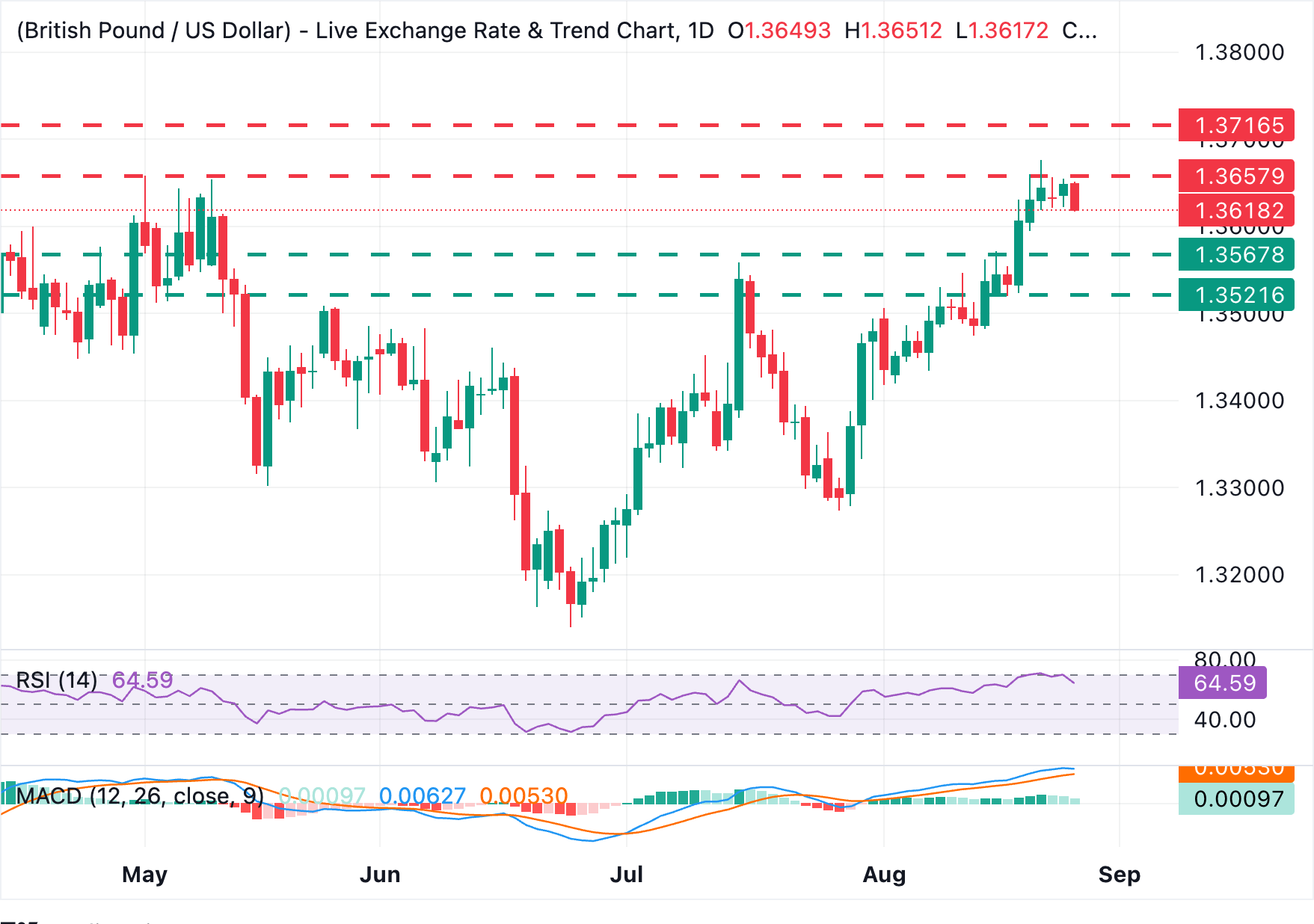
GBP/USD Price Forecast: Hits fresh intra-week lows after failure at 1.3660 resistance
The British Pound (GBP) pares gains against the US Dollar (USD) on Wednesday, with bears testing the bottom of the intra-week trading range at the 1.3620 area, after failure to breach resistance at 1.3660. US Dollar bulls, however, remain subdued, awaiting the release of July’s US Personal Consumption Expenditures (PCE) Price Index, due later on the day.
Brown Brothers Harriman’s Elias Haddad expects PCE data to “echo the soft July CPI and retail sales data, giving the Fed room to stay on hold.” Haddad also urges investors to “watch the less noisy Dallas Fed trimmed mean PCE and the Cleveland Fed median PCE measures, due around the New York close, for a cleaner read on underlying inflation,” highlighting that “both moved closer to the Fed’s 2% target in June.” Read more...
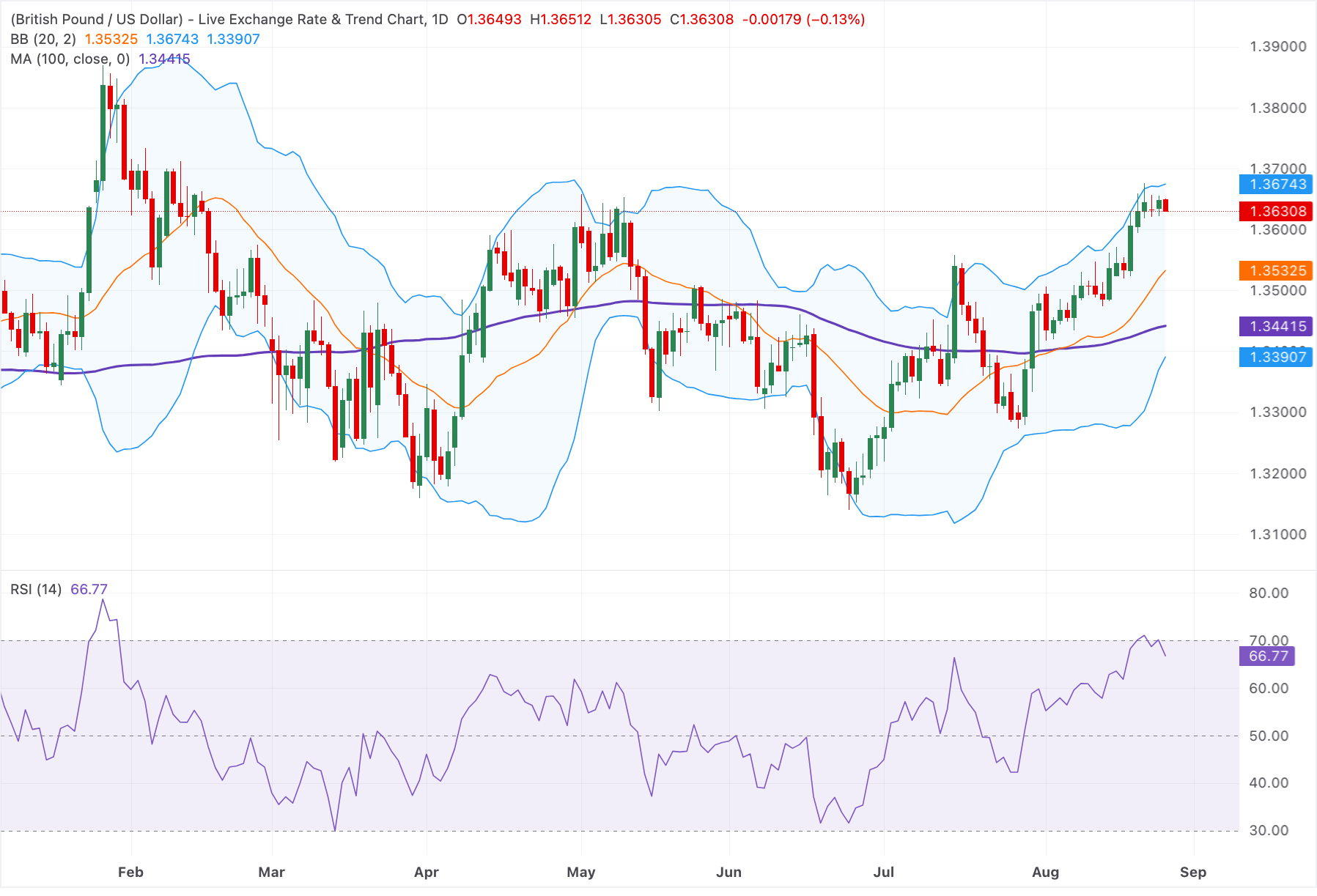
British Pound edges lower below 1.3650 as traders await US PCE release
The GBP/USD pair declines to near 1.3625 during the early European trading hours on Wednesday. The US Dollar (USD) edges higher against the British Pound (GBP) as markets turn cautious ahead of the US July Personal Consumption Expenditures (PCE) Price Index data, which is due later on Wednesday.
US Treasury Secretary Scott Bessent said last week that the US Department of the Treasury will double its bond buyback operations to at least $4 billion per operation, up from the current $2 billion maximum, in an effort to stabilize surging long-term borrowing costs. This action exerted some selling pressure on the USD in the previous sessions. Read more...
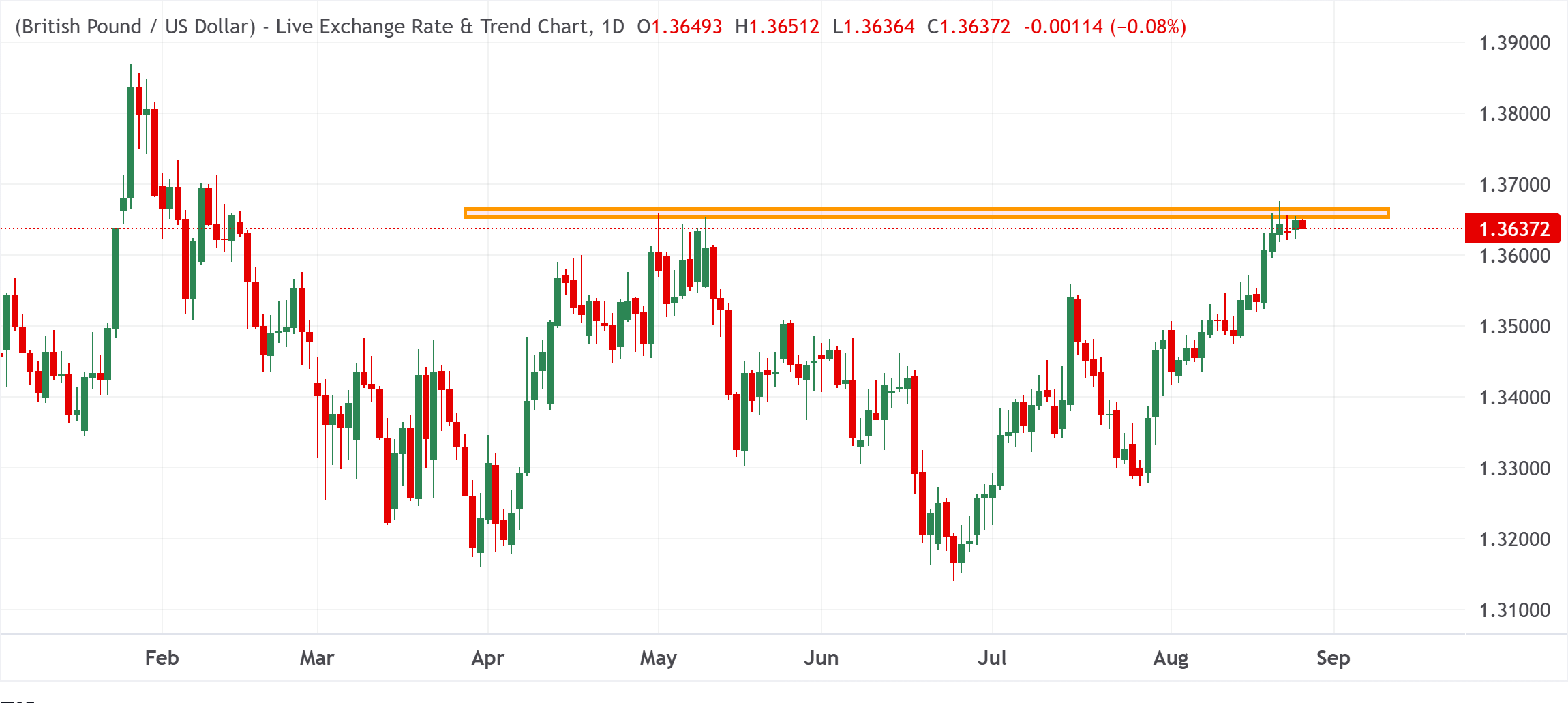
British Pound edges lower but remains close to multi-month top as USD awaits US PCE
The GBP/USD pair trades with a negative bias below mid-1.3600s during the Asian session on Wednesday, eroding a part of the previous day's strong gains. Spot prices, however, remain within striking distance of a six-month top, set last Friday, as traders keenly await the release of the US Personal Consumption Expenditures (PCE) Price Index data for a fresh impetus.
The crucial US inflation data, along with Federal Reserve (Fed) Chair Kevin Warsh's speech at the Jackson Hole Symposium on Friday, will be scrutinized for cues about the US central bank's interest rate path. Apart from this, developments surrounding the Middle East crisis would play a key role in determining the near-term trajectory for the US Dollar (USD) and the GBP/USD pair. Read more...
Author

FXStreet Team
FXStreet
Composed of a group of economic journalists and FX experts, the FXStreet content team produces and oversees all content published on FXStreet. It provides a purely journalistic approach to the Forex market.
















