|

New year, new fears: Where are stocks headed in 2023?

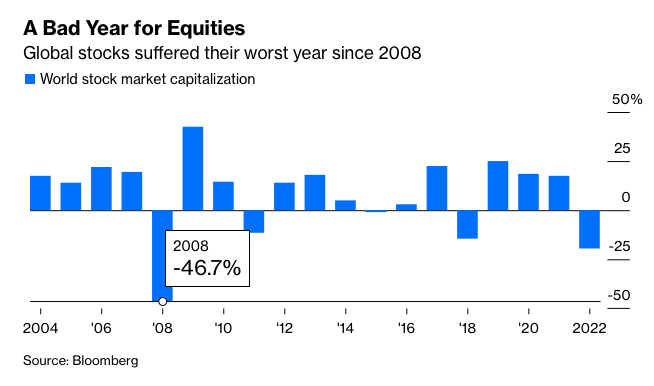
Last year global stocks had their worst year since 2008. World stock market capitalisation fell nearly 20% which, in recent history, was only eclipsed by the near 50% drop in 2008. However, it should be remembered that the decline followed unprecedented levels of fiscal stimulus from governments and years of low-interest rates from central banks.
Chart

Stocks to fall further in 2023 H1?

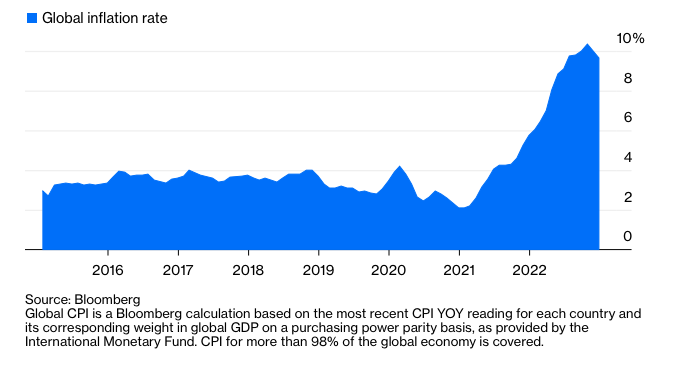
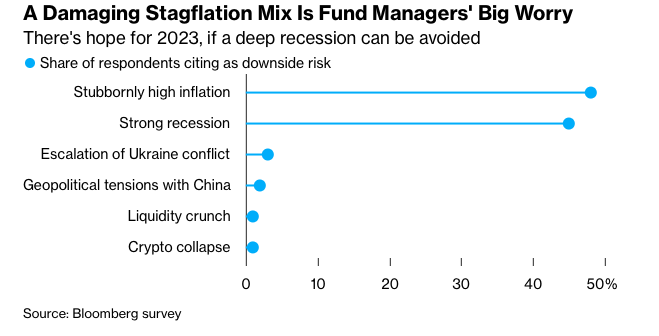
According to a Bloomberg News survey of 134 fund managers, investors are expecting a 10% rebound in global equities for 2023. However, around half of those investors saw a deep recession as a concern and that high inflation could hurt stocks again. Remember that global inflation is above 8% right now.
Chart

The stagflationary view, high inflation, and slow growth is the consensus view. The path ahead from here for stocks will depend on the probability, depth, and length of any recession. You can see the two biggest fears that investors have here below:
Chart

What to watch for

This means that if recession and inflation fears grow then stocks should also face more pressure. However, if inflation shows signs of falling and growth metrics hold up then stocks could find some support. Going forward it is going to be these twin drivers of growth and inflation which should determine the path for stocks for 2023. At the moment slowing leading indicators from the US, recession fears, and higher global inflation levels are anticipated by the majority to keep stocks pressured for the first quarter of 2023.


Learn more about HYCM

Author

Giles Coghlan LLB, Lth, MA

Giles is the chief market analyst for Financial Source. His goal is to help you find simple, high-conviction fundamental trade opportunities. He has regular media presentations being featured in National and International Press.


More from Giles Coghlan LLB, Lth, MA
Share:

Editor's Picks

AUD/USD bounces back toward 0.6950 on fresh USD supply

AUD/USD bounces back toward 0.6950 in the Asian session on Friday. The US Dollar retreats from 17-month highs as traders take profits off the table ahead of the all-important US Nonfarm Payrolls report. Meanwhile, the Australian Dollar draws support from reviving expectations of a November interest rate hike amid elevated global yields and inflation risks.


USD/JPY struggles near 158.00 as USD retreats ahead of NFP

USD/JPY is struggling for fresh impetus near 158.00, moving away from the top end of its weekly range in the Asian session on Friday, after hotter-than-expected Tokyo CPI and amid a broad US Dollar retreat. Traders reposition themselves ahead of US Nonfarm Payrolls.

Gold remains capped below $4,200 as traders await US NFP for Fed rate cuts

Gold extends its sideways move on Friday, trading below the $4,200 mark heading into the European session as traders await the release of US employment details. The US Nonfarm Payrolls report is expected to show that the economy added only 90K jobs in September, down from the previous month's reading of 162K.

Pi Network retreats to key support level as selling pressure resurfaces

Pi Network price remains volatile in the near term, hovering around $0.0900 at press time on Friday after losing over 3% the previous day. The pullback warns of a steeper correction, with a risk of breaking below a rising wedge pattern on the four-hour chart. Pi Network struggles to maintain a steady recovery as the price remains capped below the $0.1000 psychological barrier.

US Nonfarm Payrolls expected to soften in September

The United States Bureau of Labor Statistics is set to release September Nonfarm Payrolls (NFP) data on Friday at 12:30 GMT. Investors expect NFP to rise by 90K in September following August’s impressive 162K increase. The Unemployment Rate is seen holding steady at 4.1%, while the monthly wage inflation, as measured by the change in Average Hourly Earnings, is projected to hold steady at 0.3%.

Markets are pricing a Fed pause. The jobs data says the hike is still coming
The market has rapidly changed its mind about the Federal Reserve (Fed). Only a week ago, investors saw an October interest-rate hike as the most likely outcome. However, softer inflation and cautious comments from policymakers have since turned a pause into the dominant scenario. Yet beneath that dramatic repricing, the US economy is sending a considerably less dovish message.