|

Netflix Inc. $NFLX blue box area offers a buying opportunity

In today’s article, we’ll examine the recent performance of Netflix Inc. ($NFLX) through the lens of Elliott Wave Theory. We’ll review how the decline from the June 30, 2025, high unfolded as a 7-swing correction (WXY) and discuss our forecast for the next move. Let’s dive into the structure and expectations for this stock.

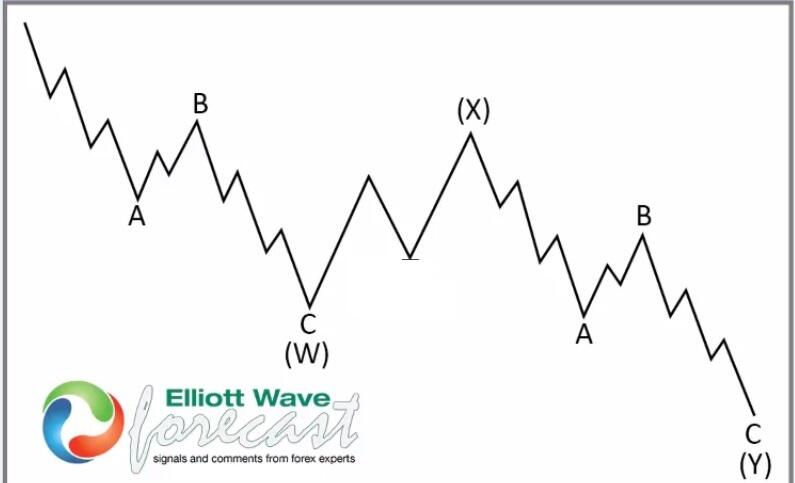
7-swing WXY correction
$NFLX four-hour Elliott Wave chart 7.20.2025
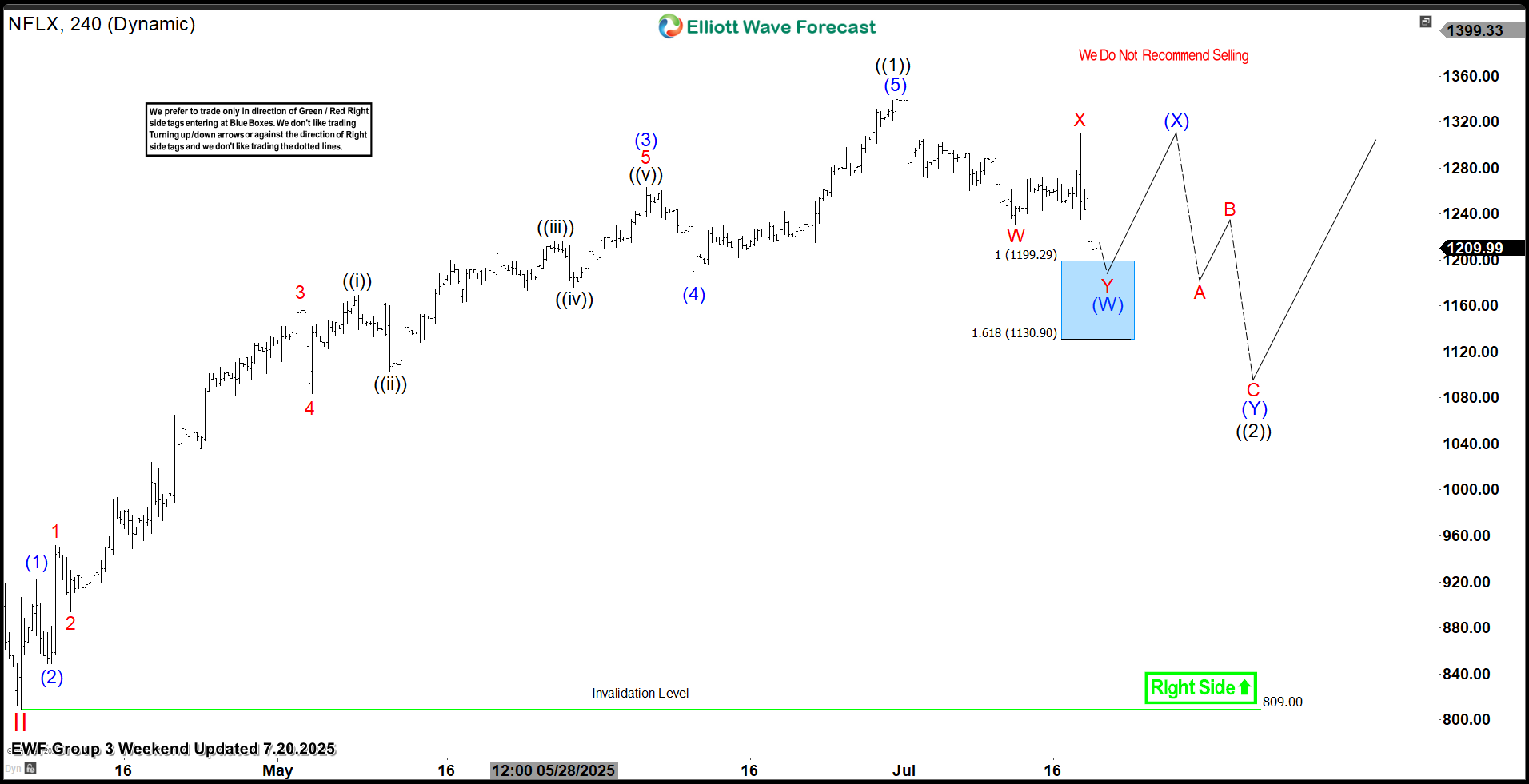
In the 4H Elliott Wave count from July 20, 2025, we saw that $NFLX completed a 5-wave impulsive cycle at black ((1)). As expected, this initial wave prompted a pullback. We anticipated this pullback to unfold in 7 swings, likely finding buyers in the equal legs area between $1199.29 and $1130.90.

This setup aligns with a typical Elliott Wave correction pattern (WXY), in which the market pauses briefly before resuming its primary trend.

$NFLX four-hour Elliott Wave chart 7.27.2025
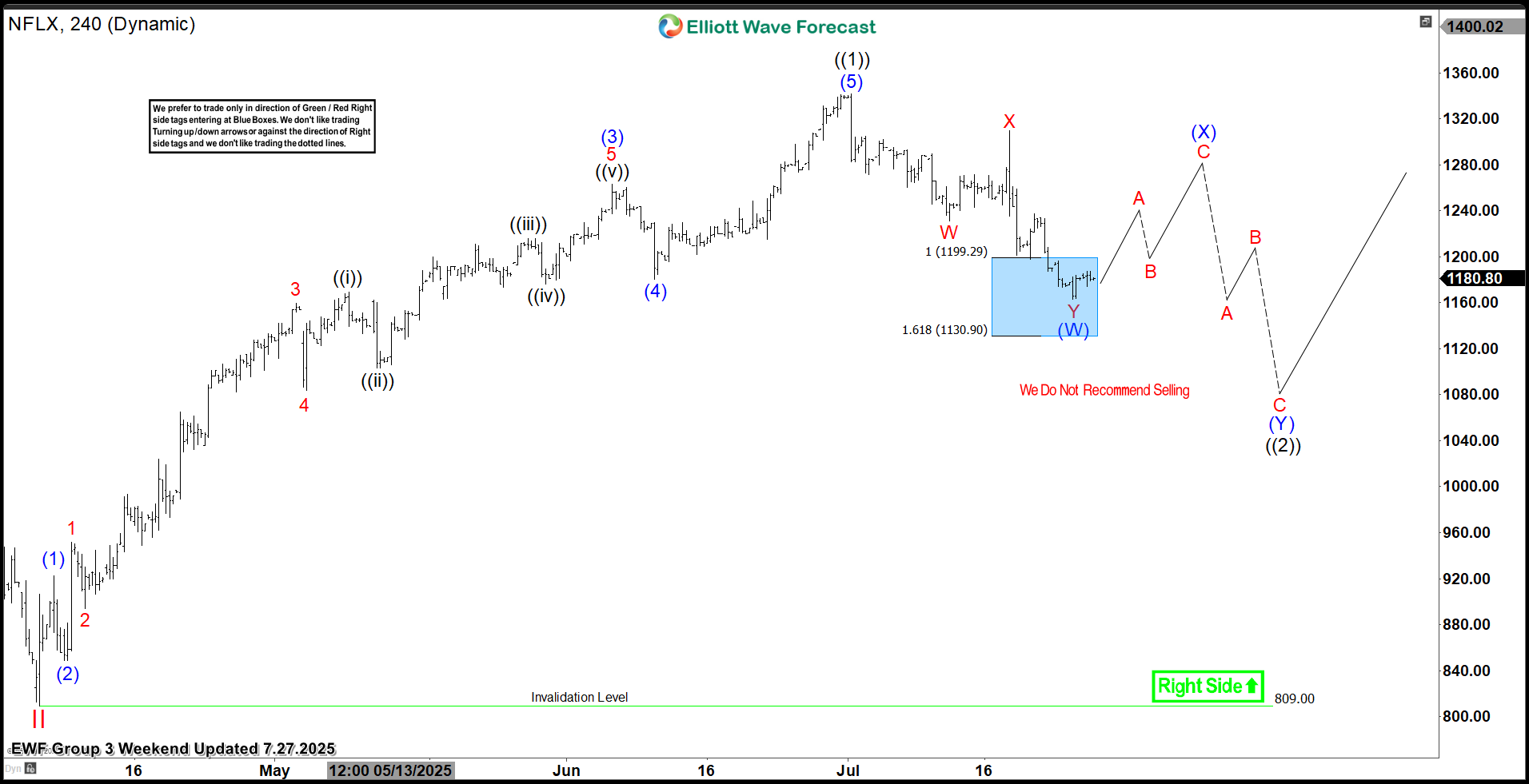
The most recent update, from July 27, 2025, shows that the stock has found a low as predicted. After the decline from the June peak, the stock is now finding support from the equal legs area. Currently, it is looking for a corrective bounce towards 1240 – 1280. After that, the stock is expected to continue lower in wave ((2)) before a renewed bullish cycle takes place.

Conclusion

In conclusion, our Elliott Wave analysis of Netflix Inc. ($NFLX) suggests that it remains supported against April 2025 lows. As a result, traders should buy the dips and monitor the $1240–$1280 zone as the next potential target. In the meantime, keep an eye out for any corrective pullbacks that may offer entry opportunities. By applying Elliott Wave Theory, traders can better anticipate the structure of upcoming moves and enhance risk management in volatile markets.

Author

Elliott Wave Forecast Team

Elliott Wave Forecast Team

ElliottWave-Forecast.com

More from Elliott Wave Forecast Team
Share:

Editor's Picks

AUD/USD sits at three-week highs above 0.7000 on hawkish RBA-speak

AUD/USD holds a positive bias for the fourth straight day, trading above 0.7000 in the Asian session on Wednesday and at three-week highs. RBA Deputy Governor Andrew Hauser's hawkish remarks and inflation concerns underpin the pair. However, the upside appears capped as the US Dollar attracts some buyers amid looming US-Iran uncertainty.

USD/JPY remains confined in a familiar range below 158.50

USD/JPY sees some dip-buying in the Asian session on Wednesday, though it remains confined within a multi-week range near 158.50 as the uncertainty over the timing of the next BoJ rate hike keeps Japanese Yen bulls on the defensive. Meanwhile, hawkish Fed expectations, bolstered by inflation risks stemming from volatile oil prices, underpin the US Dollar. However, looming intervention fears could limit JPY losses and cap the currency pair.

Gold extends losing spree as US bond yields hold ground

Gold extends its losing streak for the fourth trading day on Wednesday, trading 0.2% lower to near $4,115 in the Asian session. The precious metal is under pressure as United States Treasury Yields on the back of significant gains in oil prices in past few weeks.

Bitcoin gains strength as Ethereum and Ripple selling eases

Top three cryptocurrencies, Bitcoin, Ethereum, and Ripple, are holding steady on Wednesday after a bullish close the previous day. The mild recovery hints at an extended rally as the prevailing bearish pressure eases. Bitcoin trades at $82,930 on Wednesday, holding a bullish near-term bias following a mild rebound the previous day.

US – Midterm update: Pre-election tail risk scenarios
With two weeks until the US midterm elections on 3 November, early voting has already opened in more than 40 states. Prediction markets are broadly unchanged since we published our Midterm update, 13 October. The prediction market Polymarket continues to see Democrats winning both chambers as the most likely outcome, with a 62.5% probability.
The US Dollar fell. Gold didn't rally. That tells you everything
Gold (XAU/USD) is struggling to capitalize on a weaker US Dollar (USD), after repeatedly failing to establish itself above the $4,200 level. The precious metal remains confined to a relatively narrow trading range despite a combination of developments that would normally support higher prices.