|

Singapore Dollar: Seen consolidating in range against US Dollar – Commerzbank
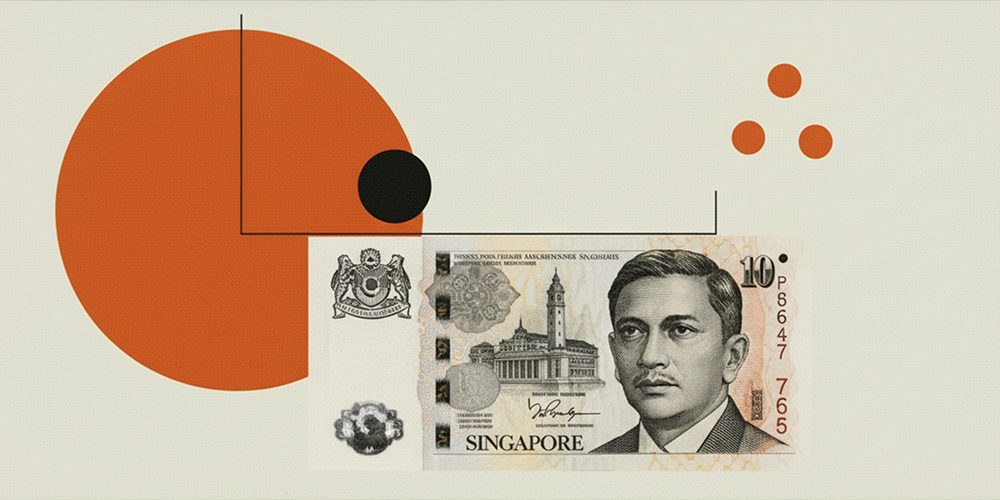
Commerzbank highlights that strong Singapore manufacturing and electronics PMIs underpin a constructive growth outlook, with Q2 GDP expected to exceed Q1’s 6% expansion. Against this backdrop, USD/SGD has eased slightly but remains near this year’s highs. The bank expects the pair to consolidate in a defined range rather than trend strongly in the near term.

Range-bound outlook for USD/SGD

"Looking ahead, the manufacturing outlook remains constructive."

"We will get the advance Q2 GDP report in the next week or so."

"It is expected to post a strong performance and even exceed Q1’s 6% yoy expansion, supported by a strong manufacturing sector and continued firm domestic demand."

"Growth this year is likely to exceed the upper end of the government's 2-4% forecast, and the official forecast may be revised up when the final Q2 report is released around August."

"For USD/SGD, it was slightly lower yesterday by around 30 pips to 1.2930. It is holding around this year's high, and we look for consolidation in the near term between 1.28 and 1.30."

(This article was created with the help of an Artificial Intelligence tool and reviewed by an editor.)

Author

FXStreet Insights Team

The FXStreet Insights Team is a group of journalists that handpicks selected market observations published by renowned experts. The content includes notes by commercial as well as additional insights by internal and external analysts.


More from FXStreet Insights Team
Share:

Editor's Picks

AUD/USD drops toward 0.6900 amid USD uptick, ahead of US NFP

AUD/USD meets fresh supply and drifts toward 0.6900 in the Asian session on Friday, near its lowest level since early July. The US Dollar regains traction near 17-month highs as oil-driven inflationary concerns counter reduced bets on an October Fed rate hike and the overnight pullback in US bond yields, weighing on the pair. Focus is now on the US jobs data.


USD/JPY holds steady above 158.00 after hot Tokyo CPI; US NFP awaited

USD/JPY consolidates above 158.00, the top end of its weekly range in the Asian session on Friday, moving little after hotter-than-expected Tokyo CPI, which backs the case for more BoJ rate hikes. Meanwhile, the US Dollar retains a bullish undertone near a one-and-a-half-year top amid oil-driven inflation fears and geopolitical uncertainties, supporting the pair ahead of US Nonfarm Payrolls.

Gold returns to the red and tests $4,150, with eyes on US NFP

Gold edges lower in a multi-day-old range near $4,150 in the Asian session on Friday as traders await the US NFP report for more cues about the Fed's policy path. The outlook will drive the US Dollar and the non-yielding bullion. Meanwhile, oil-driven inflation fears offset the overnight pullback in US bond yields, helping the USD to stand firm near a one-and-a-half-year high amid the US-Iran standoff.

WTI holds steady near $92.00 as US weighs sending more troops to Middle East
West Texas Intermediate (WTI), the US crude oil benchmark, is trading around $91.75 during the early Asian trading hours on Friday. WTI flatlines after a two-day gain as the United States (US) mulled sending another aircraft carrier group to the Middle East.
Why speculators slashed Yen longs by the most since August — and what that signals about risk
For much of the past month, the Japanese Yen (JPY) had become one of the market's preferred defensive trades. Hedge funds accumulated more than 170K net long contracts over four weeks as investors positioned for tighter Bank of Japan (BoJ) policy, persistent geopolitical uncertainty and a more cautious outlook for global growth.
Markets are pricing a Fed pause. The jobs data says the hike is still coming
The market has rapidly changed its mind about the Federal Reserve (Fed). Only a week ago, investors saw an October interest-rate hike as the most likely outcome. However, softer inflation and cautious comments from policymakers have since turned a pause into the dominant scenario. Yet beneath that dramatic repricing, the US economy is sending a considerably less dovish message.